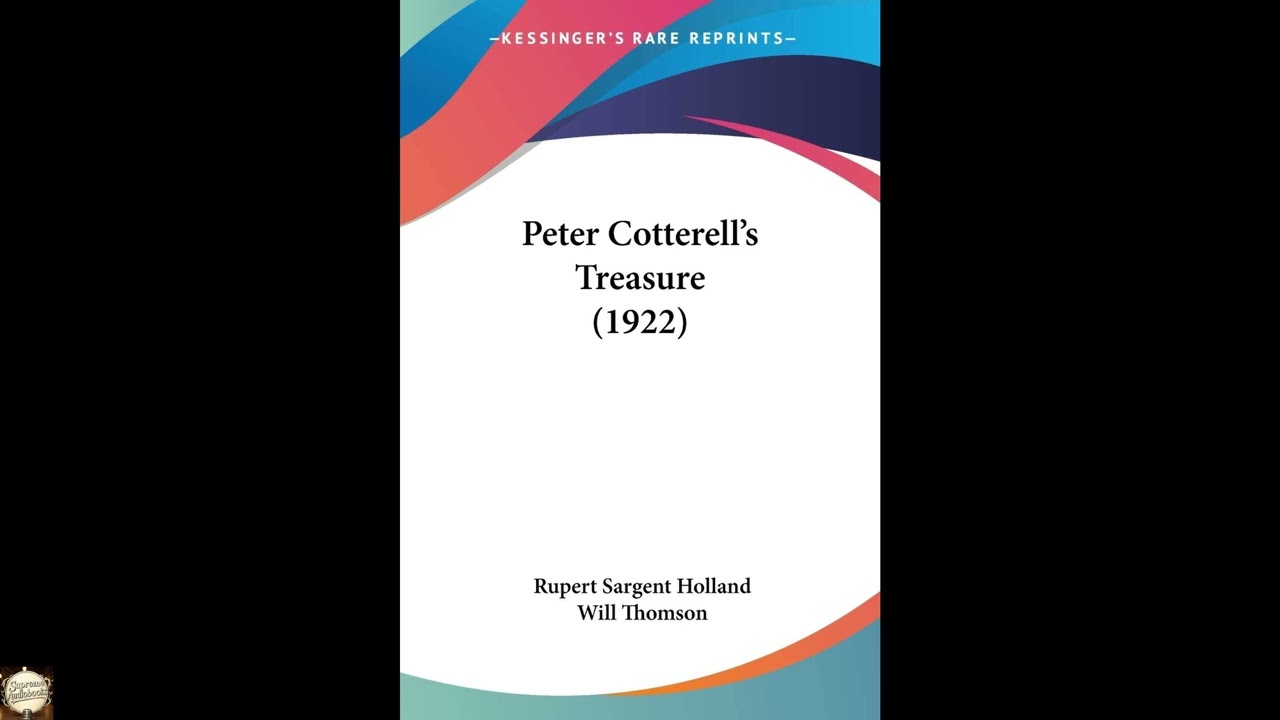
Peter Cotterell's Treasure
Few narratives grip the imagination quite like the promise of hidden wealth, the thrill of deciphering an old map, or the call of a distant, uncharted shore. Such is the enduring power of Rupert Sargent Holland’s classic adventure, Peter Cotterell’s Treasure. This isn't merely a tale of greed or the pursuit of riches; it is a meticulously crafted narrative that transports listeners to an era when the world still held vast, mysterious corners, and heroism could be found in the most unexpected places. It speaks to the part of us that yearns for discovery, that believes in the potential for self-transformation found beyond the mundane. Listeners today will find its themes of courage, ingenuity, and the ultimate value of integrity as relevant as ever, wrapped in a story that pulses with excitement and genuine heart. The story plunges us into a world of nautical lore and whispered legends, beginning with young Jim Hawkins—a name that resonates with the spirit of classic adventure. Living a quiet, uneventful life on the New England coast, Jim stumbles upon a cryptic, weather-beaten chart tucked away in the belongings of an old, reclusive sailor. This chart, laden with enigmatic symbols and faint markings, points to the fabled hoard of Peter Cotterell, a notorious buccaneer whose name has long been synonymous with both ruthlessness and an untold fortune. Cotterell’s treasure isn't just gold and jewels; it’s a legend, a myth whispered in port taverns and feared by those who remember his reign on the high seas. Swept up in the irresistible pull of the unknown, Jim finds himself drawn into a desperate quest. He quickly aligns with a motley crew of seekers, including the pragmatic Captain Sterling, a seasoned mariner with a skeptical eye but an undeniable sense of duty, and Professor Albright, an eccentric scholar whose knowledge of ancient languages and forgotten histories proves invaluable in decoding Cotterell’s elaborate clues. Their path, however, is far from solitary. A ruthless rival, the cunning and avaricious Silas Black, also seeks Cotterell’s legacy. Black, with his own crew of desperate men, represents the darker side of human ambition, forever shadowing Jim’s every move, turning the hunt into a perilous race against time and treachery. From the bustling docks of colonial ports to the treacherous, storm-battered islands of the Caribbean, the chase unfolds across vivid backdrops, each location testing the resolve and ingenuity of our protagonists. Rupert Sargent Holland, the mind behind this exciting tale, was an American author born in 1878 and living until 1952. A graduate of Harvard University, Holland carved out a distinguished career primarily writing for young readers, establishing himself as a prolific and beloved storyteller. His passion lay in weaving narratives that were both entertaining and instructive, often grounding his fiction in historical settings or infusing them with a sense of high adventure that appealed to a burgeoning audience of youthful readers eager for tales of daring. Throughout his career, Holland penned numerous works across various genres, though he is perhaps best known for his historical biographies and adventure stories. Titles such as Historic Girlhoods, Historic Boyhoods, and Lafayette, We Come! showcase his dedication to presenting inspiring figures and significant events from the past in an accessible, engaging manner. He also produced a series of Boy Scout adventure novels, demonstrating his affinity for stories that championed moral fortitude, courage, and the spirit of outdoor discovery. Holland’s writing style, characterized by its clear prose and straightforward narrative drive, placed him firmly within the early 20th-century tradition of authors who sought to educate and uplift while thrilling their audience. He understood the power of a well-told story to convey universal truths and foster a love for history and imaginative play. Peter Cotterell’s Treasure enacts several significant themes that resonate deeply with readers. Central among these is the theme of courage, not merely in the face of physical danger but also in confronting one's own fears and limitations. When Jim, a relatively unseasoned youth, finds himself caught in a violent squall at sea, lashed by wind and rain, his initial terror slowly gives way to a fierce determination to aid the crew. This moment illustrates how true bravery often emerges not from an absence of fear, but from the will to act despite it. Another prominent theme is the lure of discovery and the unknown. The very act of deciphering Cotterell’s riddles, exploring hidden inlets, and navigating perilous landscapes highlights humanity’s inherent desire to push boundaries and uncover secrets, valuing the thrill of the chase as much as the potential reward. The novel also thoughtfully considers the contrasting motivations of greed versus integrity. Silas Black and his cohorts are driven solely by avarice, willing to betray and endanger others for the sake of the treasure. In stark opposition, Jim and his companions, though certainly desiring the wealth, are guided by a stronger moral compass. They prioritize mutual aid, fair play, and an unspoken code of honor, demonstrating that the manner in which one pursues a goal can be as important as the goal itself. Finally, the narrative champions the theme of camaraderie and loyalty. The bonds that form between Jim, Captain Sterling, and Professor Albright under duress—sharing hardships, relying on each other’s unique strengths, and offering unwavering support—underscore the idea that true riches often lie in the relationships we forge and the trust we cultivate with those who stand by us. Rupert Sargent Holland wrote during a fascinating period in American literary and cultural history. The early decades of the 20th century, particularly the time between the World Wars, saw an increased emphasis on adventure and self-reliance in popular fiction, especially for younger audiences. Following the Gilded Age and as the country grappled with industrialization and global conflicts, there was a widespread yearning for tales that offered moral clarity and celebrated traditional virtues. This era, influenced by the romanticized legacy of Victorian adventure writers like Robert Louis Stevenson and H. Rider Haggard, fostered a fertile ground for authors who could deliver thrilling narratives set in exotic locales, often with a clear delineation between good and evil. Holland’s stories emerged from this cultural milieu, providing an escape from modernity's complexities while reinforcing values considered essential for character development in young citizens. His work resonated with a public that appreciated stories emphasizing ingenuity, perseverance, and ethical conduct as keys to success, both personally and nationally. Listening to Peter Cotterell’s Treasure as an audiobook offers a truly immersive way to experience this classic adventure. The story’s "several hours" run length makes it perfect for extended listening sessions, whether on a road trip, during a focused work-out, or simply unwinding at home. A skilled narrator can bring the crackle of ancient parchment, the crash of ocean waves against a ship's hull, and the hushed tension of a hidden cave to vivid life. Pay close attention to the pacing of the narration—how it builds suspense during a perilous confrontation with Silas Black or quickens during a desperate chase. The distinct vocal characterizations for Jim, the pragmatic Captain Sterling, the scholarly Professor Albright, and the sinister Silas Black will deepen your connection to their individual struggles and triumphs. The narrator’s voice can elevate the atmosphere, transforming the written words into a sensory experience that conjures salty air, rustling jungle leaves, and the thrilling echo of a long-dead pirate's riddle.
Enjoyed Peter Cotterell's Treasure? A few ways to support us
Audible & Amazon links are affiliate; we may earn a small commission at no extra cost.
About this production
Human narration by a volunteer reader from LibriVox.org, the public-domain audiobook project. LibriVox volunteers record literary works whose copyright has expired in the United States, releasing the resulting recordings into the public domain.
Peter Cotterell's Treasure by Rupert Sargent Holland. The underlying text is in the U.S. public domain. We do not republish any modern copyrighted edition, translation, or commentary.
The 4K cinematic visuals accompanying this audiobook are generated by an AI image model from prompts derived from the source text. No copyrighted photos, paintings, or stock footage are used. AI generation is disclosed on every video on our YouTube channel as required by YouTube's altered/synthetic content policy.
English subtitles are transcribed from the LibriVox recording with OpenAI Whisper. Translations into the 11 other supported languages are produced by Meta's NLLB-200 neural translation model. No human translator's copyrighted translation is used.
Questions about sourcing or rights? See our DMCA & Sourcing policy or contact us.
Enjoyed this audiobook?
If you'd like to own a copy of Peter Cotterell's Treasure or hear a professionally produced edition, the links below help support free audiobook production at no extra cost to you.
As an Amazon Associate we earn from qualifying purchases. Audible / print links are affiliate.