Friendly Fairies
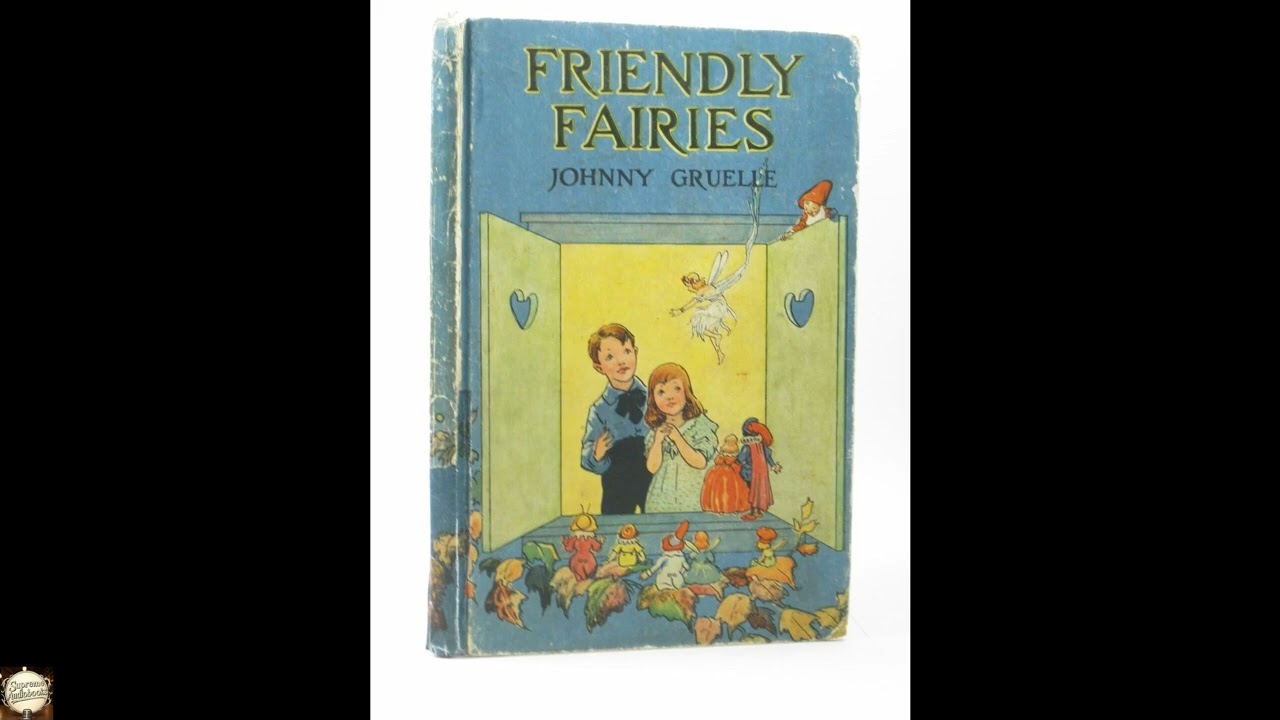
Step into a realm where moonbeams become paths and dewdrop jewels adorn tiny crowns, a place where the smallest whisper of wind carries secrets from the forest floor. Johnny Gruelle’s Friendly Fairies, though nearly a century old, remains a cherished portal to enchantment, inviting listeners to rediscover the profound joy and simple wisdom hidden within the natural world. This collection offers a delightful escape into innocence, reminding us that wonder awaits those with open hearts and imaginative spirits, a vital message in our often-overwhelmed modern lives. Its gentle tales resonate with anyone yearning for a return to simpler delights and the quiet magic that persists in the overlooked corners of existence. Friendly Fairies whisks the listener away to a bucolic landscape teeming with diminutive, winged folk whose lives unfold amidst flowers, streams, and woodland creatures. The setting is less a singular location and more a composite of idealized nature – sun-dappled meadows, mossy glades, and shimmering ponds where water sprites and flower fairies make their homes. We meet a delightful array of characters: the mischievous but kind Peaseblossom, who often finds himself in gentle scrapes; the industrious Queen Titania, presiding over her realm with a benevolent hand; and a host of nameless, cheerful sprites whose days are filled with tending to nature’s needs, dancing on spiderwebs, and sharing secrets with butterflies. The “plot” of Friendly Fairies is not a singular, overarching narrative, but rather a series of interconnected vignettes and charming poems that paint a vivid picture of fairy life. Each episode presents a miniature world, where the fairies encounter minor challenges—perhaps a lost acorn, a wilting blossom, or a human child who stumbles into their hidden domain. Their days are marked by the changing seasons, the ebb and flow of nature, and the cheerful camaraderie they share. While no grand conflict drives the collection, the underlying tension comes from the delicate balance of their world and the need to maintain harmony and kindness, often through cleverness and a bit of magic. The arc of the stories is one of continuous discovery and appreciation for the small miracles of daily life, concluding each time with a warm sense of resolution and the promise of more wonder just around the corner. The creator of this enduring charm was Johnny Gruelle, a name synonymous with beloved characters in American children's literature. Born in Arcola, Illinois, in 1880, Gruelle hailed from an artistic family; his father, Richard Gruelle, was a noted Impressionist painter. Johnny inherited this creative inclination, beginning his career as a newspaper cartoonist in the early 1900s, where his whimsical drawings and inventive storytelling quickly gained popularity. He moved to New York City, contributing to various publications like The New York Herald and Woman's World, becoming a prominent figure in the syndicated comic strip world. Gruelle’s most significant legacy, however, emerged from a deeply personal story. In 1915, while exploring his grandmother's attic, his young daughter Marcella discovered a tattered rag doll. Gruelle repaired the doll, and it became his inspiration for Raggedy Ann, a character he would soon introduce to the world. Tragically, Marcella passed away in 1918, a loss that profoundly affected Gruelle and solidified his dedication to creating wholesome, imaginative stories that celebrated innocence and kindness. Friendly Fairies, published in 1919, arrived at the same time as the first Raggedy Ann book, reflecting Gruelle’s distinctive brand of gentle fantasy and his unique place within the early 20th-century children's literary scene, often blending simple morality with playful escapism. One of the central themes permeating Friendly Fairies is the power of imagination. Gruelle consistently invites his audience to perceive the extraordinary in the ordinary. For instance, a simple dewdrop is not merely water, but a "crystal globe" fairies use as a looking glass, reflecting their tiny world in brilliant colors. A spiderweb, often seen as a nuisance, transforms into a delicate hammock or a shimmering stage for fairy dances. This constant reframing encourages listeners to engage their own imaginative capacities, seeing the latent magic in their surroundings, whether a gnarled tree root or a flickering firefly. Another significant theme is the inherent goodness and kindness that guides the fairy folk. The characters consistently exhibit empathy and a willingness to help one another, as well as the creatures of the forest. When a baby bird falls from its nest, a group of sprites might band together to safely return it, demonstrating a quiet, communal benevolence without fanfare. This portrays a world where problems are solved through cooperation and a gentle spirit, offering a comforting message about the positive outcomes of altruism and mutual respect. The early 20th century, the period when Friendly Fairies first appeared, was a time of significant change and also a longing for continuity in children's literature. The industrialized world was rapidly expanding, and World War I had just concluded, leaving a sense of upheaval and a desire for stories that offered comfort and a return to simpler values. Authors like Gruelle provided an antidote to the harsh realities of the era, crafting narratives that emphasized wonder, nature, and moral purity. This era saw the continued popularity of fantasy and fairy tales, building on the foundations laid by earlier British authors, but often with a distinctly American flavor, focusing on wholesome characters and domestic enchantment rather than grand, epic adventures. Gruelle's particular contribution was his ability to create fantastical worlds that felt both magical and approachable, rooted in the familiar imagery of American woodlands and cottage gardens. Listening to Friendly Fairies as an audiobook offers a particularly immersive experience, perfectly suited to Gruelle’s narrative style. The run length, several hours in total, allows for extended periods of gentle escape, whether for a quiet afternoon of focused listening or as a soothing backdrop to daily tasks. A skilled narrator brings Gruelle’s whimsical dialogue and descriptive passages to life, conveying the delicate voices of the fairies and the gentle sounds of their natural habitat with a warmth that draws you into their world. Expect a comfortable, unhurried pacing, allowing ample time for the listener to absorb each miniature tale and conjure mental images of dancing sprites and moonlit glades. The nuanced narration, sensitive to the subtle humor and underlying sweetness of the text, elevates the listening experience from mere storytelling to a full-sensory immersion into a realm of pure, unadulterated enchantment.
Enjoyed Friendly Fairies? A few ways to support us
Audible & Amazon links are affiliate; we may earn a small commission at no extra cost.
About this production
Human narration by a volunteer reader from LibriVox.org, the public-domain audiobook project. LibriVox volunteers record literary works whose copyright has expired in the United States, releasing the resulting recordings into the public domain.
Friendly Fairies by Johnny Gruelle. The underlying text is in the U.S. public domain. We do not republish any modern copyrighted edition, translation, or commentary.
The 4K cinematic visuals accompanying this audiobook are generated by an AI image model from prompts derived from the source text. No copyrighted photos, paintings, or stock footage are used. AI generation is disclosed on every video on our YouTube channel as required by YouTube's altered/synthetic content policy.
English subtitles are transcribed from the LibriVox recording with OpenAI Whisper. Translations into the 11 other supported languages are produced by Meta's NLLB-200 neural translation model. No human translator's copyrighted translation is used.
Questions about sourcing or rights? See our DMCA & Sourcing policy or contact us.
Enjoyed this audiobook?
If you'd like to own a copy of Friendly Fairies or hear a professionally produced edition, the links below help support free audiobook production at no extra cost to you.
As an Amazon Associate we earn from qualifying purchases. Audible / print links are affiliate.