Laches
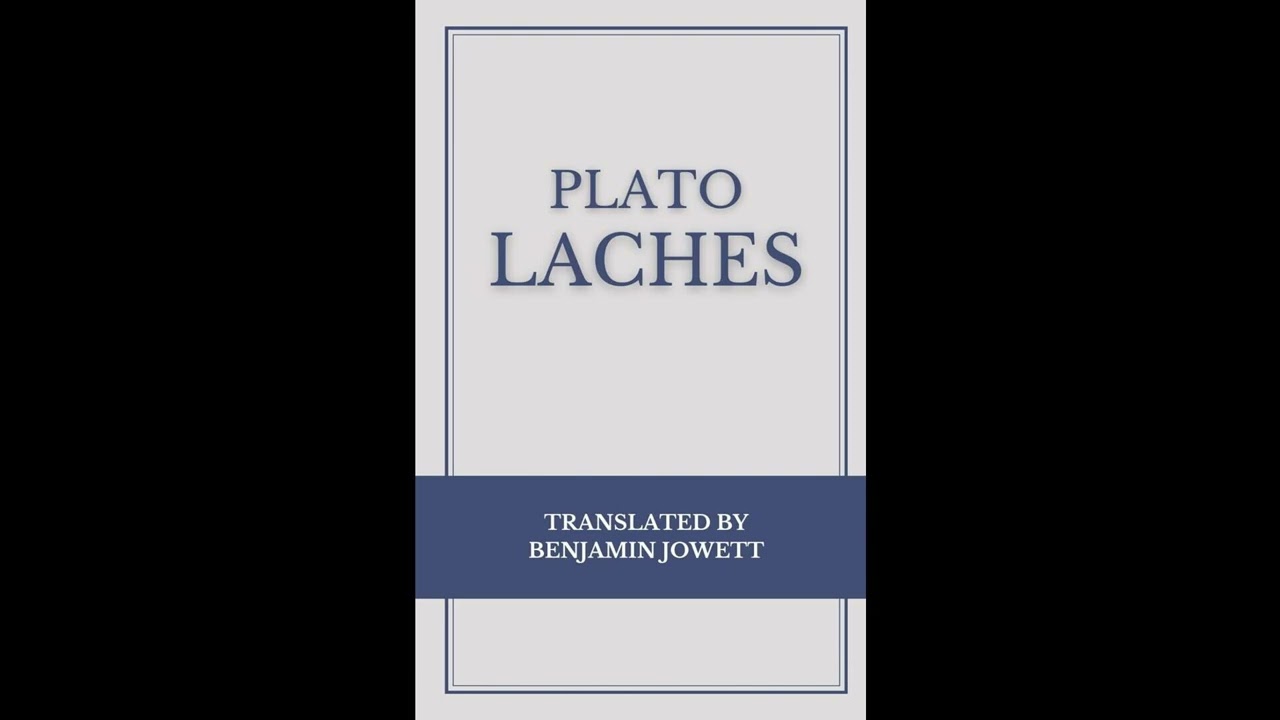
What does it truly mean to be courageous? Not just to act bravely in the heat of a moment, but to possess a deep, abiding understanding of courage itself—to grasp its essence, its origins, and its place among the virtues that define a good life. This ancient text, a lively exchange of ideas set against the backdrop of bustling Athens, grapples with precisely that profound question. It invites listeners into an intimate philosophical debate that remains as vital today as it was more than two millennia ago, challenging us to consider whether virtue can be taught, how we recognize it, and what happens when our most admired leaders are asked to articulate the very qualities for which they are renowned. The setting is a wrestling school in Athens, a place of physical and intellectual training. Two respected Athenian citizens, Lysimachus and Melesias, are concerned about the education of their sons, Aristides and Thucydides. They seek counsel from two prominent generals, Laches and Nicias, on whether their boys should undertake a relatively new form of martial training: fighting in heavy armor. The generals are men of considerable experience and reputation, particularly Laches, known for his directness and valor on the battlefield. As the discussion unfolds, Socrates, present at the request of Lysimachus, gently guides the conversation away from the practicalities of weapon drills and towards a more fundamental inquiry: what is courage itself? Socrates proposes that before they can decide if armor-fighting promotes courage, they must first understand what courage is. This shift in focus becomes the core of the dialogue. Laches, a man of action, readily offers a definition: courage is standing firm in battle, refusing to flee. Socrates, with his characteristic calm and probing questions, systematically shows how this definition is too narrow, failing to account for courage in other situations or even different kinds of battlefield bravery. Nicias, a more intellectual and cautious general, then steps forward with his own definition, drawing on the wisdom of the Sophists: courage is a kind of knowledge—specifically, the knowledge of what is truly to be feared and what is truly to be hoped for. This leads to a deeper, more nuanced discussion about the relationship between courage, wisdom, and other virtues. The participants struggle, proposing and refuting ideas, as the true nature of courage proves elusive. Plato, born around 428 or 427 BCE in Athens, stands as one of the most influential figures in Western thought. His lineage was distinguished, connected to some of Athens' most prominent families. Early in his life, he witnessed the tumultuous Peloponnesian War, a conflict that deeply shaped Athenian society and politics. His early ambition to pursue a political career was altered dramatically by his association with Socrates, whom he regarded as the most just and wise man of his time. Socrates’ trial and execution in 399 BCE profoundly affected Plato, leading him to abandon politics and dedicate his life to philosophy. After Socrates' death, Plato spent years traveling, possibly visiting Egypt, Italy, and Sicily, before returning to Athens around 387 BCE. There, he founded the Academy, often considered the first institution of higher learning in the Western world, where he taught mathematics, astronomy, and philosophy for the rest of his life. Plato's writings, almost all of which take the form of dialogues with Socrates as a central character, preserve and interpret his teacher's legacy while developing his own unique philosophical system, including the renowned theory of Forms. Other notable works include The Republic, which sketches an ideal state; Apology, a defense of Socrates' life; and Symposium, a celebration of love. He passed away around 348 or 347 BCE, leaving behind an unparalleled body of work that continues to shape philosophical inquiry. The central theme running through the text is the very nature of andreia, or courage. The dialogue meticulously tests various definitions. Laches, a veteran warrior, first defines courage as steadfastness in battle—the refusal to retreat. Socrates challenges this by pointing out that sometimes intelligent retreat or even aggressive pursuit can also be courageous, thus demonstrating that courage is not a single, unvarying action. Later, Nicias offers a more sophisticated definition, suggesting courage is the "knowledge of what is to be feared and hoped for." Socrates then questions whether this knowledge, if it truly encompasses all good and evil, is not simply wisdom itself, thus subsuming courage into a broader virtue and leaving its specific character undefined. Another powerful theme is the Socratic method itself—the relentless process of questioning, refuting, and leading interlocutors to confront their own ignorance. Socrates does not lecture; instead, he asks precise questions that expose inconsistencies in accepted beliefs. For instance, when Laches tries to give concrete examples of courage, Socrates gently pushes him to move beyond specific instances towards a universal definition, the essence of courage that applies to all situations. This method, often called elenchus, highlights the idea that true wisdom begins with recognizing what one does not know, making it a powerful model for critical thinking and philosophical inquiry. The text also underscores the limits of practical expertise, as two respected generals struggle to articulate the very virtue they embody. This philosophical debate emerges from a particular moment in Athenian history. The text was likely written in the period following the devastating Peloponnesian War, a time of significant political and social upheaval for Athens. The city-state had suffered a crushing defeat, leading to a profound re-evaluation of its values, its leadership, and the very qualities that defined its citizens. The reputation of figures like Laches and Nicias would have been fresh in the minds of Plato's contemporaries, making their participation in a discussion about courage especially relevant. Furthermore, the rise of the Sophists, who taught rhetoric and practical wisdom, created an intellectual atmosphere where the precise definition of concepts and the art of persuasion were paramount, often leading to a questioning of traditional virtues. Plato, through Socrates, seeks to move beyond mere rhetorical skill to a deeper, more rigorous understanding of moral principles. Listening to this text as an audiobook provides an unparalleled experience, allowing the listener to truly inhabit the conversational atmosphere of ancient Athens. The dialogue format, with its distinct voices and evolving arguments, is perfectly suited for audio. A skilled narrator, perhaps employing subtle shifts in tone for Socrates' patient probing, Laches' more gruff assertions, and Nicias' intellectual musings, brings the characters to life, making the abstract philosophical points immediate and personal. The run length of several hours allows for a sustained period of focused engagement, perfect for thoughtful listening during a commute or a quiet evening. Listeners can pay close attention to the pacing, the careful unfolding of arguments, and the way Socrates subtly steers the conversation, making this a dynamic and immersive encounter with foundational philosophical thought.
Enjoyed Laches? A few ways to support us
Audible & Amazon links are affiliate; we may earn a small commission at no extra cost.
About this production
Human narration by a volunteer reader from LibriVox.org, the public-domain audiobook project. LibriVox volunteers record literary works whose copyright has expired in the United States, releasing the resulting recordings into the public domain.
Laches by Plato. The underlying text is in the U.S. public domain. We do not republish any modern copyrighted edition, translation, or commentary.
The 4K cinematic visuals accompanying this audiobook are generated by an AI image model from prompts derived from the source text. No copyrighted photos, paintings, or stock footage are used. AI generation is disclosed on every video on our YouTube channel as required by YouTube's altered/synthetic content policy.
English subtitles are transcribed from the LibriVox recording with OpenAI Whisper. Translations into the 11 other supported languages are produced by Meta's NLLB-200 neural translation model. No human translator's copyrighted translation is used.
Questions about sourcing or rights? See our DMCA & Sourcing policy or contact us.
Enjoyed this audiobook?
If you'd like to own a copy of Laches or hear a professionally produced edition, the links below help support free audiobook production at no extra cost to you.
As an Amazon Associate we earn from qualifying purchases. Audible / print links are affiliate.