Ion
Plato's Ion brings listeners directly into the lively intellectual arena of ancient Athens, staging a sharp, focused conversation between the ever-inquisitive Socrates and Ion, a celebrated rhapsode. This short, potent dialogue, often overlooked in favor of Plato’s longer works, nevertheless presents a foundational questioning that resonates with startling clarity in our own time. It asks, with a disarming directness, about the true nature of artistic inspiration, the source of creative genius, and whether the ability to perform or interpret great art stems from genuine knowledge or something far more mysterious. In an era where fame often eclipses substance, and the pronouncements of artists are given significant weight, Ion forces us to reconsider the basis of their authority and the unique power they wield over an audience. This work isn’t merely a historical curiosity; it’s an urgent examination of the very roots of artistic expression and the sometimes-fragile bridge between creation and understanding. The scene unfolds in a casual, public setting, typical of Socratic dialogues, likely a portico or a wrestling school in Athens. Ion, fresh from a triumphant performance at the festival of Asclepius in Epidaurus, where he won first prize for his recitation of Homer, encounters Socrates. Ion, brimming with pride, declares himself the finest rhapsode of all time, unrivaled in his ability to interpret the works of Homer. His self-assured confidence provides the perfect foil for Socrates’ characteristic humility and relentless questioning. Socrates, ever the midwife of ideas, expresses admiration for Ion’s craft but gently begins to prod at the foundations of Ion’s perceived expertise. The central dynamic quickly becomes clear: Socrates seeks to understand what exactly constitutes Ion’s skill. Is it a form of knowledge, a techne—a demonstrable craft or art? Or is it something else entirely? Socrates observes that while Ion excels at interpreting Homer, he seems unable to speak with equal authority about other poets like Hesiod or Archilochus. This leads to a series of inquiries, meticulously unwrapping Ion’s claims. Socrates points out that if Ion truly possessed a comprehensive understanding of poetry, he would be able to judge the merits of all poets, not just Homer. Through a series of increasingly pointed questions, Socrates endeavors to show that Ion’s special gift, while powerful and moving, does not spring from a rational grasp of his subject matter. He argues that if a general speaks about war or a doctor about medicine, their authority comes from specific, definable knowledge. But what of the rhapsode? What specific knowledge does Ion possess that enables him to interpret Homer so brilliantly? The dialogue progresses as Socrates systematically challenges Ion to identify the distinct domain of knowledge that makes him an expert, rather than simply an inspired performer. The author of this provocative exchange, Plato, stands as one of the colossal figures in Western thought, whose writings continue to shape philosophical inquiry centuries later. Born into an aristocratic Athenian family around 428 or 427 BCE, Plato's early life was deeply influenced by the political turmoil of his city-state and, most profoundly, by his mentor, Socrates. The trial and subsequent execution of Socrates in 399 BCE left an indelible mark on Plato, prompting him to dedicate his life to philosophical pursuits and the preservation of Socratic thought. He subsequently founded the Academy in Athens, often regarded as the first institution of higher learning in the Western world, where he taught and wrote for decades. Plato’s extensive body of work, almost all of which survives, primarily takes the form of dialogues, with Socrates as the central character in many of them. These include monumental contributions like The Republic, which lays out his vision for an ideal state and introduces the theory of Forms; Phaedo, an examination of the immortality of the soul; and Symposium, a celebration of love and beauty. His literary skill allowed him to transform complex philosophical arguments into engaging dramatic conversations, making his writings both intellectually rigorous and artistically compelling. Plato did not merely record Socrates's teachings; he expanded upon them, developing his own distinctive metaphysical and ethical systems, thereby cementing his place as a foundational figure whose ideas established the very framework for subsequent philosophical discourse. One of the core themes animating Ion is the enduring question of whether artistic creation stems from rational knowledge or from a more enigmatic, possibly divine, inspiration. Socrates proposes an analogy: much like a magnet attracts a chain of iron rings, the divine muse first inspires the poet, who then inspires the rhapsode, who in turn inspires the audience. Ion, when pressed, cannot articulate a systematic, rational basis for his ability to interpret Homer, beyond a feeling of being "possessed" or "out of his mind" during performance. This highlights the tension between techne—a teachable skill or craft—and what the Greeks called enthousiasmos, a state of being filled with divine spirit. The dialogue suggests that the rhapsode’s power, while effective in moving an audience, may not originate from a clear, communicable understanding of truth, but rather from an uncritical, almost trance-like state. This leads directly to another significant theme: the nature and value of art itself. Plato, through Socrates, consistently questions whether poetry truly imparts knowledge or merely imitates reality, potentially misleading those who mistake artistic representation for truth. By challenging Ion's claims of universal expertise regarding Homer, Socrates also underscores the importance of the specialization of knowledge. He points out that if Homer speaks of driving chariots, a charioteer is the true expert; if of strategy, a general; not the rhapsode. Ion's inability to speak with authority on these specific subjects, despite reciting the poetry that describes them, illustrates the distinction between performance and genuine understanding. Furthermore, the entire dialogue is a brilliant demonstration of the Socratic method in action—a persistent, step-by-step cross-examination designed to expose inconsistencies in belief and guide the interlocutor towards a clearer understanding, even if that understanding reveals one's own ignorance. Plato’s Ion emerged from a vibrant intellectual landscape in 4th century BCE Athens, a period marked by both the aftershocks of the devastating Peloponnesian War and an explosion of philosophical and rhetorical discourse. Athens, though diminished politically, remained a cultural powerhouse, where public speaking, dramatic performances, and athletic contests were central to civic life. Rhapsodes like Ion were celebrities, integral to preserving and disseminating the foundational epics of Homer, which served as both historical record and moral compass for Greek society. The Sophists, teachers of rhetoric and persuasion, were also prominent, and their emphasis on winning arguments rather than discovering truth created a backdrop against which Socrates and Plato sought to establish genuine knowledge and ethical inquiry. Plato’s critique of poetry and rhetoric, seen here in Ion and more extensively in The Republic, was part of a larger philosophical project to establish rational foundations for truth and morality, often by challenging the traditional authorities of poets and popular opinion. Listening to Ion as an audiobook offers a singular opportunity to fully appreciate the dramatic and intellectual tension of a Socratic dialogue. The exchange between Socrates and Ion, lasting several hours, unfolds with a natural, conversational rhythm that is perfectly suited to the spoken word. Distinct voices for each character bring the philosophical debate to life, allowing the listener to track the subtle shifts in tone—Socrates’ calm, relentless questioning against Ion’s initial confidence and eventual discomfiture. The pacing allows the listener to absorb each step of the argument, to pause and reflect on the logical progression of Socrates’ cross-examination without the distraction of reading. This format emphasizes the immediate, immersive experience of being present at an ancient Athenian discussion, making the abstract questions of art and knowledge feel intensely personal and remarkably current.
Enjoyed Ion? A few ways to support us
Audible & Amazon links are affiliate; we may earn a small commission at no extra cost.
About this production
Human narration by a volunteer reader from LibriVox.org, the public-domain audiobook project. LibriVox volunteers record literary works whose copyright has expired in the United States, releasing the resulting recordings into the public domain.
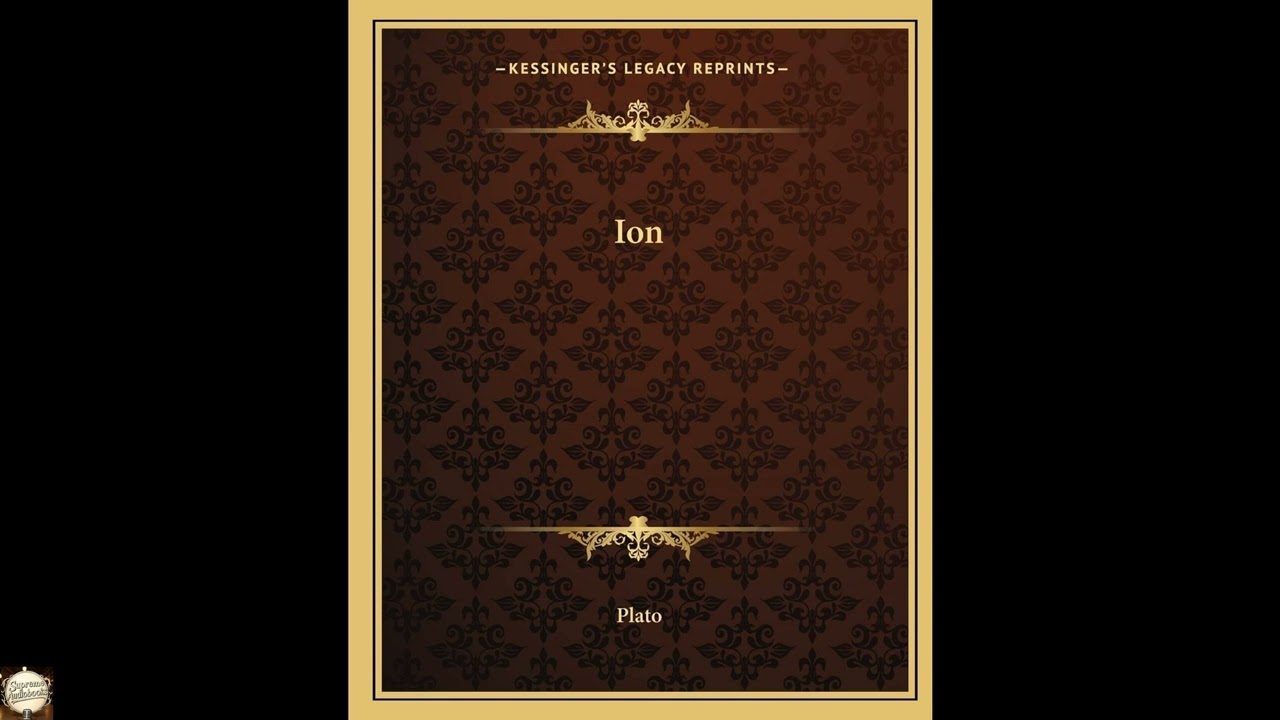
Ion by Plato. The underlying text is in the U.S. public domain. We do not republish any modern copyrighted edition, translation, or commentary.
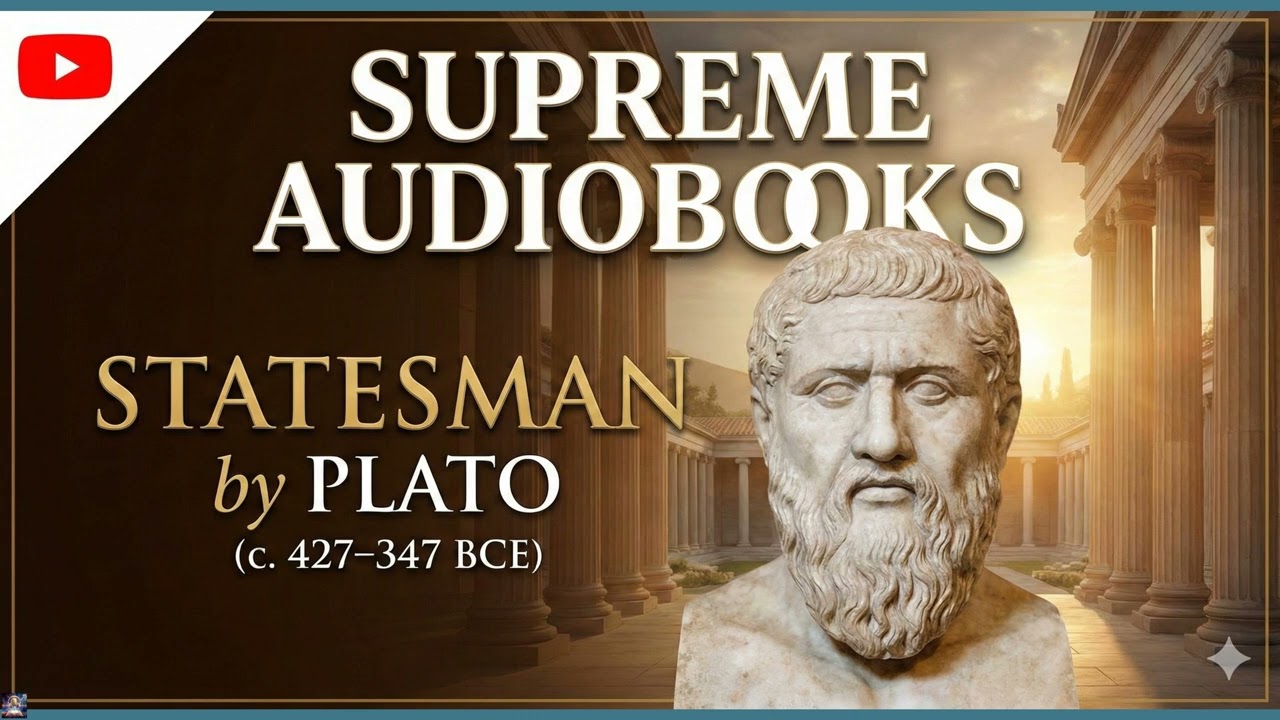
The 4K cinematic visuals accompanying this audiobook are generated by an AI image model from prompts derived from the source text. No copyrighted photos, paintings, or stock footage are used. AI generation is disclosed on every video on our YouTube channel as required by YouTube's altered/synthetic content policy.
English subtitles are transcribed from the LibriVox recording with OpenAI Whisper. Translations into the 11 other supported languages are produced by Meta's NLLB-200 neural translation model. No human translator's copyrighted translation is used.
Questions about sourcing or rights? See our DMCA & Sourcing policy or contact us.
Enjoyed this audiobook?
If you'd like to own a copy of Ion or hear a professionally produced edition, the links below help support free audiobook production at no extra cost to you.
As an Amazon Associate we earn from qualifying purchases. Audible / print links are affiliate.