Charmides
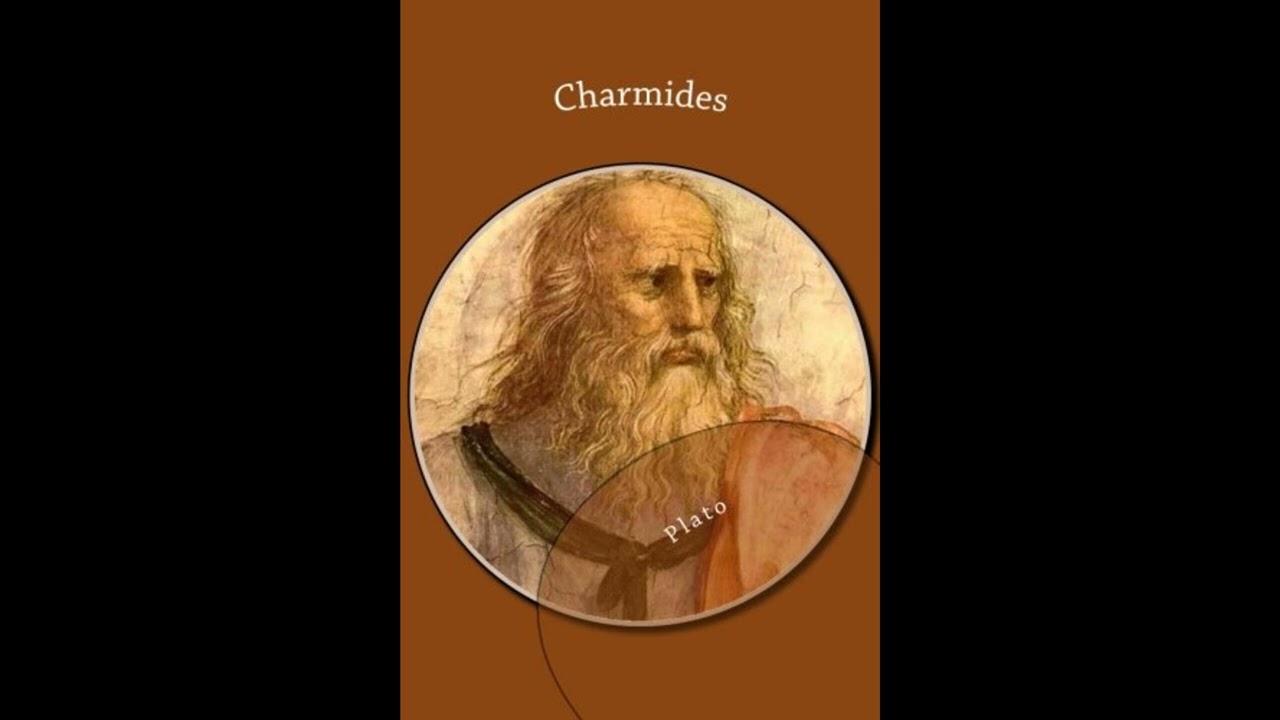
What constitutes a truly good life? How do we understand and practice self-control, particularly in a world often pulling us in myriad directions? These questions, as relevant now as they were millennia ago, sit at the heart of Plato’s Charmides, a foundational Socratic dialogue. This profound work invites listeners into an intimate philosophical discussion, centered on the ancient Greek concept of sophrosyne, often translated as moderation, temperance, or sound-mindedness. Far from a dusty academic text, this conversation offers a direct challenge to our contemporary assumptions about virtue, knowledge, and the very nature of what it means to live thoughtfully. It’s a vital encounter with Western philosophy's origins, compelling us to reconsider the virtues we value and how deeply we truly understand them. The scene opens in the busy palaestra, a wrestling school in ancient Athens, shortly after the Battle of Potidaea. Socrates, returning from the campaign, encounters a group of familiar faces, including the influential Critias and his exceptionally handsome young cousin, Charmides. Word has spread throughout the city of Charmides’ remarkable beauty, both physical and, so it is said, moral. The men present believe Charmides embodies sophrosyne, possessing a rare tranquility and modesty. Socrates, always eager to understand the essence of things, seizes the opportunity. He proposes to Charmides that they investigate together what sophrosyne truly is, assuming that if Charmides possesses it, he must surely know what it is. The conversation begins gently, with Socrates questioning Charmides about his understanding of this celebrated virtue. Charmides offers a series of definitions, drawing on commonly held beliefs and perhaps the influence of his guardian, Critias. He suggests sophrosyne is a kind of quietness, then modesty, then doing one's own business. Each proposition is met with Socrates' patient, yet relentless, cross-examination. Through careful questioning, Socrates demonstrates how these initial definitions cannot fully capture the essence of what they seek to define, revealing inherent contradictions or limitations. As Charmides struggles to articulate a satisfactory answer, Critias, an intellectual and prominent figure, eventually steps in, taking over the role of the respondent and guiding the discussion toward more abstract and sophisticated ideas, including the notion of sophrosyne as a form of self-knowledge or even a "science of science." The dialogue presses forward, examining these concepts with intense rigor, each attempt to grasp the definition slipping away, leaving the participants no closer to a definitive answer. Plato, the author of Charmides, lived from approximately 428/427 to 348/347 BCE, born into a prominent aristocratic family in Athens. His early life was marked by the Peloponnesian War and the political turmoil that gripped his city-state. Most significantly, he became a devoted student of Socrates, whose distinctive philosophical method and moral integrity profoundly influenced him. The unjust trial and execution of his teacher in 399 BCE cemented Plato’s disillusionment with Athenian democracy and spurred his lifelong dedication to philosophy. Following Socrates' death, Plato traveled extensively, visiting places like Megara, Egypt, and Italy, where he encountered various philosophical schools. Upon returning to Athens, Plato founded the Academy around 387 BCE, an institution often considered the first university in the Western world. Here, students engaged in mathematics, astronomy, and, of course, philosophy, carrying forward the Socratic tradition of rigorous inquiry. Plato's surviving works are almost exclusively philosophical dialogues, where Socrates typically appears as the central figure, engaging others in dialectical discussion. Beyond Charmides, his prolific output includes seminal works such as The Republic, which sketches an ideal state and introduces the Theory of Forms; The Symposium, a brilliant exploration of love; The Apology, a defense of Socrates; and Phaedo, which discusses the immortality of the soul. Plato’s intellectual legacy is immense, establishing him as one of the most influential figures in Western thought, shaping ethics, metaphysics, political theory, and epistemology for centuries to come. Charmides enacts several significant themes, central among them the inherent difficulty in defining abstract virtues. Socrates' relentless questioning reveals how easily we might praise a quality like moderation without truly understanding its fundamental nature. For example, Charmides and Critias both struggle to articulate what sophrosyne entails, despite their society's high regard for it and Charmides' reputation for embodying it. Their proposed definitions — quietness, modesty, doing one's own business, self-knowledge — are all systematically dismantled, showing that superficial understanding or conventional wisdom often falls short of genuine insight. The dialogue thus highlights the critical difference between possessing a virtue and understanding it on an intellectual level. Another powerful theme is the practical application and limits of the Socratic method itself. The dialogue is a prime demonstration of elenchus, Socrates' method of cross-examination to expose contradictions in an opponent's argument. He doesn't offer answers but rather leads his interlocutors to discover the flaws in their own thinking. This process can be frustrating, as it frequently ends in aporia, a state of perplexity or impasse, where no clear answer is reached. Charmides exemplifies this, leaving the definition of sophrosyne ultimately unresolved. This lack of resolution is not a failure, but rather an invitation for the listener to continue the intellectual work themselves, underscoring the ongoing nature of philosophical inquiry rather than the attainment of final answers. The character of Critias, who later became a notorious leader of the Thirty Tyrants, also subtly foreshadows the political dangers of men who claim wisdom or virtue but ultimately lack true understanding. Written during Athens’ classical period, Charmides emerges from a vibrant intellectual landscape marked by profound political shifts. The dialogue likely dates from the period following the devastating Peloponnesian War and the brief, brutal reign of the Thirty Tyrants, an oligarchic regime in Athens that included Critias, one of the main interlocutors in this very dialogue. This context is crucial; Plato, having witnessed firsthand the collapse of Athenian democracy and the subsequent tyranny, sought to understand the moral failings that he believed contributed to these catastrophes. His writings, including Charmides, can be seen as a direct response to the ethical relativism of the Sophists, who taught rhetoric and argued that truth was subjective, and a defense of Socrates' unwavering search for objective moral truth. Plato's work, thus, didn't just appear in a vacuum; it was deeply intertwined with the social and political fabric of his time. The philosophical discussions in works like Charmides were not abstract musings disconnected from daily life, but rather urgent investigations into the very foundations of a just society and the virtuous individual. By dissecting concepts like moderation, Plato aimed to provide a stable ethical groundwork against a backdrop of moral uncertainty and political instability. Charmides specifically reflects an early stage of Plato’s thinking, perhaps one of his “Socratic dialogues,” where his teacher’s influence is most pronounced, and the focus remains on ethical definition rather than elaborate metaphysical theories. Listening to Charmides as an audiobook offers a uniquely immediate and engaging way to experience Plato's genius. The Socratic dialogues are, by their very nature, conversations. They are designed to be heard, to unfold in spoken word, simulating the live intellectual sparring of ancient Athens. A skilled narrator brings the distinct personalities to life—Socrates’ calm but probing voice, Charmides’ youthful hesitation, and Critias’ more assertive and intellectually ambitious tone. The run length, spanning several hours, allows for a sustained immersion into the philosophical problem, mirroring the gradual, persistent unfolding of Socrates' inquiry. You can perceive the subtle shifts in argument, the moments of pause, and the growing tension as each definition is scrutinize. This format transforms what could be a challenging text into an accessible and dynamic encounter, inviting you to become an eavesdropper on one of history's most compelling intellectual exchanges.
Enjoyed Charmides? A few ways to support us
Audible & Amazon links are affiliate; we may earn a small commission at no extra cost.
About this production
Human narration by a volunteer reader from LibriVox.org, the public-domain audiobook project. LibriVox volunteers record literary works whose copyright has expired in the United States, releasing the resulting recordings into the public domain.
Charmides by Plato. The underlying text is in the U.S. public domain. We do not republish any modern copyrighted edition, translation, or commentary.
The 4K cinematic visuals accompanying this audiobook are generated by an AI image model from prompts derived from the source text. No copyrighted photos, paintings, or stock footage are used. AI generation is disclosed on every video on our YouTube channel as required by YouTube's altered/synthetic content policy.
English subtitles are transcribed from the LibriVox recording with OpenAI Whisper. Translations into the 11 other supported languages are produced by Meta's NLLB-200 neural translation model. No human translator's copyrighted translation is used.
Questions about sourcing or rights? See our DMCA & Sourcing policy or contact us.
Enjoyed this audiobook?
If you'd like to own a copy of Charmides or hear a professionally produced edition, the links below help support free audiobook production at no extra cost to you.
As an Amazon Associate we earn from qualifying purchases. Audible / print links are affiliate.