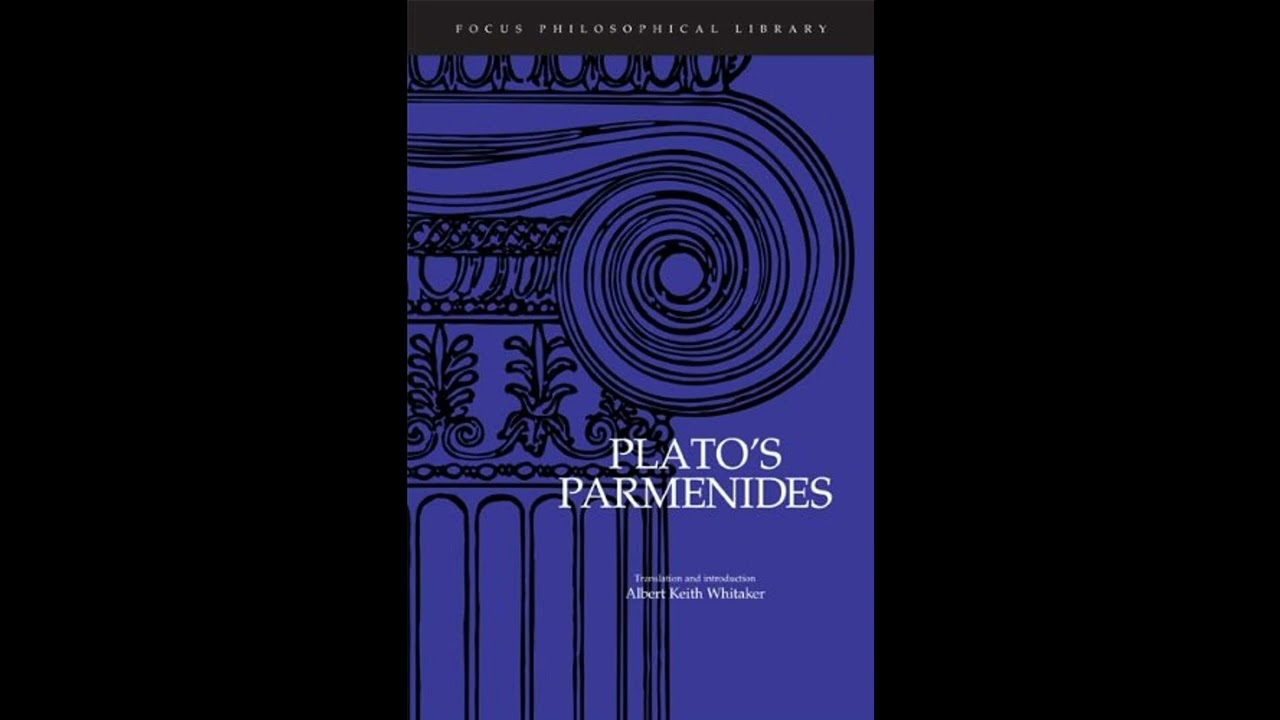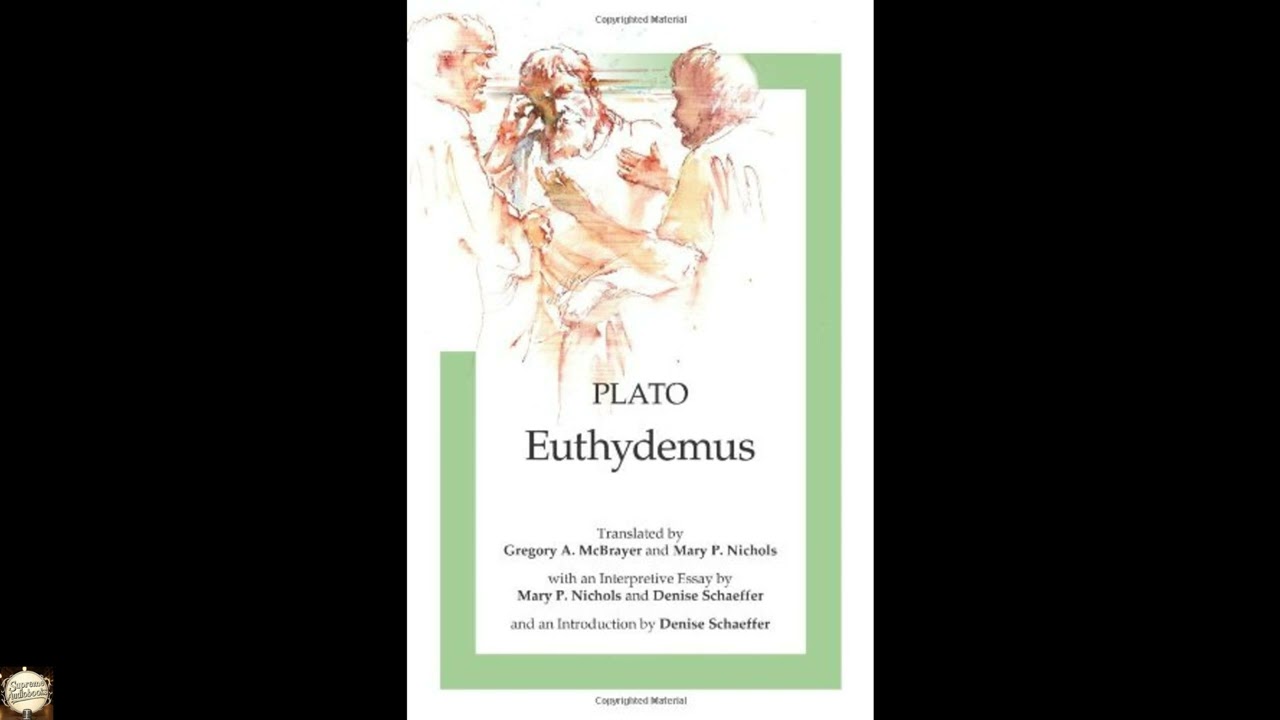
Euthydemus (Focus Philosophical Library)
Step into ancient Athens, a city buzzing with intellectual ferment and philosophical debate, where the very foundations of truth and knowledge were questioned in public squares and wrestling schools. Plato’s Euthydemus drops the listener right into this vibrant intellectual arena, presenting not just a philosophical treatise but a lively, often hilarious, dramatic performance. At its heart, this is a profound and surprisingly relevant examination of what it truly means to be wise, to learn, and to communicate effectively. In an age saturated with information, where persuasive rhetoric can often overshadow genuine understanding, this classic dialogue offers a compelling reminder to scrutinize arguments, to distinguish substance from mere show, and to pursue wisdom with earnest inquiry rather than empty trickery. It’s a foundational text that challenges us to consider how we engage with ideas and what kind of knowledge we truly value. The narrative unfolds through the eyes of Crito, an old friend of Socrates, to whom Socrates recounts a most unusual encounter. The setting is a gymnasium, a place of both physical and intellectual training, where Socrates chances upon two brothers, Euthydemus and Dionysodorus. These two men have recently arrived in Athens, boasting an extraordinary new skill: they claim to be able to make anyone wise and virtuous in a remarkably short time. Socrates, ever the curious philosopher and seeker of truth, is intrigued. He presents a young, promising aristocrat named Cleinias, hoping the brothers will demonstrate their supposed expertise by instructing the boy. Also present is Ctesippus, a spirited companion of Cleinias, who becomes a vocal participant in the ensuing exchanges. What begins as an apparent offer of philosophical education quickly devolves into a masterful display of eristic—the art of winning arguments by any means necessary, regardless of truth or consistency. Euthydemus and Dionysodorus use every logical fallacy, semantic trap, and verbal sleight-of-hand imaginable. They twist words, create paradoxes, and force their interlocutors into absurd contradictions, all while maintaining a facade of superior intellect. Socrates attempts to guide Cleinias towards genuine philosophical questions about the acquisition of wisdom and the nature of happiness, but the sophist brothers continually interrupt, diverting the discussion into increasingly convoluted and nonsensical arguments. The brothers’ tactics are a spectacle of verbal gymnastics, designed not to enlighten but to confound, showcasing a cynical view of discourse where victory in debate is the sole objective. Plato, born around 428/427 BCE in Athens, was a pivotal figure in the development of Western thought. Descended from an aristocratic Athenian family, he initially intended a career in politics, but the tumultuous events of his time—particularly the Peloponnesian War and the eventual execution of his beloved mentor, Socrates—turned his focus decisively towards philosophy. He spent several years traveling after Socrates' death in 399 BCE, visiting places like Megara, Cyrene, Italy, and Sicily, where he encountered various philosophical schools and political systems. Upon returning to Athens, around 387 BCE, he founded the Academy, an institution often considered the first university in the Western world, which served as a center for philosophical and scientific inquiry for over 900 years. Plato’s extensive body of work, primarily in the form of dialogues, spans an enormous range of philosophical topics. His Republic stands as a monumental work on justice, politics, and the ideal state, while the Symposium offers profound insights into love and beauty. In the Apology, Crito, and Phaedo, he immortalized the final days and philosophical courage of Socrates, shaping the enduring image of the philosopher. His theories, particularly the Theory of Forms—which posits that non-physical forms or ideas represent the most accurate reality—have profoundly influenced metaphysics, ethics, political theory, and epistemology for millennia, cementing his place as one of the most significant thinkers in history. The Euthydemus brilliantly foregrounds the theme of genuine wisdom versus mere sophistry. The sophist brothers exemplify the latter, employing clever but ultimately empty verbal tricks to "prove" contradictory points—for instance, arguing that no one can speak falsely, or that everyone knows everything. Socrates, by contrast, seeks to guide Cleinias towards an understanding of true good and the knowledge necessary to achieve happiness, demonstrating the profound difference between skill in argumentation and actual philosophical insight. This contrast reveals the critical importance of distinguishing between rhetoric designed to win and dialogue aimed at discovering truth. Another central theme is the true purpose of education. The sophists present their "teaching" as a shortcut to virtue, a superficial attainment of skill without true understanding. Socrates, however, advocates for a painstaking, often uncomfortable process of self-examination and critical inquiry, where the student grapples with fundamental questions rather than simply memorizing clever arguments. The dialogue also serves as a comedic, yet incisive, commentary on the limits and potential misuse of language. The sophists' constant manipulation of grammar, ambiguity, and wordplay underscores how language, when divorced from a commitment to truth, can become a tool for deception rather than communication. It highlights the power of carefully chosen words to either illuminate or obscure understanding, a lesson as pertinent now as it was in ancient Greece. This dialogue emerged from a specific moment in Athenian history, during a period of intense intellectual and social change following the devastating Peloponnesian War. Athens had lost much of its political power, yet it remained a hub of cultural and philosophical innovation. The sophists were a prominent intellectual force, traveling teachers who offered instruction in rhetoric, debate, and various practical skills for a fee. They filled a need for public speaking and persuasive argumentation in a democratic society, and their influence was significant. Plato, and Socrates before him, often critiqued the sophists for their relativism, their focus on success over truth, and their practice of charging for wisdom. The Euthydemus can be seen as Plato's direct, humorous, and pointed critique of the sophist movement, showcasing their methods in an exaggerated, almost farcical manner to expose their philosophical weaknesses and ethical shortcomings. Listening to Euthydemus as an audiobook offers a unique and particularly fitting way to experience this dialogue. The entire work is built on verbal sparring, rapid-fire questions and answers, and the subtle nuances of spoken irony and wit. A skilled narrator, employing distinct voices for Socrates, Crito, the pompous Euthydemus and Dionysodorus, and the earnest young Cleinias, can bring the theatricality and humor of the exchange to life. The run length of several hours allows for focused immersion in the back-and-forth, making it ideal for attentive listening that truly captures the pacing of the philosophical arguments. Pay close attention to the shifts in tone: Socrates’ patient inquiries, the sophists’ increasingly absurd pronouncements, and the occasional interjections from Ctesippus. The audio format enhances the dramatic atmosphere, making the listener a direct participant in this ancient, yet eternally relevant, philosophical contest.
Enjoyed Euthydemus (Focus Philosophical Library)? A few ways to support us
Audible & Amazon links are affiliate; we may earn a small commission at no extra cost.
About this production
Human narration by a volunteer reader from LibriVox.org, the public-domain audiobook project. LibriVox volunteers record literary works whose copyright has expired in the United States, releasing the resulting recordings into the public domain.
Euthydemus (Focus Philosophical Library) by Plato. The underlying text is in the U.S. public domain. We do not republish any modern copyrighted edition, translation, or commentary.
The 4K cinematic visuals accompanying this audiobook are generated by an AI image model from prompts derived from the source text. No copyrighted photos, paintings, or stock footage are used. AI generation is disclosed on every video on our YouTube channel as required by YouTube's altered/synthetic content policy.
English subtitles are transcribed from the LibriVox recording with OpenAI Whisper. Translations into the 11 other supported languages are produced by Meta's NLLB-200 neural translation model. No human translator's copyrighted translation is used.
Questions about sourcing or rights? See our DMCA & Sourcing policy or contact us.
Enjoyed this audiobook?
If you'd like to own a copy of Euthydemus (Focus Philosophical Library) or hear a professionally produced edition, the links below help support free audiobook production at no extra cost to you.
As an Amazon Associate we earn from qualifying purchases. Audible / print links are affiliate.