Meno
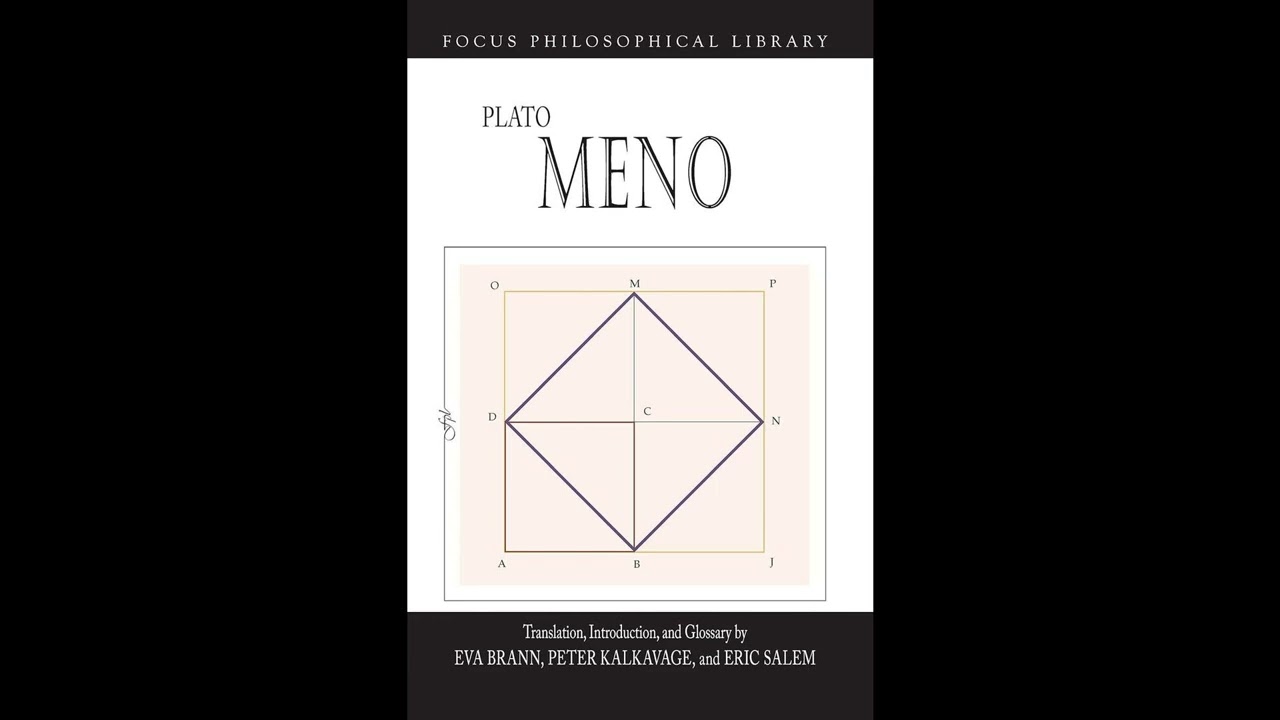
Can virtue be taught? Is all learning merely a form of remembering what we already know? These profound questions, which continue to challenge philosophers and educators alike, sit at the very heart of Plato’s Meno. This enduring dialogue, set in ancient Athens, invites listeners into a live intellectual exchange, a vibrant debate that grapples with the fundamental nature of goodness and the possibility of imparting it. Far from being a dry academic exercise, Meno unfolds as a dramatic encounter between minds, a searching investigation into how we acquire knowledge and what it truly means to be a good person, making it as relevant to modern ethical dilemmas and pedagogical theories as it was to the Greeks over two millennia ago. The action of Meno begins abruptly, with a direct question from Meno, a wealthy young Thessalian aristocrat, to Socrates, the renowned Athenian philosopher: "Can you tell me, Socrates, whether virtue is teachable? Or is it not teachable but rather practiced? Or is it neither of these, but rather acquired by nature or in some other way?" This immediate challenge sets the stage for a wide-ranging discussion. Socrates, true to form, insists that one cannot discuss whether virtue can be taught until one first understands what virtue itself is. He presses Meno for a definition, leading to a series of attempts and subsequent refutations. Meno offers several definitions – virtue as the ability to govern people, virtue as desiring good things and being able to acquire them – each of which Socrates expertly dismantles through careful logical questioning, exposing inconsistencies and limitations. Meno, growing increasingly frustrated by Socrates' relentless questioning, famously compares him to a torpedo fish (a stingray) that numbs anyone who comes near it, leaving him in a state of perplexity, or "aporia." This moment of intellectual paralysis is crucial, as Socrates suggests it is a necessary first step toward true understanding. To illustrate a crucial point about the nature of knowledge, Socrates then calls upon one of Meno’s uneducated slave boys. Through a series of carefully posed geometric questions, Socrates guides the boy to deduce complex mathematical truths he had never been explicitly taught. This demonstration serves as a powerful, concrete example for Socrates' radical idea that learning is not about being filled with new information, but rather about recollecting innate knowledge, drawing out truths that the soul already possesses from a previous existence. The dialogue continues to probe whether virtue might be a form of knowledge, a divine gift, or something else entirely, bringing in a brief, skeptical interjection from Anytus, a prominent Athenian citizen who will later play a role in Socrates' own trial. Plato, the author of Meno, was born into an aristocratic Athenian family around 428 or 427 BCE. His early life was shaped by the tumultuous political climate of Athens during and after the Peloponnesian War, a conflict that ultimately saw the defeat of his city-state. Originally named Aristocles, he was a student and devoted follower of Socrates, whose execution in 399 BCE for impiety and corrupting the youth had a profound impact on Plato, solidifying his commitment to philosophy and his disillusionment with Athenian democracy. This pivotal event compelled Plato to write extensively, preserving Socrates' methods and developing his own philosophical systems. Following Socrates' death, Plato traveled widely, reputedly visiting places like Egypt, Italy, and Sicily, where he engaged with various intellectual traditions, including Pythagoreanism. Upon returning to Athens around 387 BCE, he founded the Academy, one of the earliest institutions of higher learning in the Western world, which operated for nearly a millennium. It was at the Academy that Plato taught and wrote, attracting students who would go on to shape philosophical thought for centuries, most notably Aristotle. His extensive body of work, almost all of it in the form of dialogues featuring Socrates as the main speaker, includes influential texts such as The Republic, which outlines his vision for an ideal state; Phaedo, concerning the immortality of the soul; and Symposium, a celebration of love and beauty. Plato’s influence on Western philosophy, political theory, ethics, metaphysics, and epistemology is immense and foundational. Meno enacts several crucial philosophical themes. The most apparent is the Nature of Virtue. Meno initially believes he knows what virtue is, offering definitions that are either too specific (virtue for a man, virtue for a woman) or too broad (the desire for good things). Socrates, by showing that Meno cannot provide a consistent definition, demonstrates the necessity of clear, foundational understanding before practical application. Meno’s frustration highlights the common human tendency to assume knowledge without truly possessing it, forcing a confrontation with one’s own ignorance. Another central theme is the Theory of Recollection, or Anamnesis. The famous scene with Meno’s slave boy provides the primary example. Socrates guides the boy to solve a complex geometric problem, not by giving him answers, but by asking leading questions that help him "remember" mathematical principles. This episode suggests that certain fundamental truths are not learned from scratch but are somehow inherent within us, awaiting the right stimulus to be drawn out. This idea deeply challenged contemporary views on education and knowledge acquisition, proposing a revolutionary view of the human mind as a repository of ancient wisdom. The historical context surrounding Meno is crucial for understanding its emergence. Plato wrote this dialogue in the aftermath of the Peloponnesian War, a period of immense political instability and moral questioning in Athens. The city had witnessed its own decline and the rise of various intellectual movements, including the Sophists, who were professional teachers of rhetoric and persuasion, often charging fees for their services. Socrates frequently challenged the Sophists' claims to wisdom, arguing that they merely taught how to argue effectively rather than true understanding. Meno can be seen as Plato's defense of the Socratic method and a critique of the Sophistic approach to education. The dialogue also reflects anxieties about leadership and moral education in a recovering Athenian society. Socrates’ execution less than two decades before Plato wrote Meno cast a long shadow, highlighting the dangers of free inquiry in a society that feared intellectual disruption. By framing the discussion around whether virtue can be taught, Plato addressed a pressing societal concern: how to cultivate good citizens and leaders in a city that had suffered from moral decay and political missteps. The work emerged from a deeply felt need to re-establish ethical foundations and to articulate a more rigorous path to wisdom than that offered by the prevailing intellectual currents. Listening to Meno as an audiobook offers a unique and particularly fitting experience, especially given its original form as a spoken dialogue. The length of several hours allows for a measured engagement with the text, ideal for focused listening during a commute or dedicated quiet time. A skilled narrator can differentiate the voices of Socrates, Meno, and Anytus, bringing their distinct personalities and rhetorical styles to life: Socrates’ characteristic calm and relentless probing, Meno’s initial confidence that gradually gives way to exasperated confusion, and Anytus’s brief, sharp cynicism. The conversational pacing, designed to mimic a real-time exchange, shines through in audio. Listeners can fully immerse themselves in the back-and-forth reasoning, the building of arguments, and the dramatic moments of revelation and frustration, creating an atmosphere that is both intellectually stimulating and deeply human. It transforms a classical text into an immediate, unfolding drama of ideas.
Enjoyed Meno? A few ways to support us
Audible & Amazon links are affiliate; we may earn a small commission at no extra cost.
About this production
Human narration by a volunteer reader from LibriVox.org, the public-domain audiobook project. LibriVox volunteers record literary works whose copyright has expired in the United States, releasing the resulting recordings into the public domain.
Meno by Plato. The underlying text is in the U.S. public domain. We do not republish any modern copyrighted edition, translation, or commentary.
The 4K cinematic visuals accompanying this audiobook are generated by an AI image model from prompts derived from the source text. No copyrighted photos, paintings, or stock footage are used. AI generation is disclosed on every video on our YouTube channel as required by YouTube's altered/synthetic content policy.
English subtitles are transcribed from the LibriVox recording with OpenAI Whisper. Translations into the 11 other supported languages are produced by Meta's NLLB-200 neural translation model. No human translator's copyrighted translation is used.
Questions about sourcing or rights? See our DMCA & Sourcing policy or contact us.
Enjoyed this audiobook?
If you'd like to own a copy of Meno or hear a professionally produced edition, the links below help support free audiobook production at no extra cost to you.
As an Amazon Associate we earn from qualifying purchases. Audible / print links are affiliate.