PROTAGORAS By Plato
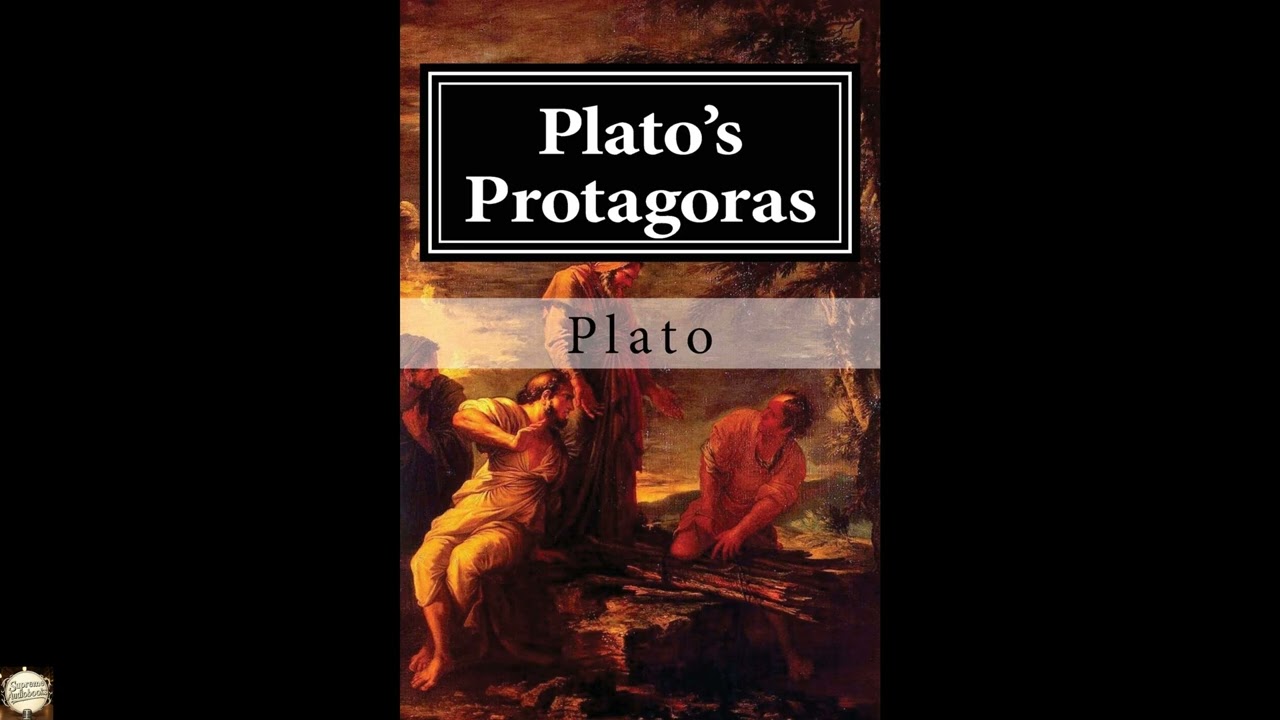
What does it mean to be a good person? Can virtue be taught, like mathematics or rhetoric, or is it an innate gift, something instilled by the gods, or simply absorbed from a well-ordered society? These are the fundamental, stirring questions at the heart of Plato's Protagoras, a dialogue that feels as urgent and relevant today as it did more than two millennia ago. In an era saturated with experts claiming to hold the keys to success and happiness, where persuasive speech often overshadows substance, the arguments within this classical text offer a piercing examination of what true wisdom entails, challenging us to look beyond superficial appearances and confront the very core of our moral understanding. It’s a compelling intellectual drama that pits the greatest mind of a generation against the greatest philosopher of his time, forcing listeners to wrestle with eternal dilemmas about human nature, education, and the foundations of a just society. The scene unfolds in Athens, within the bustling home of the wealthy Callias, a patron of the arts and a magnet for the city’s intellectual elite. Early one morning, Socrates is roused by his eager young friend Hippocrates, who has just heard that Protagoras, the most celebrated Sophist of the age, has arrived in Athens. Hippocrates, keen to secure Protagoras’s tutelage, seeks Socrates’s counsel. Together, they make their way to Callias’s house, finding it abuzz with an assembly of prominent Athenians and students, all gathered to hear the famous teacher. Among them are other renowned Sophists like Hippias and Prodicus, as well as notable figures such as Alcibiades and Critias. The core of the story quickly centers on the question Hippocrates brings: what does Protagoras teach? Protagoras proudly proclaims he teaches the "art of politics" or "political virtue," which essentially means making men good citizens, capable of managing their own households and contributing effectively to the state. Socrates, ever the skeptic, expresses doubt that virtue can be taught, pointing out that even good men often fail to teach their sons virtue, and that Athenians listen to experts in specialized fields but not when it comes to general matters of civic excellence. This sets the stage for a spectacular debate. Protagoras responds with a long, eloquent speech, first employing a mythical account of Prometheus giving humans the political art, then shifting to a logical argument (logos) about how society teaches virtue through praise, blame, and punishment. He asserts that all citizens possess some measure of virtue, and that those who excel have refined it through education. Socrates then begins his characteristic method of questioning, seeking precise definitions and exposing contradictions. He presses Protagoras on whether the different virtues—justice, piety, temperance, courage, and wisdom—are distinct qualities or parts of a single, unified virtue. The discussion takes several turns, including an amusing interlude where Socrates criticizes Protagoras's interpretation of a poem by Simonides. The philosophical sparring builds to a pivotal point where Socrates argues that virtue is knowledge, and therefore teachable, while Protagoras, despite his initial claims, finds himself struggling to maintain a consistent position on the unity of virtues and the nature of courage. The conversation continues with both men finding their initial positions subtly shifting, showcasing the dynamic and often surprising nature of genuine philosophical inquiry, culminating in a striking inversion of their starting points. The author of this profound and enduring dialogue is Plato, born around 428/427 BCE into an aristocratic Athenian family. His early life coincided with a tumultuous period for Athens, marked by the Peloponnesian War and political instability. His deep dissatisfaction with Athenian politics, especially after the trial and execution of his mentor Socrates in 399 BCE, profoundly shaped his philosophical outlook. Socrates’s unjust death convinced Plato that true justice and virtue could not flourish without a radical change in the political and ethical foundations of society. Plato dedicated his life to philosophy, becoming one of the most influential thinkers in Western intellectual history. He traveled extensively, reportedly visiting Egypt and Sicily, before returning to Athens to found the Academy, often considered the first institution of higher learning in the Western world. For over forty years, he taught and wrote, composing a remarkable body of work that primarily consists of philosophical dialogues, with Socrates typically serving as the main speaker. His writings range from early Socratic dialogues, which largely preserve Socrates’s method and ideas, to later works that develop his own elaborate metaphysical theories, such as the Theory of Forms. Among his most celebrated contributions are The Republic, an extensive blueprint for an ideal state; Symposium, a brilliant exploration of love; and Apology, an account of Socrates’s defense speech. Plato’s influence is so pervasive that Alfred North Whitehead famously stated that "the safest general characterization of the European philosophical tradition is that it consists of a series of footnotes to Plato." At its heart, Protagoras rigorously examines the teachability of virtue. Socrates’s initial stance is skeptical, arguing that if virtue were a teachable skill, there would be dedicated teachers for it, and virtuous parents would invariably produce virtuous children—neither of which appears to be true. Protagoras counters by arguing that virtue is taught continuously and implicitly by society, much like language or manners, through a system of rewards and punishments. For instance, when Protagoras recounts his myth, he stresses that Zeus sends Hermes to distribute justice and reverence among all humans, making virtue a prerequisite for political community, and therefore something that is learned and shared. The dialogue also grapples with the unity of virtues. Are justice, piety, temperance, courage, and wisdom separate qualities, or are they different manifestations of a single underlying virtue? Socrates, through his relentless questioning, seeks to demonstrate that if virtue is knowledge, then all virtues must ultimately be aspects of that single understanding. This is vividly illustrated when he challenges Protagoras on courage, suggesting that true courage is not mere fearlessness, but the wisdom to know what truly ought to be feared. A further powerful theme is the fundamental contrast between rhetoric and dialectic. Protagoras, the Sophist, is a master of long, flowing speeches designed to persuade and impress. His "Great Speech" is a prime example of this rhetorical prowess, employing both myth and logical argument to make his case. Socrates, in stark contrast, employs dialectic—a method of short questions and answers aimed at exposing inconsistencies and leading to a clearer understanding. His persistent refusal to allow Protagoras to deliver lengthy monologues, instead insisting on brief responses, highlights this distinction. Socrates aims not for mere persuasion, but for truth, even if it means acknowledging uncertainty. Finally, the dialogue touches upon the nature of knowledge and expertise. Who is truly wise? Is it the one who can speak persuasively on all topics, or the one who knows the limits of his own understanding and continually seeks precise definitions? The playful but pointed exchanges between Socrates and the other Sophists, Prodicus and Hippias, about the precise meaning of words further underscores this quest for genuine conceptual clarity. Plato composed Protagoras during a period of intense intellectual ferment in ancient Athens, likely in the early 4th century BCE, after the Peloponnesian War had concluded and Socrates had been executed. This era saw the rise and flourishing of the Sophists—professional teachers who traveled from city to city, offering instruction in rhetoric, debate, and practical wisdom for a fee. Figures like Protagoras, Gorgias, and Hippias were highly respected and commanded considerable influence, often teaching the skills necessary for success in democratic politics and legal proceedings. Their emphasis on persuasive speech and the teachability of virtue (often understood as practical success) presented a direct challenge to more traditional moral values and, crucially, to Socrates’s philosophical approach, which prioritized genuine knowledge and absolute moral standards over mere expediency or relative truth. Plato’s dialogues, including Protagoras, can be seen as his effort to counter the perceived moral relativism and intellectual superficiality of the Sophists, while simultaneously immortalizing the method and spirit of his beloved teacher, Socrates. The work reflects the vibrant, argumentative intellectual climate of the Athenian agora and its private symposia, where fundamental questions about morality, politics, and education were debated with a passionate intensity. It emerged as a profound response to the societal shifts and philosophical challenges of its time, questioning the very foundations of public education and civic life in a way that continues to resonate with contemporary concerns about expertise, truth, and the role of education. Listening to Protagoras as an audiobook offers a particularly immersive and illuminating experience. The conversational format of a Platonic dialogue is ideally suited to audio, allowing the listener to truly inhabit the roles of the participants and follow the nuances of the verbal sparring. The various voices of the narrator and characters bring to life the lively Athenian setting—the eager Hippocrates, the confident, eloquent Protagoras, the subtly probing Socrates, and the interjections of figures like Alcibiades. Over its several hours run length, you can follow the development of arguments, the shifts in perspective, and the dramatic interplay between intellect and personality without the visual distraction of a printed page. Pay close attention to the pacing, particularly when Socrates interjects with his short, insistent questions that break the flow of Protagoras’s longer speeches, and how the atmosphere of a casual gathering gradually transforms into a rigorous philosophical examination. The directness of spoken argument, the cadence of the questions, and the very sound of reason being applied to complex moral problems become central to understanding the work’s power.
Enjoyed PROTAGORAS By Plato? A few ways to support us
Audible & Amazon links are affiliate; we may earn a small commission at no extra cost.
About this production
Human narration by a volunteer reader from LibriVox.org, the public-domain audiobook project. LibriVox volunteers record literary works whose copyright has expired in the United States, releasing the resulting recordings into the public domain.
PROTAGORAS By Plato by Plato. The underlying text is in the U.S. public domain. We do not republish any modern copyrighted edition, translation, or commentary.
The 4K cinematic visuals accompanying this audiobook are generated by an AI image model from prompts derived from the source text. No copyrighted photos, paintings, or stock footage are used. AI generation is disclosed on every video on our YouTube channel as required by YouTube's altered/synthetic content policy.
English subtitles are transcribed from the LibriVox recording with OpenAI Whisper. Translations into the 11 other supported languages are produced by Meta's NLLB-200 neural translation model. No human translator's copyrighted translation is used.
Questions about sourcing or rights? See our DMCA & Sourcing policy or contact us.
View 10 famous quotes from this book →
Enjoyed this audiobook?
If you'd like to own a copy of PROTAGORAS By Plato or hear a professionally produced edition, the links below help support free audiobook production at no extra cost to you.
As an Amazon Associate we earn from qualifying purchases. Audible / print links are affiliate.