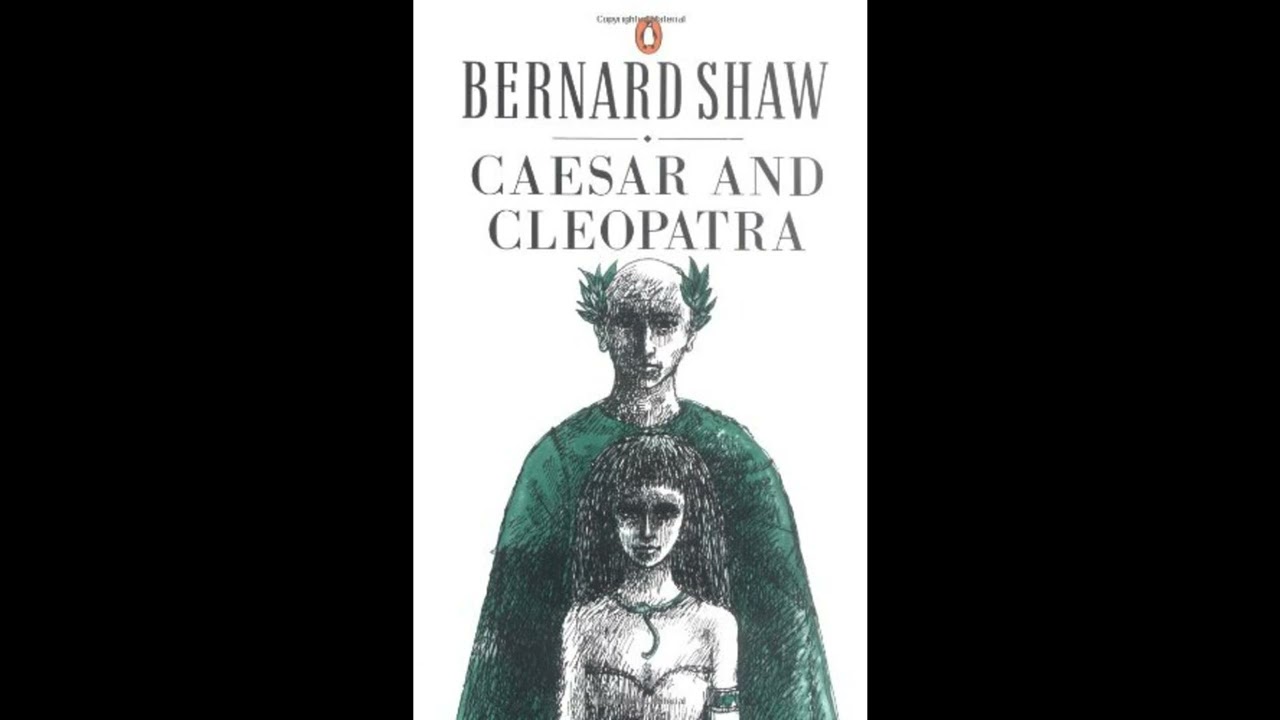
Caesar and Cleopatra : A History
Imagine a world where history's most towering figures are stripped of their mythological grandeur, revealed instead as complex, flawed, and often surprisingly human. George Bernard Shaw's Caesar and Cleopatra: A History offers precisely that reinterpretation, a brilliant dramatic comedy that reimagines the foundational encounter between two legends. This is not a dry historical chronicle but a sharp, witty, and surprisingly modern examination of power, governance, and the making of a queen. Listeners today will find its insights into leadership, the clash of cultures, and the molding of character remarkably resonant, offering a refreshing perspective on figures we thought we knew, presented with Shaw's signature intellectual bite and playful subversion. The story opens in Egypt, 48 BCE, a land simmering with political unrest and under the nascent thumb of Roman ambition. Julius Caesar, an aging but still formidable general, arrives in Alexandria after pursuing his rival, Pompey, only to find himself embroiled in the convoluted politics of the Ptolemaic dynasty. He encounters a young girl, initially frightened and defiant, hiding among the sphinxes in the desert – the titular Cleopatra, then a mere child of sixteen, unpolished, unlearned, and exiled from her own palace by her scheming younger brother, Ptolemy XIII. What follows is an unlikely mentorship, as Caesar, with a blend of paternal amusement and strategic foresight, takes this raw, untamed girl under his wing. Caesar, a man of profound pragmatism and weary wisdom, endeavors to instill in Cleopatra the principles of effective leadership, the responsibilities of a ruler, and the nuances of Roman governance. He sees beyond her childish petulance to the potential for a powerful queen, shaping her mind and guiding her through the treacherous court intrigues. Their relationship becomes the fulcrum of the play, set against a backdrop of military skirmishes, political machinations, and the stark cultural differences between the disciplined Romans and the passionate Egyptians. Caesar must navigate not only the local rebellions and the demands of his own legions but also the tumultuous emotional landscape of a young woman destined for greatness, all while securing Rome's interests in the strategically vital Nile Delta. The story culminates in Caesar's departure from Egypt, leaving behind a vastly changed landscape and a queen transformed, prepared to assert her claim to the throne and her place in history, but not without a lingering personal effect from their extraordinary connection. George Bernard Shaw, born in Dublin, Ireland, in 1856, moved to London in his early twenties and quickly became a prominent figure in the city's intellectual and artistic circles. He began his career as a music and drama critic, using his sharp intellect and even sharper wit to challenge conventional thinking and critique the hypocrisies of Victorian society. Shaw's early experiences with poverty and his later involvement with the Fabian Society, a socialist organization advocating for gradual social reform, deeply influenced his writing. He believed that art should serve a purpose beyond entertainment, actively engaging with social and political issues to provoke thought and inspire change. His prodigious output included essays, criticism, and over sixty plays, earning him the Nobel Prize in Literature in 1925 for his idealism and his stimulating satire. Beyond Caesar and Cleopatra, his most celebrated works include Pygmalion, later adapted into the musical My Fair Lady, which satirized class distinctions and phonetics, and Man and Superman, a philosophical comedy. Shaw was also known for Major Barbara, which scrutinizes philanthropy and morality, and Saint Joan, a profound examination of religious and political authority. He stood as a towering figure in the development of modern English-language drama, renowned for his "plays of ideas" and his distinctive blend of intellectual discourse with comedic brilliance, ultimately reshaping the landscape of theatrical writing before his death in 1950. At its core, Caesar and Cleopatra examines the complex nature of leadership. Shaw presents Caesar not as a conquering hero but as a world-weary pragmatist, guided by reason and a commitment to order rather than brute force. We see this in his insistence on justice and mercy, even towards his enemies, believing that a ruler governs most effectively through wisdom and stability. Another compelling theme is the process of transformation and mentorship, as Caesar undertakes the difficult task of cultivating a queen out of a frightened, untutored girl. Cleopatra’s gradual shedding of childish fears and her adoption of a more regal demeanor, often through challenging interactions with Caesar, vividly illustrates this progression, culminating in her embracing the cold necessities of power. The play also delves into the concept of "civilization" itself, questioning what truly defines it and exposing the often-arbitrary distinctions made between supposedly advanced and primitive cultures. Shaw uses the Roman and Egyptian clash to satirize imperial arrogance and highlight the universal aspects of human nature, regardless of cultural veneer. Furthermore, the piece offers a provocative historical revisionism, challenging the romanticized portrayals of these historical figures that were common in Shaw’s time. He strips away the legendary polish to reveal individuals driven by human desires, fears, and ambitions, making them relatable while still acknowledging their monumental impact on history. When Caesar and Cleopatra premiered in 1898, it emerged from a specific cultural and political moment. The late Victorian era in Britain was characterized by the zenith of the British Empire, a period Shaw frequently critiqued for its imperialistic attitudes and social inequalities. His play subtly comments on the responsibilities and hypocrisies of empire-building, drawing parallels between Roman dominion over Egypt and British rule over its colonies. In the literary world, Shaw was a key figure in the "new drama" movement, reacting against the sentimental melodrama and romantic historical plays that dominated the nineteenth-century stage. He favored "problem plays" that engaged directly with social and intellectual issues, challenging audiences to think rather than merely feel. This work, with its witty dialogue and psychological depth, offered a stark contrast to earlier, more melodramatic treatments of ancient history, particularly Shakespeare's Antony and Cleopatra, which Shaw deliberately sought to counter with a more realistic and less romanticized portrayal of the protagonists. Listening to Caesar and Cleopatra as an audiobook unlocks the full force of Shaw’s masterful dialogue. His plays were always intended for performance, and the spoken word breathes life into the rapid-fire exchanges, the intellectual debates, and the finely drawn characterizations. Over several hours of listening, you can immerse yourself in the rich tapestry of voices, each actor bringing a distinct texture to Caesar’s world-weary wisdom, Cleopatra’s spirited development, and the varied personalities of the Roman and Egyptian courts. Pay close attention to the pacing of the conversations, the subtle shifts in vocal tone, and the deliberate rhythm of Shaw’s prose – they are integral to his humor and his philosophical arguments. The auditory experience enhances the atmospheric setting, allowing the witty dialogue to shine, conveying the tension and camaraderie among the characters, and transporting you directly into the heart of ancient Alexandria.
Enjoyed Caesar and Cleopatra : A History? A few ways to support us
Audible & Amazon links are affiliate; we may earn a small commission at no extra cost.
About this production
Human narration by a volunteer reader from LibriVox.org, the public-domain audiobook project. LibriVox volunteers record literary works whose copyright has expired in the United States, releasing the resulting recordings into the public domain.
Caesar and Cleopatra : A History by George Bernard Shaw. The underlying text is in the U.S. public domain. We do not republish any modern copyrighted edition, translation, or commentary.
The 4K cinematic visuals accompanying this audiobook are generated by an AI image model from prompts derived from the source text. No copyrighted photos, paintings, or stock footage are used. AI generation is disclosed on every video on our YouTube channel as required by YouTube's altered/synthetic content policy.
English subtitles are transcribed from the LibriVox recording with OpenAI Whisper. Translations into the 11 other supported languages are produced by Meta's NLLB-200 neural translation model. No human translator's copyrighted translation is used.
Questions about sourcing or rights? See our DMCA & Sourcing policy or contact us.
Enjoyed this audiobook?
If you'd like to own a copy of Caesar and Cleopatra : A History or hear a professionally produced edition, the links below help support free audiobook production at no extra cost to you.
As an Amazon Associate we earn from qualifying purchases. Audible / print links are affiliate.