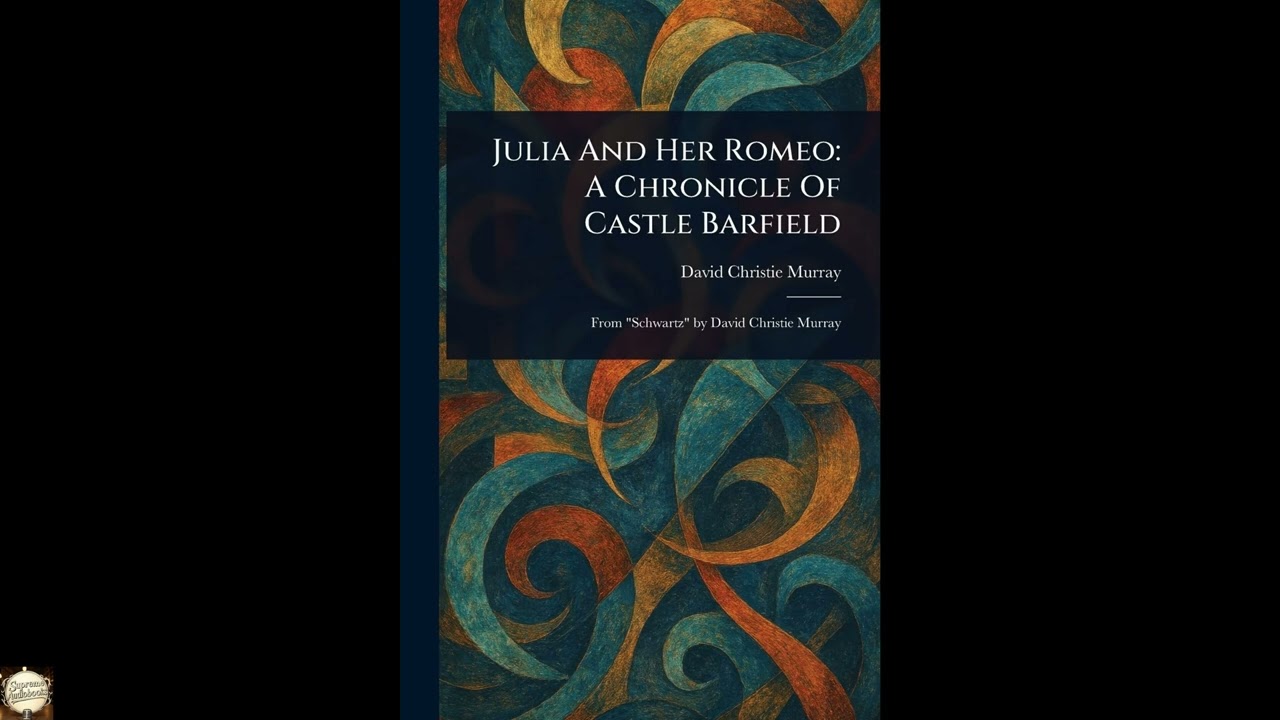
Julia And Her Romeo: A Chronicle Of Castle Barfield
Step into a world where ancient stone walls hold secrets and the echoes of forbidden love still resonate, even across a century. David Christie Murray’s Julia And Her Romeo: A Chronicle Of Castle Barfield offers listeners a compelling return to the late Victorian era, a period ripe with social constraints, dramatic misunderstandings, and the persistent, sometimes perilous, call of the heart. This isn't merely a historical curiosity; it’s a story that lays bare the universal struggles against convention and the enduring hope for true connection, themes as relevant to today's complex relationships as they were when this engaging novel first appeared. The chronicle centers on the venerable Castle Barfield, a place steeped in history and the rigid traditions of the English aristocracy. Here resides Julia, a young woman of spirited intelligence and deep affections, whose life, like the castle itself, seems destined to follow a predetermined, ancient path. Her world is one of decorum and expectation, where family lineage and social standing often outweigh personal desires. Into this carefully constructed existence steps a figure who, despite not bearing the traditional name, embodies the passionate, somewhat impetuous spirit of a Romeo. This newcomer, whose presence stirs the quiet waters of Barfield, quickly becomes the catalyst for a series of events that challenge Julia's understanding of duty, love, and self. The central conflict quickly emerges as the nascent affection between Julia and her Romeo figure is met with formidable opposition. Not only do social hierarchies and familial ambitions stand in their way, but a web of long-held secrets, past grievances, and deliberate misinterpretations begins to entangle their fates. Misunderstandings multiply, fueled by the era's strict social codes and the machinations of those who wish to keep the young lovers apart for reasons both personal and patrimonial. As the narrative progresses, the characters are forced to navigate a labyrinth of emotional trials, where every choice carries significant consequences, and the truth itself seems to be a casualty of entrenched pride and prejudice, drawing the listener ever deeper into their unfolding drama. David Christie Murray, born in 1847 in West Bromwich, Staffordshire, was a prolific English novelist, journalist, and playwright whose career spanned much of the late Victorian period. He began his working life as a reporter for newspapers in Birmingham before moving to London, where he contributed to prestigious publications like The Daily News. His journalistic background instilled in him a keen eye for social observation and a talent for crafting narratives that resonated with the reading public. Murray's experiences weren't limited to England; he traveled extensively, including lecturing tours in Australia and America, which broadened his perspectives and informed the settings and characterizations found in his many works. While perhaps not counted among the absolute giants of Victorian literature, Murray was undoubtedly a significant and popular voice of his time, producing more than forty novels, many of which were serialized in magazines, a common practice that built suspense and a loyal readership. Other notable works include Joseph’s Coat, Val Strange, and Aunt Rachel, showcasing his versatility in crafting stories that combined elements of realism with compelling romantic and dramatic plots. His place in the literary canon reflects the vibrant and diverse publishing landscape of the era, where authors could achieve considerable fame by telling engaging stories that spoke to the social concerns and romantic sensibilities of their audience. Julia And Her Romeo powerfully enacts several enduring themes, providing ample material for reflection. One prominent theme is the irrepressible nature of true affection against societal boundaries. Julia's growing attachment, despite the obvious social chasm and the disapproval of her family, illustrates the novel's insistence that genuine feeling often transcends artificial divisions. Consider the scenes set during formal gatherings at Castle Barfield, where Julia and her Romeo must navigate a delicate dance of stolen glances and hushed conversations, their burgeoning connection starkly contrasted with the rigid decorum expected of them, highlighting the tension between personal desire and public duty. Another significant theme centers on the destructive power of misunderstanding and the burden of inherited grievances. Characters often act on incomplete information or fall prey to the machinations of others, leading to tragic miscommunications that escalate the central conflict. For instance, an early, seemingly innocent remark or an overheard snippet of conversation, twisted by gossip and malevolent intent, becomes the foundation for deeper animosity, revealing how easily truth can be distorted and how long-held resentments can poison present happiness. The novel deftly shows how assumptions, rather than direct inquiry, drive much of the drama, holding a mirror to the human tendency to prejudge. This work emerged during a fascinating period in British history—the late 19th century—an era defined by rapid industrialization, expanding empire, and significant social change, yet still deeply entrenched in Victorian moral codes and aristocratic traditions. The widespread rise of a literate middle class fueled a booming publishing industry, creating a demand for novels that could both entertain and, subtly or overtly, comment on contemporary society. Authors like Murray responded by blending dramatic romance with elements of social realism, reflecting anxieties about class mobility, the role of women, and the clash between traditional values and modern aspirations. Julia And Her Romeo is a product of this environment, offering a narrative that allowed readers to escape into a romantic drama while simultaneously engaging with the underlying social tensions of their own lives, particularly concerning arranged marriages, inherited wealth, and the shifting power dynamics within old families. Listening to Julia And Her Romeo: A Chronicle Of Castle Barfield as an audiobook transforms the experience of this classic into something immediate and immersive. The narrator's voice becomes the conduit to Castle Barfield, bringing the formidable stone edifice and its inhabitants vividly to life. With a running length of several hours, this allows for a substantial engagement, perfect for extended commutes, an afternoon of focused listening, or as a companion during household tasks. Listen closely for how the narrator distinguishes between the varied characters—the spirited Julia, the earnest Romeo figure, the calculating antagonists—through subtle shifts in tone and inflection. The pacing will allow the slow burn of romantic tension and the gradual unfolding of secrets to build naturally, while the dialogue, rich with period idiom, gains an added layer of authenticity when spoken aloud, transporting you directly into the heart of a bygone romantic drama.
Enjoyed Julia And Her Romeo: A Chronicle Of Castle Barfield? A few ways to support us
Audible & Amazon links are affiliate; we may earn a small commission at no extra cost.
About this production
Human narration by a volunteer reader from LibriVox.org, the public-domain audiobook project. LibriVox volunteers record literary works whose copyright has expired in the United States, releasing the resulting recordings into the public domain.
Julia And Her Romeo: A Chronicle Of Castle Barfield by David Christie Murray. The underlying text is in the U.S. public domain. We do not republish any modern copyrighted edition, translation, or commentary.
The 4K cinematic visuals accompanying this audiobook are generated by an AI image model from prompts derived from the source text. No copyrighted photos, paintings, or stock footage are used. AI generation is disclosed on every video on our YouTube channel as required by YouTube's altered/synthetic content policy.
English subtitles are transcribed from the LibriVox recording with OpenAI Whisper. Translations into the 11 other supported languages are produced by Meta's NLLB-200 neural translation model. No human translator's copyrighted translation is used.
Questions about sourcing or rights? See our DMCA & Sourcing policy or contact us.
Enjoyed this audiobook?
If you'd like to own a copy of Julia And Her Romeo: A Chronicle Of Castle Barfield or hear a professionally produced edition, the links below help support free audiobook production at no extra cost to you.
As an Amazon Associate we earn from qualifying purchases. Audible / print links are affiliate.