Cecil Rhodes: Man and Empire-maker
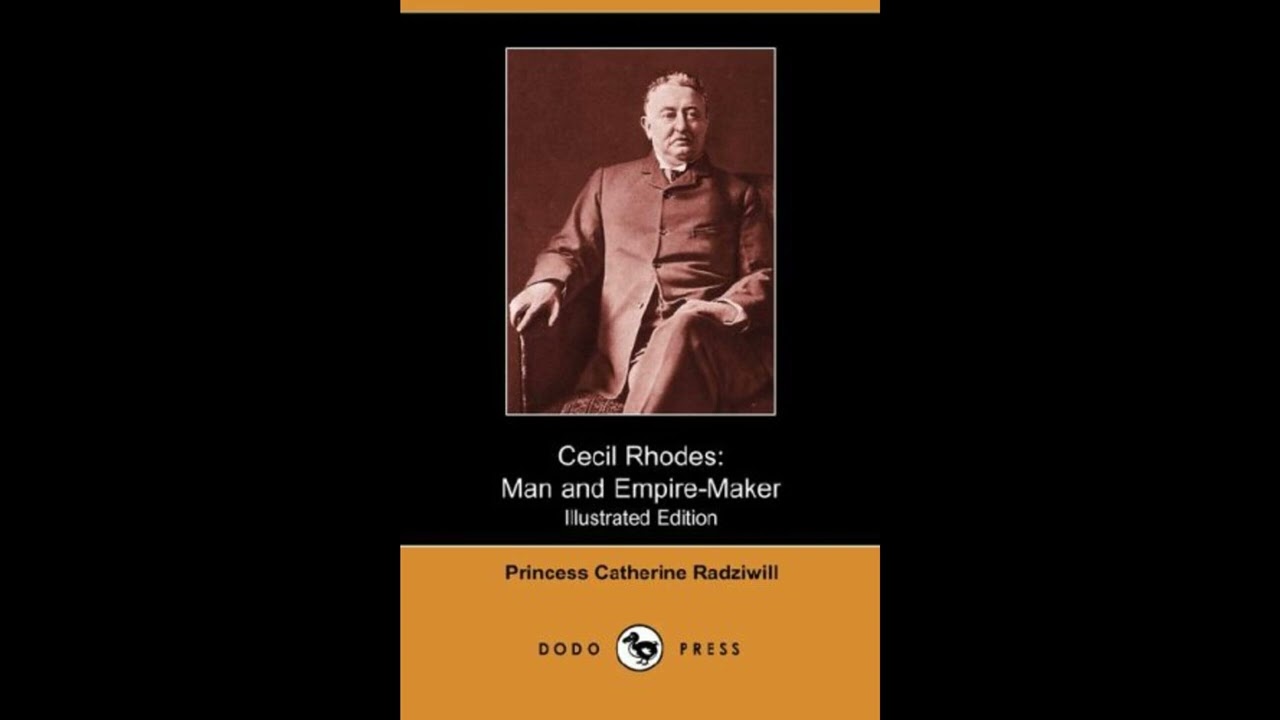
Cecil Rhodes: Man and Empire-maker offers a compelling, if controversial, portrait of one of the most polarizing figures in modern history. Penned by Princess Catherine Radziwill, a contemporary and a notable social observer, this biography transcends a mere recitation of facts, instead presenting a deeply personal and often surprising look at the man who shaped the destiny of Southern Africa. Why should listeners care about Rhodes today? Because his legacy — of immense wealth built on diamond and gold, the brutal expansion of empire, and the foundational policies that led to apartheid — continues to resonate, shaping political landscapes, economic disparities, and cultural debates across the globe. This audiobook provides a direct conduit to the early twentieth-century understanding of a figure whose influence remains profoundly felt, inviting us to grapple with the complex intersections of ambition, power, and colonial conquest. The story opens with Cecil Rhodes's arrival in South Africa as a young, sickly man seeking a warmer climate, a setting that quickly transforms from a pastoral escape into a stage for colossal ambition. The narrative traces his meteoric rise from a humble cotton farmer to the undisputed titan of the diamond fields, culminating in his consolidation of the world's diamond supply through the De Beers Mining Company. This initial success serves as a springboard for his far grander, imperial designs. Listeners witness Rhodes's relentless pursuit of territory, his vision of a British dominion stretching "from Cape to Cairo," and his aggressive expansion into vast swathes of land that would eventually bear his name – Rhodesia. Radziwill meticulously details the political maneuvering and ruthless pragmatism that characterized Rhodes's tenure as Prime Minister of the Cape Colony. We see him navigating complex alliances, confronting Boer nationalism, and engaging in schemes like the controversial Jameson Raid, which aimed to provoke an uprising in the Transvaal. The central conflict within the narrative is Rhodes's unwavering commitment to British imperial expansion, often at any cost, set against the inherent challenges of administering vast, resource-rich territories inhabited by diverse indigenous populations and other European powers. The book captures the dramatic arc of his life, showcasing his triumphs and the mounting criticisms he faced as his power grew. Princess Catherine Radziwill herself was a fascinating and often scandalous figure. Born Catherine Rzewuska in 1858 into an aristocratic Polish-Lithuanian family, she married Prince Wilhelm Radziwill and became a prominent hostess in Berlin's high society. Her salons were frequented by leading politicians, artists, and intellectuals, allowing her an intimate view into the machinations of European power. A prolific writer, Radziwill penned numerous memoirs, biographies, and social commentaries throughout her life, often offering an insider's perspective on the royal courts and political landscapes of her time. Her works include My Recollections, Memories of Forty Years, and Behind the Veil at the Russian Court, among others, revealing her sharp wit and keen observational skills. However, Radziwill's connection to Cecil Rhodes was particularly unique and tumultuous. She moved to South Africa in the late 1890s, where she became entangled with Rhodes, leading to a notorious scandal involving forged promissory notes and a subsequent libel suit. This personal history profoundly shaped her perspective on Rhodes. Her biography, therefore, is not merely an academic study but a highly personalized account, filtered through her direct, albeit fraught, experiences with the man. This makes her work an indispensable, if subjective, primary source for understanding Rhodes, placing her firmly as a chronicler of her age and a figure whose own life story is intertwined with the very subjects she wrote about. She continued writing until her death in New York in 1941, leaving behind a substantial body of work that illuminates a vanished aristocratic world and its collision with modern political realities. The book enacts several powerful themes. Foremost among them is the theme of imperialism, with Rhodes standing as the very embodiment of late Victorian colonial ambition. The text illustrates this through Rhodes's relentless drive to acquire land and resources, such as the Kimberley diamond fields and the gold mines of the Witwatersrand, transforming them into engines for British global dominance. His famous vision of a "Cape to Cairo" railway line, meticulously detailed in the narrative, concretely shows his ideological commitment to extending British influence across the African continent. Another prominent theme is the interplay of power and corruption. The book reveals how Rhodes wielded immense wealth from his monopolies, leveraging it to manipulate politics and acquire vast tracts of land, often through questionable means. For example, the detailed accounts of his dealings with local chiefs and his influence over the Cape parliament starkly illustrate the moral compromises made in the pursuit of empire. Furthermore, Radziwill's account highlights the theme of individual will versus historical forces. Rhodes's personal drive, characterized by his famous will and often fanatical determination, is presented as a singular force shaping events. Yet, the book also contextualizes his actions within the broader historical current of the "Scramble for Africa," demonstrating how his personal ambitions aligned with the prevailing jingoism and racial ideologies of the late nineteenth century. Finally, the very act of writing this biography enacts the theme of biography as a subjective lens. Radziwill's unique, and at times adversarial, relationship with Rhodes inevitably colors her portrayal, forcing listeners to consider the author's own biases and personal experiences in shaping the historical narrative. Her book thus stands not just as a history, but as an artifact of opinion and experience from within the heart of the imperial project. This biography emerged in the early twentieth century, a period rife with reflection on the vast expansion of European empires. Cecil Rhodes's death in 1902 had left a gaping void, and the public was eager for accounts of the man who had so dramatically reshaped the map of Africa. The British Empire, though seemingly at its zenith, was also grappling with the aftermath of the Second Boer War and the increasing complexities of colonial administration. Culturally, there was a fascination with figures of immense power and vision, even as nascent critiques of imperial overreach began to surface. Radziwill's work thus appeared at a moment when both celebration and critical examination of imperial heroes were in vogue, and her position as an aristocratic insider with a personal connection to Rhodes gave her a unique vantage point from which to contribute to this public discourse. Listening to Cecil Rhodes: Man and Empire-maker as an audiobook offers a particularly immersive experience. The several hours of narration allow ample time to absorb the intricate details of Rhodes's life and the sweeping historical backdrop against which it unfolded. A skilled narration brings Princess Radziwill's voice — that of a well-connected, astute, and perhaps slightly jaded observer — to life, providing access to a perspective that is both authoritative and intensely personal. Listen for the subtle shifts in pacing as the story moves from the excitement of the diamond fields to the complexities of political intrigue, and appreciate how the narrator's voice subtly conveys the atmosphere of the late Victorian and Edwardian eras, from the dusty veld of South Africa to the corridors of power in London. This auditory experience allows the listener to fully appreciate the dramatic scope of Rhodes's life and the distinct lens through which Radziwill chose to present it.
Enjoyed Cecil Rhodes: Man and Empire-maker? A few ways to support us
Audible & Amazon links are affiliate; we may earn a small commission at no extra cost.
About this production
Human narration by a volunteer reader from LibriVox.org, the public-domain audiobook project. LibriVox volunteers record literary works whose copyright has expired in the United States, releasing the resulting recordings into the public domain.
Cecil Rhodes: Man and Empire-maker by Princess Radziwill, Catherine. The underlying text is in the U.S. public domain. We do not republish any modern copyrighted edition, translation, or commentary.
The 4K cinematic visuals accompanying this audiobook are generated by an AI image model from prompts derived from the source text. No copyrighted photos, paintings, or stock footage are used. AI generation is disclosed on every video on our YouTube channel as required by YouTube's altered/synthetic content policy.
English subtitles are transcribed from the LibriVox recording with OpenAI Whisper. Translations into the 11 other supported languages are produced by Meta's NLLB-200 neural translation model. No human translator's copyrighted translation is used.
Questions about sourcing or rights? See our DMCA & Sourcing policy or contact us.
Enjoyed this audiobook?
If you'd like to own a copy of Cecil Rhodes: Man and Empire-maker or hear a professionally produced edition, the links below help support free audiobook production at no extra cost to you.
As an Amazon Associate we earn from qualifying purchases. Audible / print links are affiliate.