One of Cleopatra's Nights And Other Fantastic Romances
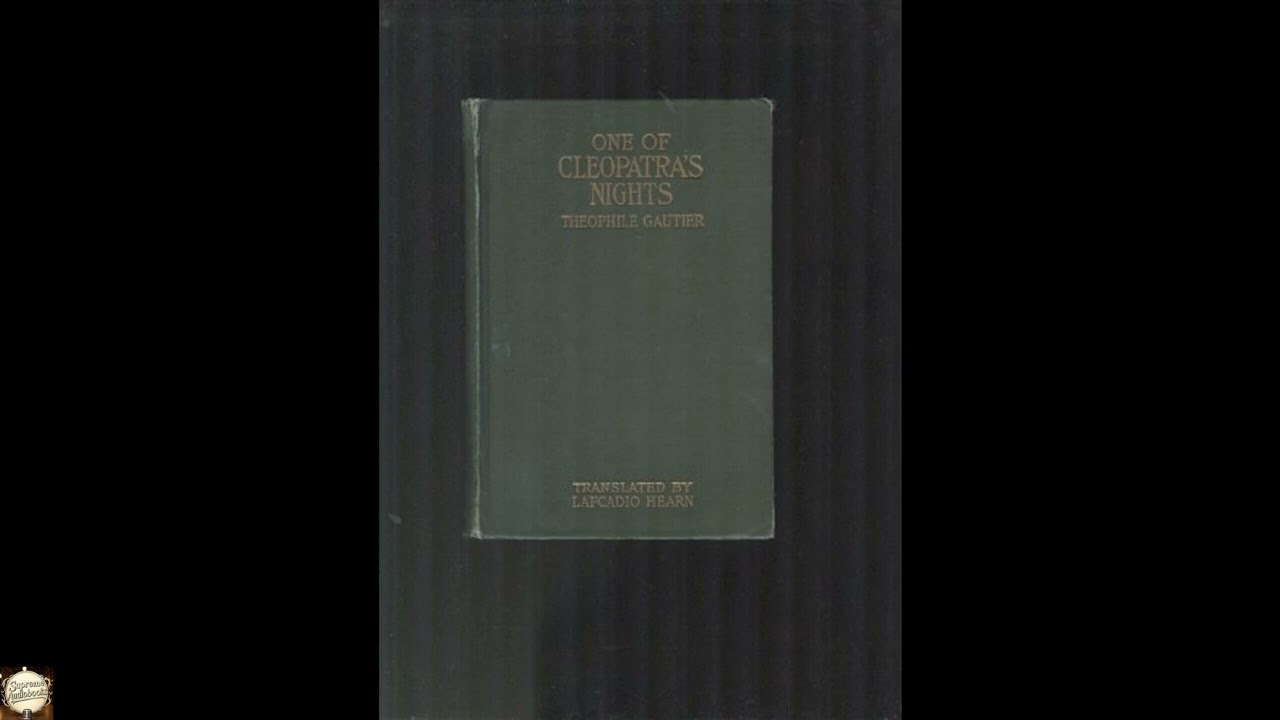
Step back in time to an era of breathtaking opulence and raw, untamed passion, where ancient civilizations rise again in a blaze of descriptive power. Théophile Gautier's "One of Cleopatra's Nights And Other Fantastic Romances," translated with a keen eye for exotic beauty by Lafcadio Hearn, is an invitation to witness worlds both distant and intimately human. This collection of stories isn't merely historical fiction; it's a plunge into the intoxicating allure of the past, presented with a Romantic flourish that continues to resonate today. Listeners who hunger for vivid escapism, for tales where desire and destiny intertwine amidst richly painted backdrops, will find themselves utterly swept away by Gautier's extraordinary imagination. The collection's titular story, "One of Cleopatra's Nights," transports us to the twilight years of ancient Egypt, a realm defined by the capricious will of its serpent-of-the-Nile queen. Our tale unfolds around Meiamoun, a humble yet handsome fisherman, whose daring gaze and raw infatuation dare to snag the attention of Cleopatra herself. The queen, bored by the predictable flattery of kings and generals, is piqued by the young man's audacious declaration of love. What follows is a single, extraordinary night – a lavish, sensual interlude arranged by Cleopatra purely for her amusement and Meiamoun's doomed pleasure. The story meticulously details the preparations for this fateful encounter: the shimmering silks, the exotic foods, the intoxicating wines, the perfumes that hang heavy in the air. As the night progresses, Meiamoun is ushered into a world of unimaginable luxury and power, sharing conversation, laughter, and an illicit intimacy with the most powerful woman of her age. Yet, beneath the veneer of this dreamlike experience, a stark power imbalance hums. Cleopatra's affection is a fleeting caprice, a dangerous game played with mortal lives, and Meiamoun's innocent adoration confronts the cold reality of her absolute authority. The tension builds as their night together reaches its climax, an unforgettable encounter that is as exquisite as it is perilous. While the specifics of their ultimate fate remain for the listener to discover, the story leaves an indelible impression of beauty, desire, and the intoxicating, often fatal, consequences of crossing the social divide in pursuit of an impossible love. The other fantastic romances in the collection echo this blend of historical accuracy, heightened emotion, and the occasional touch of the uncanny, offering a broader glimpse into Gautier's singular vision. Théophile Gautier, born in 1811 in Tarbes, France, was a central figure in the French Romantic movement and later a proponent of Parnassianism. From his early days in Paris, he became a close friend and fervent supporter of Victor Hugo, famously donning a striking red vest to the premiere of Hugo's Hernani in 1830 – an act that became a symbol of Romantic defiance against classicist norms. Gautier was a polymath: a poet, dramatist, novelist, and an influential journalist and art critic, whose keen eye and descriptive prowess shaped much of 19th-century French aesthetics. He championed the doctrine of "art for art's sake" (l'art pour l'art), believing that art's purpose was to create beauty, free from moral or didactic obligations. This philosophy is evident in his exquisite descriptions and his focus on formal perfection. His body of work also includes the acclaimed novel Mademoiselle de Maupin and the historical adventure Le Capitaine Fracasse, solidifying his place as a master of prose. Bringing Gautier's remarkable prose to English-speaking audiences was Lafcadio Hearn, a fascinating literary figure in his own right. Born on the Greek island of Lefkada in 1850 to an Irish father and Greek mother, Hearn's life was marked by displacement and a restless search for identity and new experiences. After an education in Europe, he emigrated to the United States, working as a journalist in Cincinnati and New Orleans, where he became known for his vivid portrayals of local life and folklore. Later, he moved to Japan, married a Japanese woman, became a naturalized Japanese citizen under the name Koizumi Yakumo, and spent the remainder of his life translating and writing about Japanese culture, effectively introducing it to the Western world. Hearn's own sensibility for the exotic, the beautiful, and the often melancholic, made him an ideal translator for Gautier's works, allowing him to capture the nuanced elegance and evocative power of the original French. At the heart of "One of Cleopatra's Nights And Other Fantastic Romances" lie several profound themes. The most evident is the allure of the exotic and Orientalism, a fascination with non-Western cultures, particularly ancient Egypt, that characterized 19th-century European thought. Gautier immerses listeners in this world through his detailed descriptions of settings, costumes, and customs, transforming the distant past into a vibrant, immediate reality. Secondly, the collection showcases Gautier's dedication to "art for art's sake." He prioritizes aesthetic beauty and stylistic elegance, allowing the sheer descriptive power to carry the narrative. Consider the meticulous rendering of Cleopatra's banquet, where every dish, every adornment, every scent is described with loving care, not just to advance plot but to evoke a sensory experience for its own sake. A third prominent theme is fatal beauty and destructive passion. Cleopatra herself embodies this; her immense beauty and power are inextricably linked to a cruel, indifferent will that can elevate or destroy on a whim. Meiamoun's infatuation, though pure, becomes a vehicle for his downfall, illustrating how overwhelming desire, especially for the unattainable, can lead to tragic ends. The collection frequently revisits this idea of love and beauty as forces that can both inspire and annihilate. Finally, many of Gautier's "fantastic romances" dabble in the supernatural and the uncanny, blending historical settings with elements that defy rational explanation. While "Cleopatra's Nights" leans more towards heightened realism, other stories within the collection might introduce ghostly encounters or improbable occurrences, blurring the line between the real and the imagined, a hallmark of the fantastique genre that Gautier helped define. Gautier's work emerged during a fervent period of cultural and literary change in Europe. The mid-19th century was marked by the ascendance of Romanticism, a movement that embraced intense emotion, individualism, the beauty of nature, and a profound interest in the past, particularly the medieval and ancient worlds. There was a widespread public appetite for tales of adventure, historical spectacle, and the sublime, often as a reaction against the perceived dullness of industrial modernity and bourgeois life. The ongoing archaeological discoveries in Egypt, while preceding Gautier's specific writing, kept the "Oriental" world at the forefront of European consciousness, fostering a romanticized vision of its ancient grandeur and mysterious allure. Gautier, with his emphasis on beauty, sensation, and a poetic revival of history, perfectly tapped into this zeitgeist, offering an escape into worlds of heightened aestheticism and dramatic passion. Hearn's translation, appearing later in the century, resonated with a fin de siècle audience that shared a similar fascination with exoticism and a taste for finely crafted prose. Listening to "One of Cleopatra's Nights And Other Fantastic Romances" as an audiobook offers a unique opportunity to truly sink into Gautier's lavish descriptions and Hearn's precise translation. The run length of several hours makes this collection ideal for focused listening sessions, allowing listeners to fully absorb the rich atmosphere and detailed world-building. A skilled narrator can bring forth the sensuality of Cleopatra's court, the subtle menace in her voice, and Meiamoun's ardent innocence through careful pacing and vocal nuance. Listen for how the voice actor captures the intricate details of settings and costumes, transforming mere words into palpable images. The dialogue, often formal and poetic, gains an added layer of immediacy when performed aloud, emphasizing the dramatic tension and the clash of wills. It’s an immersive experience designed to transport you directly into Gautier’s vividly imagined past, making every word a brushstroke in a grand, fantastic painting.
Enjoyed One of Cleopatra's Nights And Other Fantastic Romances? A few ways to support us
Audible & Amazon links are affiliate; we may earn a small commission at no extra cost.
About this production
Human narration by a volunteer reader from LibriVox.org, the public-domain audiobook project. LibriVox volunteers record literary works whose copyright has expired in the United States, releasing the resulting recordings into the public domain.
One of Cleopatra's Nights And Other Fantastic Romances by Gautier, Theophile; Hearn. The underlying text is in the U.S. public domain. We do not republish any modern copyrighted edition, translation, or commentary.
The 4K cinematic visuals accompanying this audiobook are generated by an AI image model from prompts derived from the source text. No copyrighted photos, paintings, or stock footage are used. AI generation is disclosed on every video on our YouTube channel as required by YouTube's altered/synthetic content policy.
English subtitles are transcribed from the LibriVox recording with OpenAI Whisper. Translations into the 11 other supported languages are produced by Meta's NLLB-200 neural translation model. No human translator's copyrighted translation is used.
Questions about sourcing or rights? See our DMCA & Sourcing policy or contact us.
Enjoyed this audiobook?
If you'd like to own a copy of One of Cleopatra's Nights And Other Fantastic Romances or hear a professionally produced edition, the links below help support free audiobook production at no extra cost to you.
As an Amazon Associate we earn from qualifying purchases. Audible / print links are affiliate.