An Unsocial Socialist: A Novel
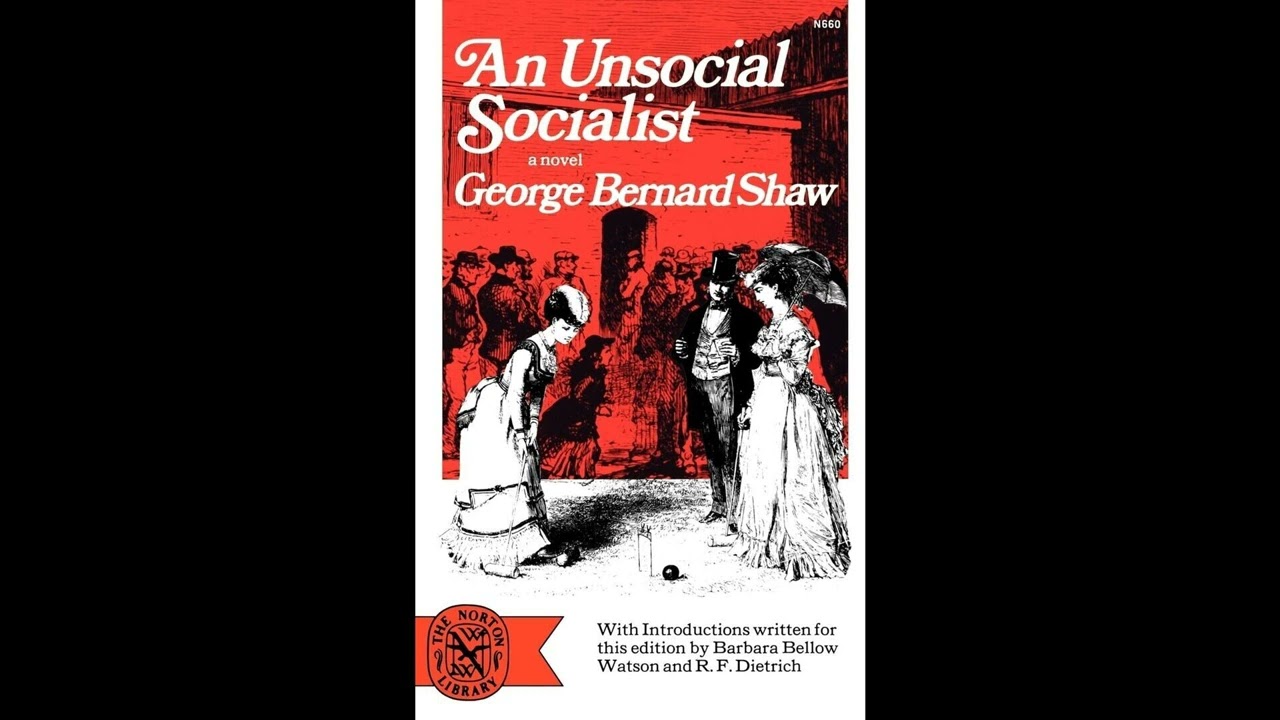
Step into the spirited world of George Bernard Shaw’s An Unsocial Socialist, a novel that bristles with intellectual combat, social satire, and a distinctly Shavian brand of wit. Published in 1887, this early work from the future Nobel laureate introduces us to a protagonist whose radical views are as provocative today as they were in late Victorian England, challenging conventional notions of wealth, marriage, and personal responsibility. It is a comedic and often poignant examination of a society grappling with profound change, inviting listeners to reconsider their own assumptions about how we live, love, and organize our world. More than a simple story, it is a precursor to Shaw’s later dramatic triumphs, offering a lively and surprisingly prescient commentary on human nature and the systems we create. The story unfolds within the seemingly tranquil confines of a fashionable girls’ school, where a group of young, privileged women are being groomed for society’s upper echelons. Their genteel existence is dramatically disrupted by the arrival of Sidney Trefusis, a brilliant but undeniably eccentric individual who has abandoned his affluent background and estranged his wife to dedicate himself entirely to the socialist cause. Trefusis, under the guise of an agent for a Mrs. Jansenius, infiltrates the school and begins, with disarming frankness and biting logic, to dissect the very foundations of the comfortable lives the young women are being prepared to lead. He presents himself as an ardent advocate for radical social change, arguing that private property and conventional marriage are the root of most societal ills. Among the pupils is Henrietta Jansenius, Trefusis’s own wife, though she is unaware of his true identity or his covert mission to win her back by converting her to his socialist ideals. Trefusis's relentless and often confrontational espousal of his views—ranging from the inequities of inherited wealth to the performative nature of polite society—creates a delightful ferment within the school. His pronouncements clash hilariously with the girls’ romantic notions and their ingrained acceptance of the status quo, creating a dynamic tension that drives the narrative forward. As Trefusis attempts to dismantle the prevailing social order with his rhetoric, the novel deftly orchestrates a series of intellectual skirmishes and personal revelations, setting the stage for both comedic misunderstandings and moments of genuine insight, all without revealing the ultimate fate of Trefusis's peculiar crusade. George Bernard Shaw, born in Dublin in 1856, moved to London in 1876, where he quickly immersed himself in the city’s intellectual and artistic circles. His early years were marked by considerable struggle, working as a novelist and critic before finding his true calling in the theatre. A committed socialist, Shaw became a prominent member of the Fabian Society, an organization dedicated to advancing socialism through gradual, rather than revolutionary, means. This political conviction profoundly shaped his literary output, transforming him into one of the most incisive social critics of his era. Shaw's prolific career saw him pen over sixty plays, earning him the Nobel Prize in Literature in 1925, though he famously accepted the medal but rejected the prize money. His most acclaimed dramas, such as Pygmalion (later adapted into My Fair Lady), Man and Superman, Mrs. Warren’s Profession, and Saint Joan, cemented his reputation as a master of English prose and an astute observer of human folly and societal injustice. He revolutionized modern drama by infusing it with intellectual depth, sharp wit, and a passionate commitment to social reform, leaving an indelible mark on English literature until his death in 1950. At its core, An Unsocial Socialist addresses the stark contrast between individual aspiration and collective well-being, most clearly through the figure of Sidney Trefusis and his unyielding advocacy for socialism. Shaw uses Trefusis's impassioned speeches and often baffling behavior to expose the deep-seated inequalities that underpinned Victorian society, illustrating how the privileges enjoyed by the upper classes were often built upon the exploitation of others. For example, Trefusis rails against the concept of inherited wealth, presenting it not as a blessing but as a burden that corrupts both the recipient and the society that sanctions it, forcing his genteel audience to confront the uncomfortable origins of their comfort. Another prominent theme is the institution of marriage and its societal function, particularly as it pertains to women. Shaw challenges the romanticized ideal of marriage, portraying it instead as an economic arrangement, especially for women of the period who often had limited avenues for independence. Trefusis's unusual method of trying to "convert" his wife to his ideals, rather than simply pursuing her affection, speaks volumes about Shaw's view of how deeply social and economic structures intertwine with personal relationships. The various young women at the school embody different approaches to their expected roles, some embracing societal norms, others showing glimmers of rebellion against a future determined by convention and property. Shaw penned An Unsocial Socialist during a pivotal period in British history, the late nineteenth century, an era often characterized by its strict social hierarchies and moralistic facade. This was a time of immense industrial growth, which, while creating unprecedented wealth for some, also gave rise to dire poverty and widespread social discontent. Socialism was gaining traction as a serious political and intellectual movement, with organizations like the Fabian Society—which Shaw himself helped popularize—proposing radical changes to the economic system. The novel serves as an early example of Shaw’s engagement with these contemporary debates, using the medium of fiction to critique the prevailing capitalist system and the hypocrisies of the Victorian upper classes. It directly reflects the growing awareness of class divisions and the stirrings of social reform that would eventually reshape the British political landscape. Listening to An Unsocial Socialist as an audiobook offers a unique gateway into Shaw’s distinctive voice and the theatricality of his early prose. The extensive dialogue, often a precursor to his later plays, truly comes alive when performed. A skilled narrator can capture the nuanced wit of Trefusis, the varying degrees of confusion and amusement from the young women, and the overall atmosphere of intellectual sparring blended with social comedy. Pay attention to the pacing of the arguments and the distinct characterizations—Shaw’s writing, even in this novelistic form, has an inherent rhythm that benefits immensely from being spoken aloud. The run length provides an excellent opportunity to immerse oneself in a full-bodied narrative that both entertains and provokes thought, ideal for long commutes or dedicated listening sessions where Shaw’s ideas can unfold and resonate.
Enjoyed An Unsocial Socialist: A Novel? A few ways to support us
Audible & Amazon links are affiliate; we may earn a small commission at no extra cost.
About this production
Human narration by a volunteer reader from LibriVox.org, the public-domain audiobook project. LibriVox volunteers record literary works whose copyright has expired in the United States, releasing the resulting recordings into the public domain.
An Unsocial Socialist: A Novel by George Bernard Shaw. The underlying text is in the U.S. public domain. We do not republish any modern copyrighted edition, translation, or commentary.
The 4K cinematic visuals accompanying this audiobook are generated by an AI image model from prompts derived from the source text. No copyrighted photos, paintings, or stock footage are used. AI generation is disclosed on every video on our YouTube channel as required by YouTube's altered/synthetic content policy.
English subtitles are transcribed from the LibriVox recording with OpenAI Whisper. Translations into the 11 other supported languages are produced by Meta's NLLB-200 neural translation model. No human translator's copyrighted translation is used.
Questions about sourcing or rights? See our DMCA & Sourcing policy or contact us.
Enjoyed this audiobook?
If you'd like to own a copy of An Unsocial Socialist: A Novel or hear a professionally produced edition, the links below help support free audiobook production at no extra cost to you.
As an Amazon Associate we earn from qualifying purchases. Audible / print links are affiliate.