Cleopatra
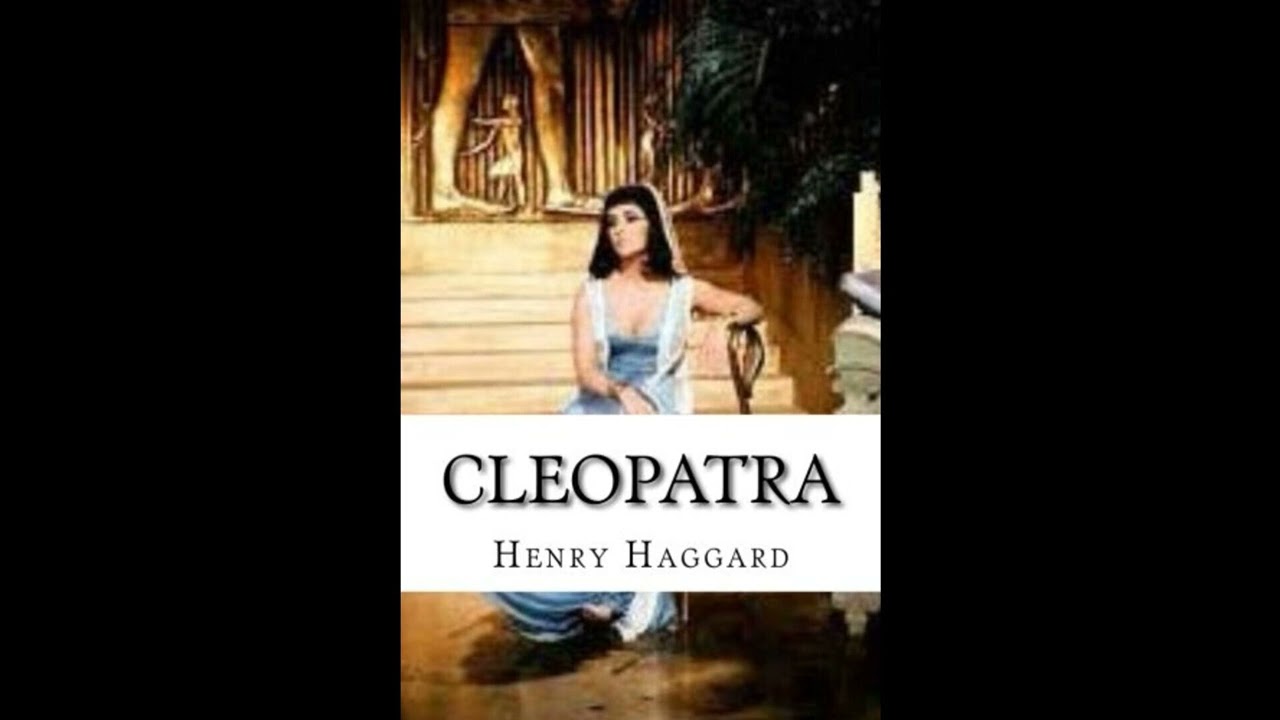
From the mind of a legendary storyteller comes a grand reimagining of one of history’s most enigmatic figures: Cleopatra. Henry Rider Haggard, known for his sweeping tales of adventure and discovery, brings us his vivid interpretation of the Egyptian queen, not merely as a historical footnote or a femme fatale, but through the eyes of Harmachis, a pharaoh-in-exile destined to reclaim his throne. This is a story of love, ambition, ancient prophecies, and the clash of empires, all set against the breathtaking backdrop of a civilization on the brink. Even today, the lure of ancient Egypt, the drama of political power, and the tragic allure of a queen who defied the greatest empire of her age resonate deeply, reminding us of the enduring human struggles for sovereignty and self-determination. The narrative unfolds in the turbulent final years of the Ptolemaic dynasty, a period of immense political upheaval as the vast shadow of Rome lengthens over the Nile. We are introduced to Harmachis, a young man of royal blood, a priest of Isis, and a devout patriot who believes himself to be the rightful heir to Egypt's throne, having been dispossessed by the machinations surrounding Cleopatra. Haunted by prophetic visions and driven by a sacred oath to restore his country to its former glory and rid it of foreign influence, Harmachis returns from years of exile in disguise, seeking to infiltrate Cleopatra's court and fulfill his destiny. His plan, however, quickly becomes entangled with the queen herself, a woman of unparalleled beauty, wit, and formidable political cunning. As Harmachis finds himself drawn into the dangerous world of court intrigue, he becomes both a pawn and a player in Cleopatra’s grand schemes. He witnesses firsthand the queen’s strategic alliances with Roman leaders like Julius Caesar and Mark Antony, seeing her not just as a sovereign, but as a sorceress of statecraft, a figure both revered and feared. His initial resolve to depose her is complicated by a complex, almost hypnotic attraction to Cleopatra, which threatens to derail his sacred mission and challenge his very understanding of duty and love. The story follows Harmachis’s agonizing moral struggle as he grapples with his destiny, the demands of ancient prophecy, and the powerful, almost supernatural, presence of the woman who rules Egypt. Henry Rider Haggard (1856-1925) was an English novelist whose name became synonymous with the adventure genre during the late Victorian and Edwardian eras. Born in Norfolk, England, Haggard’s life was as adventurous as the tales he penned. At the age of nineteen, he moved to South Africa, where he served as secretary to the Governor of Natal and witnessed the annexation of the Transvaal. This formative experience in a vast, untamed continent deeply influenced his writing, providing him with a wealth of exotic settings, cultures, and conflicts that would define his literary output. His firsthand exposure to indigenous peoples, colonial expansion, and the raw beauty of the African landscape fueled his imagination and lent an authenticity to his fantastical narratives. Haggard exploded onto the literary scene with "King Solomon's Mines" in 1885, a sensation that immediately established his reputation. This was quickly followed by "She" (1887), another immense success featuring the immortal Ayesha. His works were instrumental in popularizing the "Lost World" subgenre, inspiring countless imitators and influencing authors across generations. Haggard's blend of archaeological mystery, epic quests, and the supernatural carved a significant niche for him in the literary canon, making him one of the most widely read and influential authors of his time. He was a master of grand narratives, creating worlds both ancient and exotic, filled with heroism, villainy, and mythical elements. "Cleopatra" powerfully enacts several enduring themes. One significant thread is the conflict between destiny and free will. Harmachis is burdened by prophecies and the weight of his lineage, believing himself chosen to fulfill a divine purpose. Yet, his personal choices, especially his evolving relationship with Cleopatra, constantly test these predetermined paths, forcing him to confront whether he is truly in control of his fate or merely an instrument of ancient powers. The text illustrates this tension through Harmachis's internal monologues and his often-agonizing decisions at critical junctures, such as when he must choose between political assassination and his growing emotional attachment. Another theme centers on the seductive and corrupting nature of power, particularly as embodied by Cleopatra herself. Her ability to manipulate, to inspire both fervent loyalty and deadly fear, showcases how absolute authority can warp individuals and societies. Harmachis, too, finds himself drawn to the allure of the throne, momentarily compromising his ideals for the prospect of power. The story also probes the clash of civilizations and the impact of imperialism. Haggard presents ancient Egypt as a proud, mystical land grappling with the encroaching might of the Roman Empire, represented by figures like Caesar and Antony. Harmachis's struggle is not just personal; it is a fight for the very soul of Egypt against foreign domination. He yearns for a return to a purer, ancient Egyptian order, untainted by Roman influence. This resonates with the era in which Haggard wrote, a period of vast colonial expansion and great debate about the responsibilities and consequences of empire. Furthermore, the novel is steeped in ancient mystery and the occult, reflecting Haggard's fascination with secret societies, forgotten religions, and the supernatural. The elaborate rituals of Egyptian priests, the cryptic prophecies, and the palpable sense of an older, powerful magic permeate the narrative, providing an atmospheric depth that transports the listener to a world saturated with the arcane. When "Cleopatra" was published in 1889, the British Empire was at its zenith, and a widespread fascination with archaeology and exotic lands gripped the public imagination. The late nineteenth century saw renewed interest in Egyptology, fueled by ongoing discoveries and the decipherment of hieroglyphs, which promised glimpses into a truly ancient and mysterious past. Haggard’s own experiences in Africa and his talent for vivid description perfectly capitalized on this appetite for adventure narratives set in far-flung, often romanticized locales. The book emerged from a literary landscape that increasingly embraced popular fiction, with a growing readership eager for escapism into worlds of heroism, romance, and grand historical drama. "Cleopatra" offered not only a thrilling plot but also a compelling dive into a distant historical era, viewed through a distinctly Victorian lens of adventure and moral inquiry, yet infused with an almost timeless sense of wonder. Listening to this expansive tale as an audiobook offers a unique opportunity to truly immerse oneself in Haggard’s intricate vision of ancient Egypt. The several hours of narration provide ample space for the story’s grand scope to unfold, allowing the listener to fully absorb the detailed descriptions of opulent palaces, desolate deserts, and clandestine rituals. A skilled narrator can bring to life the distinct personalities of Harmachis, torn between duty and desire, and Cleopatra, with her legendary charisma and formidable intellect. Pay attention to the subtle shifts in vocal tone during moments of intense political maneuvering or the dramatic pronouncements of ancient prophecies, which lend an extra layer of tension and atmosphere. The spoken word allows the epic sweep of the narrative, the dramatic dialogue, and the pervasive sense of ancient mystery to truly wash over you, making it an ideal companion for focused listening or for accompanying you on a long journey, allowing you to lose yourself completely in the heart of a bygone world.
Enjoyed Cleopatra? A few ways to support us
Audible & Amazon links are affiliate; we may earn a small commission at no extra cost.
About this production
Human narration by a volunteer reader from LibriVox.org, the public-domain audiobook project. LibriVox volunteers record literary works whose copyright has expired in the United States, releasing the resulting recordings into the public domain.
Cleopatra by Henry Rider Haggard. The underlying text is in the U.S. public domain. We do not republish any modern copyrighted edition, translation, or commentary.
The 4K cinematic visuals accompanying this audiobook are generated by an AI image model from prompts derived from the source text. No copyrighted photos, paintings, or stock footage are used. AI generation is disclosed on every video on our YouTube channel as required by YouTube's altered/synthetic content policy.
English subtitles are transcribed from the LibriVox recording with OpenAI Whisper. Translations into the 11 other supported languages are produced by Meta's NLLB-200 neural translation model. No human translator's copyrighted translation is used.
Questions about sourcing or rights? See our DMCA & Sourcing policy or contact us.
Enjoyed this audiobook?
If you'd like to own a copy of Cleopatra or hear a professionally produced edition, the links below help support free audiobook production at no extra cost to you.
As an Amazon Associate we earn from qualifying purchases. Audible / print links are affiliate.