Characters and Events of Roman History, from Caesar to Nero (Dodo Press)- Full Audiobook
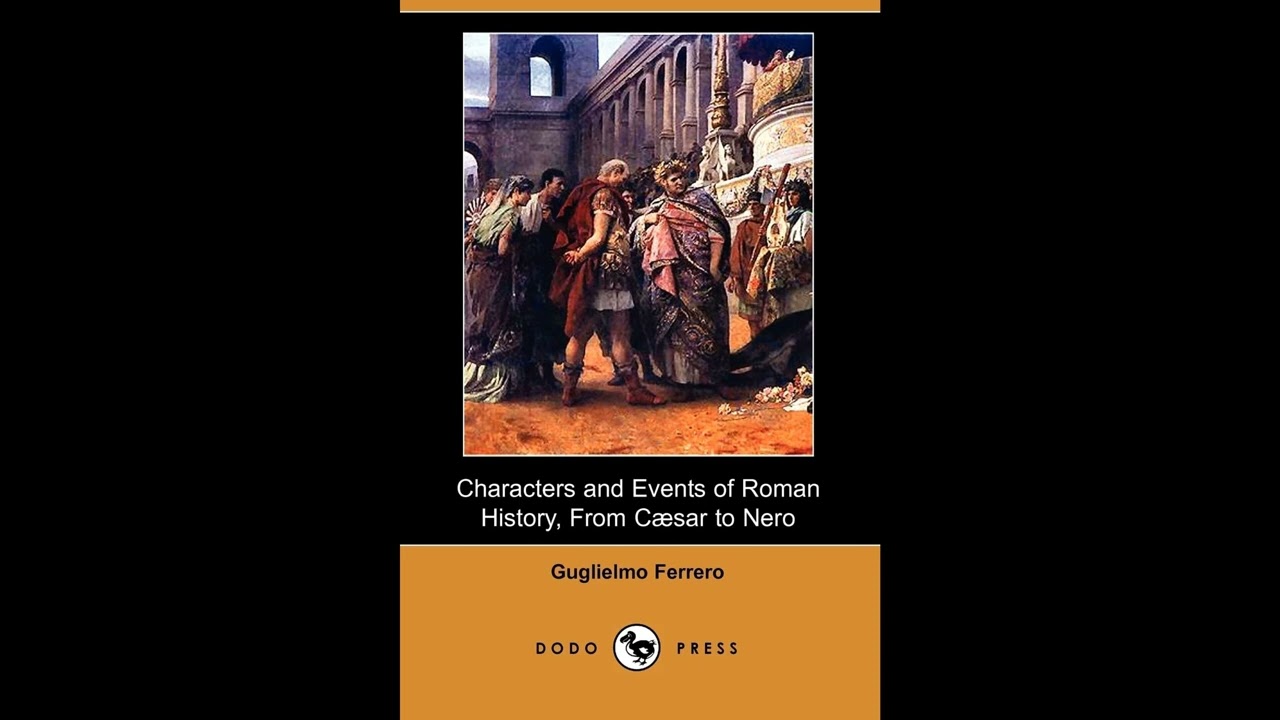
For two millennia, the specter of ancient Rome has haunted Western imagination, a powerful mirror reflecting humanity's grandest ambitions and its most catastrophic failures. From its bustling forums to its bloody arenas, from the calculated brilliance of its generals to the mad whims of its emperors, Rome's narrative continues to resonate, offering both cautionary tales and inspiring precedents for societies still grappling with power, justice, and the perennial struggle for influence. Characters and Events of Roman History, from Caesar to Nero invites listeners to stand witness to a truly pivotal epoch in this legendary civilization – the dramatic collapse of the Republic and the tumultuous birth of the Empire – a period defined by figures whose names echo through the ages and events that forever altered the course of history. This extensive collection offers not merely dates and names, but a vivid recounting of the personalities and decisions that shaped an entire world, allowing modern audiences to connect directly with the dramatic human stakes behind the history books. The narrative opens amidst the fading embers of the Roman Republic, a system of governance stretched to its breaking point by internal strife and the ambitions of powerful men. We find ourselves in the late first century BCE, a time when the Republic's venerable institutions were increasingly threatened by strongmen and military might. The central figure to kick off this epochal shift is Gaius Julius Caesar, a brilliant general and politician whose audacious campaigns in Gaul and his subsequent crossing of the Rubicon ignited a civil war that irrevocably shattered the old order. The story then meticulously traces the complex aftermath of Caesar's assassination, detailing the brutal power vacuum, the formation of the Second Triumvirate, and the eventual rise of Octavian, Caesar's adopted heir. Octavian, through shrewd political maneuvering and military victories—most famously at the Battle of Actium against Mark Antony and Cleopatra—consolidates his authority, ultimately transforming himself into Augustus, the first Roman Emperor, ushering in an era of relative peace known as the Pax Romana. From this foundation, the story continues through the Julio-Claudian dynasty, charting the reigns of successive emperors, each wrestling with the immense burden of inherited power and the ever-present threat of conspiracy, rebellion, or personal failing. We encounter the enigmatic and often cruel Tiberius, whose paranoia led him to retreat from Rome, leaving the city to the machinations of his infamous praetorian prefect, Sejanus. Then comes the brief, erratic, and tyrannical rule of Caligula, known for his eccentricities and descent into madness. His successor, the scholarly but physically infirm Claudius, brings a period of administrative reform and imperial expansion, only to be succeeded by the notorious Nero, whose reign begins with promise but rapidly descends into artistic indulgence, political purges, and the infamous burning of Rome. The overarching arc details the consolidation of imperial power, the gradual erosion of republican traditions, and the often tragic consequences of absolute authority wielded by flawed individuals. It is a chronicle of a society grappling with its own identity, moving from a citizen-led republic to an empire governed by a single, often unpredictable, ruler. While the specific author of this compilation is not identified, this kind of historical anthology fits squarely within a long and distinguished tradition of chronicling Roman history. Such works are often the product of diligent scholarship, synthesizing information from a variety of classical sources to present a cohesive and accessible account. For centuries, writers have drawn upon the original Latin and Greek historians—figures like Livy, who penned a monumental history of Rome from its foundations; Tacitus, whose incisive and often critical analyses of the early emperors remain unparalleled; Suetonius, famous for his anecdotal and biographical sketches of the Caesars; and Plutarch, who provided comparative biographies of Greek and Roman leaders. These primary accounts, often written by contemporaries or near-contemporaries of the events, form the bedrock of our understanding of this epoch. Works like the one presented here function as vital conduits, distilling complex historical narratives and making the intricate details of Roman life and politics understandable to a broader audience, bridging the gap between specialized classical scholarship and the general public's enduring fascination with Rome. The events recounted in this historical summary foreground several profound and enduring themes. One central concern is the nature of power and its corrupting influence. We see this vividly in the slow, insidious transformation of initially capable leaders into tyrannical figures. For instance, the narrative details how Caligula, once celebrated as a promising young emperor, quickly succumbs to megalomania, demanding to be worshipped as a god and committing acts of shocking cruelty, exemplified by his desire to make his horse a consul. Similarly, the shift in Nero's character, from a promising ruler advised by Seneca to a despot who likely ordered the murder of his own mother, Agrippina, illustrates how unchecked authority can erode morality and judgment. Another significant theme is the struggle between individual ambition and the common good. Caesar's extraordinary drive for personal glory, while expanding Rome's influence, ultimately precipitated the civil wars that tore the Republic apart. His ambition, however, also laid the groundwork for the efficient, centralized administration that Augustus would later solidify, creating a tension between the immediate chaos caused by personal striving and the long-term stability it might inadvertently foster. Furthermore, the work consistently touches upon the fragility of political systems and the constant tension between liberty and order. The narrative begins with the Republic failing under the weight of its own internal contradictions and the rise of powerful individuals. Augustus's careful construction of the Principate—a system that maintained the outward appearance of republican institutions while concentrating ultimate power in his hands—serves as a concrete example of this balance. He understood that Rome needed a strong hand to prevent a return to civil war, but also that its citizens still cherished the idea of the Republic. The evolution from this delicate balancing act to the outright autocratic rule of later emperors like Nero demonstrates the precarious path from order to tyranny, a lesson that resonates across all forms of governance. Works of this nature, summarizing and interpreting classical history, found a particular resurgence and relevance during certain historical periods. In the late nineteenth and early twentieth centuries, as European empires reached their zenith, there was a widespread cultural and intellectual fascination with classical antiquity. For nations like Great Britain and France, whose own empires spanned the globe, Roman history offered both a blueprint for imperial administration and a cautionary tale about decline. Educational curricula of the time placed heavy emphasis on Latin and Greek, and popular historical accounts of Rome were widely read, often to draw moral and political lessons applicable to contemporary society. The political climate, marked by great power rivalries and the anxieties of social change, naturally turned to ancient Rome for insights into governance, leadership, and the cycles of growth and decay, making comprehensive and accessible histories of this crucial Roman period highly sought after. Listening to Characters and Events of Roman History, from Caesar to Nero as an audiobook offers a particularly immersive and engaging way to absorb this foundational historical narrative. The narrator's voice becomes a trusted guide through the intricate political maneuvers and the sweeping military campaigns, bringing clarity to the often-complex relationships between emperors, senators, and generals. With several hours of content, this production is perfectly suited for extended periods of focused listening, whether during commutes, while performing household tasks, or simply as a dedicated learning experience. A good narration breathes life into these ancient figures, allowing the listener to differentiate between the calculating ambition of Augustus, the scholarly reclusiveness of Tiberius, or the artistic pretenses of Nero, not just through their actions, but through the subtle inflections and pacing that highlight their dramatic shifts in character. The auditory format provides an immediate connection to the grandeur and the intrigue of ancient Rome, transforming what might otherwise be a dense historical text into an unfolding drama, making the human stories behind the monumental events feel immediate and relevant.
Enjoyed Characters and Events of Roman History, from Caesar to Nero (Dodo Press)- Full Audiobook? A few ways to support us
Audible & Amazon links are affiliate; we may earn a small commission at no extra cost.
About this production
Human narration by a volunteer reader from LibriVox.org, the public-domain audiobook project. LibriVox volunteers record literary works whose copyright has expired in the United States, releasing the resulting recordings into the public domain.
Characters and Events of Roman History, from Caesar to Nero (Dodo Press)- Full Audiobook. The underlying text is in the U.S. public domain. We do not republish any modern copyrighted edition, translation, or commentary.
The 4K cinematic visuals accompanying this audiobook are generated by an AI image model from prompts derived from the source text. No copyrighted photos, paintings, or stock footage are used. AI generation is disclosed on every video on our YouTube channel as required by YouTube's altered/synthetic content policy.
English subtitles are transcribed from the LibriVox recording with OpenAI Whisper. Translations into the 11 other supported languages are produced by Meta's NLLB-200 neural translation model. No human translator's copyrighted translation is used.
Questions about sourcing or rights? See our DMCA & Sourcing policy or contact us.
Enjoyed this audiobook?
If you'd like to own a copy of Characters and Events of Roman History, from Caesar to Nero (Dodo Press)- Full Audiobook or hear a professionally produced edition, the links below help support free audiobook production at no extra cost to you.
As an Amazon Associate we earn from qualifying purchases. Audible / print links are affiliate.