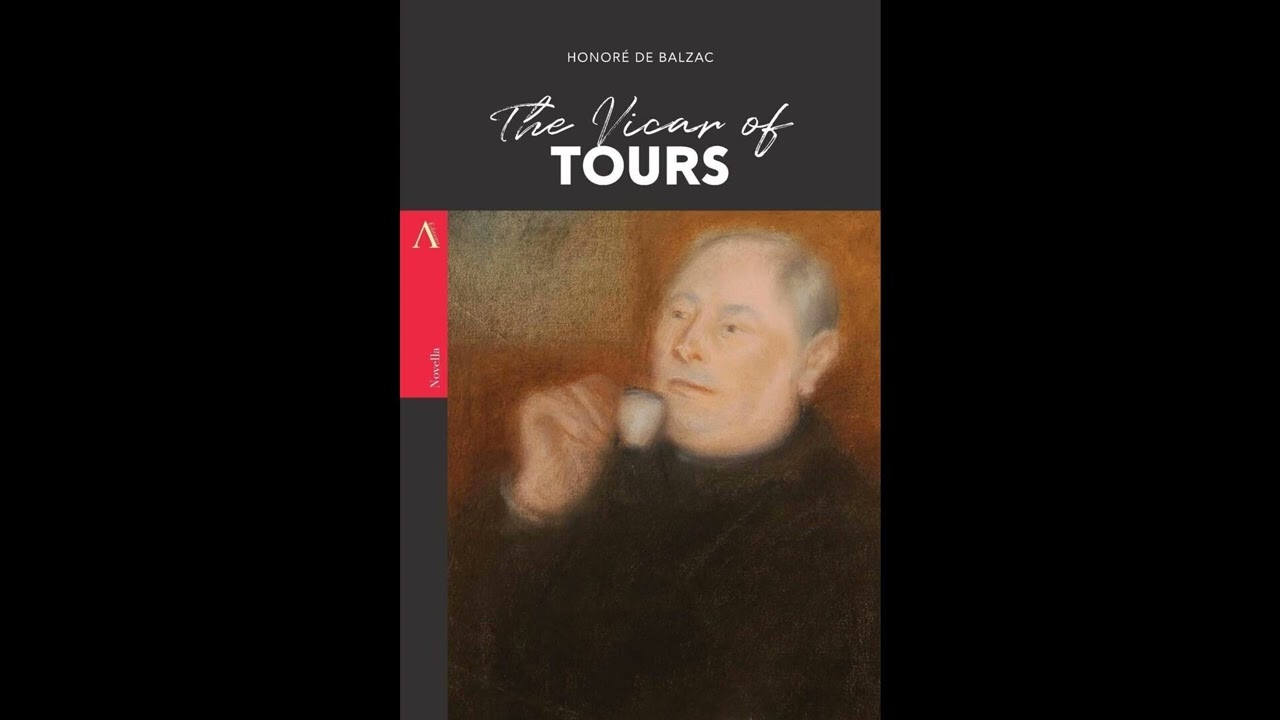
The Vicar of Tours
Honoré de Balzac's "The Vicar of Tours" offers listeners a piercing look into the quiet yet brutal machinations of provincial life in 19th-century France. This novella, a polished gem within Balzac's sprawling La Comédie humaine, dissects the human capacity for envy and the devastating power of malicious gossip. It presents a world where a good man's reputation can be systematically dismantled by petty resentments, a chilling reminder that even in tranquil settings, the gravest threats arise from within. For anyone who has observed the corrosive effects of spite, "The Vicar of Tours" remains profoundly resonant, a testament to the vulnerability of innocence in the face of calculated cruelty. The story unfolds in the sedate city of Tours during the Restoration, a place where social standing and decorum are paramount. At its heart is Abbé François Birotteau, vicar of Saint-Gatien, a man of profound goodness, devoted to his spiritual duties and innocent of the world's darker currents. He lodges in a modest apartment owned by Mademoiselle Gamard, a stern, outwardly devout spinster whose piety barely conceals a bitter, grasping nature. Her other lodger, Mademoiselle Salomon de Villenoix, serves as a confidante for Gamard's increasingly venomous thoughts. Birotteau, content in his simple routine, finds himself an object of Gamard's thinly veiled disdain, his gentle habits irritating her sour temperament. The unassuming vicar’s life takes an unexpected turn when an inheritance bestows upon him a comfortable sum and fine furniture. This sudden improvement, seen as undeserved by Gamard, ignites her latent envy into blazing hatred. What begins as minor slights escalates into psychological torment. Gamard, with Salomon's tacit support, subtly poisons town opinion, twisting Birotteau's actions and fabricating tales of impropriety. Every kindness is reinterpreted as self-serving, every quiet study seen as idleness. The arrival of an ambitious young cleric, Abbé Troubert, who eyes Birotteau's position, further complicates matters, adding another layer of ambition. As the social fabric around Birotteau frays, he finds himself isolated, his reputation under constant assault, unable to comprehend the malice directed his way. Honoré de Balzac (1799-1850), born in Tours, left an indelible mark on French literature. His early life was marked by restless ambition and a lifelong struggle with debt, often fueling his prodigious output. After failed ventures, Balzac committed entirely to writing, creating a literary universe of nearly one hundred novels and novellas. This vast, interconnected body of work, La Comédie humaine – "The Human Comedy" – aimed to provide a comprehensive, almost scientific, survey of French society from Napoleon's fall to the July Monarchy. Balzac’s genius lay in his meticulous observation of human nature and societal mechanics, earning him a place as one of literary Realism's founders. He populated his fictional world with recurring characters, allowing readers to witness their evolving fates across different narratives. Among his celebrated contributions are novels like Le Père Goriot, a searing portrayal of paternal love; Eugénie Grandet, a study of avarice; Lost Illusions, which dissects Parisian journalism and ambition; and the darker Cousin Bette. Balzac’s influence on subsequent writers, from Flaubert to Faulkner, is immense, cementing his status as a titan of the novel form. "The Vicar of Tours" keenly illustrates several enduring human themes, chief among them the destructive power of envy and malice. Mademoiselle Gamard's cultivated hatred for Birotteau, sparked by his inherited fortune and quiet contentment, drives the narrative. Balzac shows how this emotion, once given root, can warp a soul and lead to a systematic campaign of persecution. Gamard’s seemingly trivial actions—moving Birotteau's furniture, changing his meal times, making veiled complaints—are calculated steps in her psychological assault, designed to isolate and destabilize him, demonstrating how minor grievances escalate into profound cruelty. Another central theme is the insidious nature of hypocrisy and the fragility of reputation in a gossipy, image-conscious society. Gamard maintains an outward facade of piety, ensuring her malevolence operates subtly, beneath polite society's surface. Balzac masterfully depicts how rumor and innuendo, even without concrete evidence, can destroy a man's standing. Birotteau, a genuinely good man, struggles because he cannot conceive of such deep-seated ill will, rendering him defenseless against the whisper campaigns and veiled accusations that poison the minds of his parishioners and superiors. His naivety stands in stark contrast to the worldly cunning of Gamard and the strategic ambition of Abbé Troubert, highlighting how purity of heart can be a dangerous vulnerability in a world driven by social climbing and self-interest. "The Vicar of Tours" is set during the Bourbon Restoration in France (1815-1830), following Napoleon's final defeat. This era attempted to return to pre-Revolutionary social and political norms, including a re-emphasis on monarchy and Catholic Church authority. Balzac, a keen observer, captures the atmosphere of provincial France—a world still steeped in tradition and hierarchy, but subtly affected by emerging bourgeois values and economic shifts. In this context, the local church served as a significant social and political institution; clergy, like Birotteau and Troubert, were not just spiritual guides but figures within a complex local power structure. Balzac’s detailed portrayal of small-town dynamics—pervasive gossip, intense scrutiny of personal lives, subtle jockeying for position—reflects a society where appearances held immense weight and traditional institutions grappled with new forms of ambition and social mobility. The novella provides not just psychological drama but a microcosm of societal forces as France navigated its post-revolutionary identity. It emerged from Balzac's own observations of his hometown, a city he both loved and critically examined. Listening to "The Vicar of Tours" in audiobook format offers an intimate encounter with Balzac's precise prose and psychological insights. A skilled narrator brings to life distinct voices, from the gentle tones of Abbé Birotteau to the venomous undertones of Mademoiselle Gamard, allowing the listener to experience the chilling escalation of her malice. The narrative's pacing, subtly building tension as Birotteau's world crumbles, feels potent when delivered vocally, drawing you deeper into the confined, suffocating atmosphere of the provincial town. With a run length of several hours, it's an accessible way to engage with a foundational work of French Realism, allowing Balzac’s astute observations on human nature and society to resonate directly, making subtle shifts in dialogue and dramatic irony impactful.
Enjoyed The Vicar of Tours? A few ways to support us
Audible & Amazon links are affiliate; we may earn a small commission at no extra cost.
About this production
Human narration by a volunteer reader from LibriVox.org, the public-domain audiobook project. LibriVox volunteers record literary works whose copyright has expired in the United States, releasing the resulting recordings into the public domain.
The Vicar of Tours by Honoré de Balzac. The underlying text is in the U.S. public domain. We do not republish any modern copyrighted edition, translation, or commentary.
The 4K cinematic visuals accompanying this audiobook are generated by an AI image model from prompts derived from the source text. No copyrighted photos, paintings, or stock footage are used. AI generation is disclosed on every video on our YouTube channel as required by YouTube's altered/synthetic content policy.
English subtitles are transcribed from the LibriVox recording with OpenAI Whisper. Translations into the 11 other supported languages are produced by Meta's NLLB-200 neural translation model. No human translator's copyrighted translation is used.
Questions about sourcing or rights? See our DMCA & Sourcing policy or contact us.
Enjoyed this audiobook?
If you'd like to own a copy of The Vicar of Tours or hear a professionally produced edition, the links below help support free audiobook production at no extra cost to you.
As an Amazon Associate we earn from qualifying purchases. Audible / print links are affiliate.