LA Grande Breteche (Creative Short Stories)
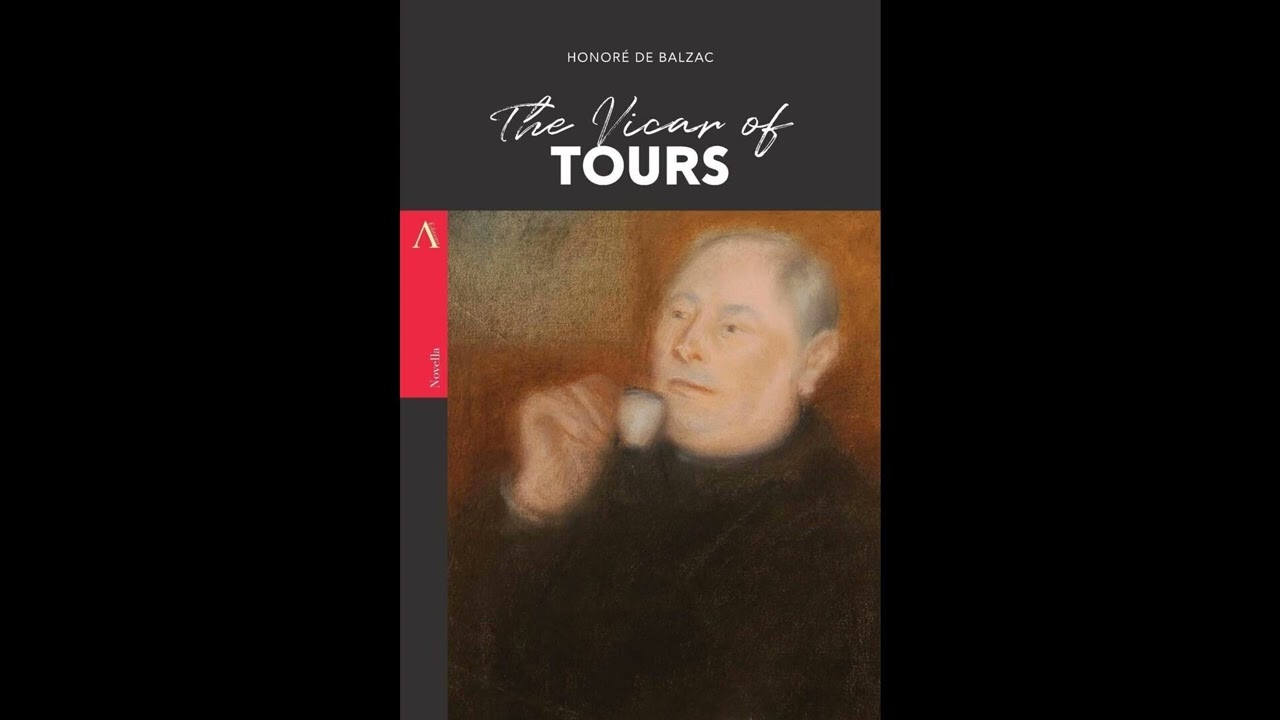
Honore de Balzac’s "LA Grande Breteche" stands as a chilling testament to the devastating power of secrets and the lengths human beings will go to preserve their honor, or destroy another’s. This short story, a jewel in the crown of his vast La Comédie humaine, offers a compact yet profoundly unsettling psychological drama that resonates with stark clarity even today. It draws listeners into a provincial world where appearances are everything, and a hidden truth can fester into a tragic, life-altering obsession. The narrative unpacks a singular, horrifying event with an almost forensic precision, laying bare the moral ambiguities and the silent, unbearable torment of its characters. This is a story not just about what happens, but about the suffocating weight of what might happen, and the lingering echoes of human cruelty. The story unfolds with a sense of lingering mystery, centered around a desolate, abandoned manor house known as La Grande Breteche, whose very name seems to whisper of forgotten tragedies. We encounter it through the observations of a local notary, Maître Rouget, a figure whose professional life has led him to uncover many hidden truths, but none so profound as the one associated with this particular edifice. He begins to recount the tale of the Marquise de Merret, a woman of striking beauty and aristocratic dignity, who lived in the house some years prior. Her life, seemingly serene, was shattered one fateful night when her cold, calculating husband, Monsieur de Merret, discovers a lover is present within their home. What follows is a terrifying battle of wills, a silent game of cat and mouse played out under the strictures of aristocratic society. Monsieur de Merret, driven by a wounded pride and a chilling determination to uphold his honor, confronts his wife with an unspoken accusation. The Marquise, equally resolute in her efforts to protect a secret that could ruin her and another, faces her husband’s icy demeanor with a desperate composure. The tension escalates around a carefully staged scene, where a shared meal becomes an agonizing test of nerves, and a locked room holds a terrible, hidden truth. The story meticulously details the emotional toll of this confrontation, the Marquise’s gradual physical decline as she carries her secret, and the oppressive atmosphere that settles over the household, culminating in the manor's eventual abandonment, leaving only whispers and unanswered questions for the curious notary to piece together. Honore de Balzac, born in Tours, France, in 1799, dedicated his life to an almost superhuman literary project. After a youth marked by legal studies and several unsuccessful business ventures that left him deeply in debt, he committed himself entirely to writing. He toiled for prodigious hours, often consuming vast amounts of coffee, to bring his vision to life. This vision coalesced into La Comédie humaine, or The Human Comedy, an ambitious, interconnected series of nearly a hundred novels and short stories designed to offer a panoramic portrait of French society during the Bourbon Restoration and the July Monarchy. Balzac's work became synonymous with literary Realism, a style he largely pioneered. He meticulously depicted the social forces, financial struggles, and psychological complexities that shaped individuals across all strata of society. His narratives were populated by recurring characters and driven by detailed observations of urban and provincial life, class dynamics, and the corrosive effects of ambition and greed. Alongside "LA Grande Breteche," other notable works include Eugenie Grandet, which lays bare the destructive power of avarice, and Le Père Goriot, a poignant and brutal examination of Parisian society, filial love, and ambition. Balzac's relentless productivity and his profound influence on later writers like Charles Dickens, Gustave Flaubert, and Émile Zola cemented his place as one of the foundational figures of the modern novel, shaping the very way we understand storytelling and character development. "LA Grande Breteche" enacts several powerful themes, chief among them the destructive nature of secrets and concealment. The entire narrative hinges on a hidden reality—the presence of the Marquise’s lover—and the subsequent, desperate efforts to keep that truth buried. Balzac shows how a secret, once created, takes on a life of its own, poisoning relationships and twisting human behavior to horrifying ends. The Marquise's silent suffering and her husband's chilling, calculated revenge highlight the immense psychological burden of such a secret and the lengths to which pride and desperation can drive individuals. Another central theme is the unforgiving code of honor and its devastating consequences. Monsieur de Merret's actions are not driven by simple jealousy, but by a profound sense of affront to his aristocratic honor and a need to maintain appearances within his societal sphere. His chosen method of retribution, rather than an overt act of violence, is a subtle yet infinitely crueler form of psychological torment and punishment. The story also subtly criticizes the stifling social expectations of the era, where a woman’s reputation and a man’s pride could lead to unspeakable acts, all in the service of preserving a façade of respectability. The silence that surrounds the Merret household, broken only by whispers and the notary’s recounting, underscores the terrible weight of these unwritten social rules. Balzac wrote and published "LA Grande Breteche" around 1832, a period of significant cultural and political flux in France. The nation was still navigating the aftermath of the French Revolution and the Napoleonic era, having recently experienced the Bourbon Restoration followed by the July Monarchy. This was a time when the old aristocratic order, though officially restored, was increasingly challenged by the rising power and values of the bourgeoisie. Old codes of honor and social hierarchy still held considerable sway, particularly in the quieter, more traditional provinces, which Balzac so often depicted with a keen, critical eye. The story emerges from a society grappling with its identity, where outward appearances often masked deep-seated anxieties about class, morality, and the rapid pace of change. Balzac, as a leading figure of Realism, was actively documenting and analyzing these societal shifts, moving away from the more idealized or exaggerated narratives of Romanticism to offer a sober, detailed, and often cynical portrayal of the human condition within its specific historical context. Listening to "LA Grande Breteche" as an audiobook offers a uniquely intimate and immersive way to experience this intense story. Its relatively compact length—several hours—allows for a focused engagement, perfect for a long drive, an afternoon's leisure, or a series of thoughtful commutes. A skilled narrator can amplify the atmosphere of foreboding and the psychological tension, allowing the listener to truly inhabit the desolate halls of La Grande Breteche and witness the chilling drama unfold. Pay attention to the subtle shifts in vocal tone during the pivotal confrontations, the deliberate pacing that builds suspense, and the way the narration conveys the unspoken dread and silent suffering of the characters. The nuanced delivery of dialogue and the evocative descriptions of the setting will draw you into a world where a single, devastating secret can echo through generations, leaving an indelible mark on place and memory.
Enjoyed LA Grande Breteche (Creative Short Stories)? A few ways to support us
Audible & Amazon links are affiliate; we may earn a small commission at no extra cost.
About this production
Human narration by a volunteer reader from LibriVox.org, the public-domain audiobook project. LibriVox volunteers record literary works whose copyright has expired in the United States, releasing the resulting recordings into the public domain.
LA Grande Breteche (Creative Short Stories) by Honore De Balzac. The underlying text is in the U.S. public domain. We do not republish any modern copyrighted edition, translation, or commentary.
The 4K cinematic visuals accompanying this audiobook are generated by an AI image model from prompts derived from the source text. No copyrighted photos, paintings, or stock footage are used. AI generation is disclosed on every video on our YouTube channel as required by YouTube's altered/synthetic content policy.
English subtitles are transcribed from the LibriVox recording with OpenAI Whisper. Translations into the 11 other supported languages are produced by Meta's NLLB-200 neural translation model. No human translator's copyrighted translation is used.
Questions about sourcing or rights? See our DMCA & Sourcing policy or contact us.
Enjoyed this audiobook?
If you'd like to own a copy of LA Grande Breteche (Creative Short Stories) or hear a professionally produced edition, the links below help support free audiobook production at no extra cost to you.
As an Amazon Associate we earn from qualifying purchases. Audible / print links are affiliate.