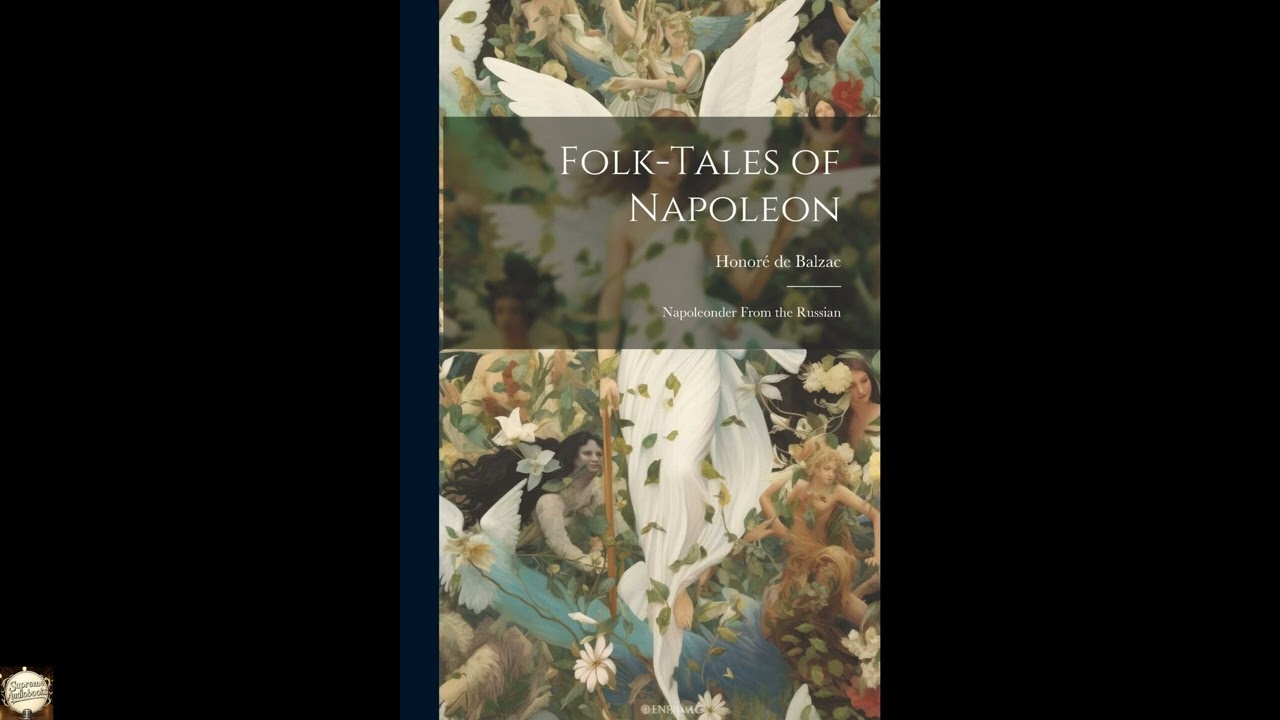
Folk-tales of Napoleon: Napoleonder From the Russian
What happens when a colossal historical figure, a man who reshaped a continent, filters through the collective consciousness of ordinary people, particularly those he once sought to conquer? Honoré de Balzac’s "Folk-tales of Napoleon: Napoleonder From the Russian" is a fascinating, perhaps unexpected, excursion from the renowned chronicler of French society. This unique collection steps away from the drawing rooms and financial intrigues of Paris to present Napoleon Bonaparte not as a general or emperor, but as "Napoleonder" — a mythical, almost supernatural entity in the popular imagination of Russia. Far from a standard historical account, this work offers a rare glimpse into the spontaneous myth-making process, revealing how legend eclipses fact, and how even the grandest figures are reinterpreted through the prism of local culture, fear, and wonder. For today’s listener, it provides a powerful meditation on how public figures become icons, how narratives shape perception, and the enduring power of storytelling in forging collective memory. The narrative scope of "Folk-tales of Napoleon" is less a conventional plot and more an anthropological survey, gathering an array of anecdotes, superstitions, and fantastical stories circulating among Russian peasants and soldiers in the aftermath of Napoleon's devastating 1812 invasion. Balzac acts as the discerning, yet empathetic, collector, presenting these oral traditions with a blend of scholarly curiosity and narrative flair. The "main character" is undoubtedly Napoleon himself, but a Napoleon transformed – no longer the strategic genius or the political revolutionary, but a figure of monstrous proportions, endowed with arcane powers, capable of vanishing in a puff of smoke or possessing an army of demons. These tales paint him as "Napoleonder," a name that hints at a destructive, otherworldly force. The "arc" of the story isn't linear but cumulative, building a mosaic of a legend as it takes hold and evolves in the popular mind. From initial awe and terror during the actual invasion, these tales morph into a retrospective attempt to explain the inexplicable, to rationalize the trauma of war through the fantastic. The stories range from the darkly humorous to the deeply superstitious, depicting Napoleon as everything from a sorcerer who eats children to a figure of divine punishment, or even a trickster who outsmarts his enemies with cunning rather than conventional warfare. The collection captures the spirit of a people grappling with a profound national experience, turning a historical event into a framework for their existing cultural beliefs and storytelling traditions. Honoré de Balzac, born in Tours, France, in 1799, lived a life as dramatic and ambitious as many of the characters he created. His early years were marked by financial struggles and unsuccessful ventures in publishing and printing, leaving him with substantial debts that plagued him throughout his career. It was these very pressures, however, that fueled his prodigious literary output. Beginning in the 1820s, Balzac dedicated himself entirely to writing, ultimately conceiving the monumental project known as La Comédie humaine — "The Human Comedy." This sprawling cycle of nearly one hundred interconnected novels and short stories aimed to provide a comprehensive, realistic panorama of French society from the Napoleonic era to the July Monarchy. Balzac's life was a tireless pursuit of social observation and literary creation, often working sixteen hours a day, sustained by strong coffee. He meticulously documented the various strata of French society – the aristocracy, the bourgeoisie, the working class, the criminal underworld – with an unparalleled eye for detail and psychological depth. His notable works, such as Eugénie Grandet, which lays bare the corrosive power of avarice; Père Goriot, a searing portrayal of filial ingratitude and Parisian social climbing; and Illusions perdues, a chronicle of an aspiring poet’s disillusionment in the capital, firmly established him as a pioneer of literary realism. Balzac's influence on subsequent generations of writers, including Dickens, Flaubert, and Zola, was immense, cementing his place as a towering figure in the canon of world literature before his death in Paris in 1850. The collection of "Folk-tales of Napoleon" foregrounds several compelling themes. Central among these is the theme of myth-making versus historical fact. The book starkly illustrates how a historical figure, however well-documented, can be utterly transformed by the popular imagination. For instance, rather than a military strategist, Napoleon becomes "Napoleonder," a being of almost supernatural power, able to conjure battles out of thin air or manipulate events through sheer will. This transformation isn't an error but a testament to humanity’s need to filter grand events through familiar cultural lenses, often resorting to exaggeration and the supernatural to make sense of overwhelming realities. Another prominent theme is cultural perception and the construction of "the Other." Through these Russian folk tales, Balzac reveals not only how Napoleon was perceived, but also, implicitly, how Russians viewed French power and their own national identity in opposition to it. The tales often imbue Napoleon with characteristics that reflect Russian anxieties and virtues – his hubris contrasted with Russian resilience, his foreignness against their local traditions. The way his name itself becomes a monstrous epithet encapsulates this cultural struggle. The collection also highlights the power of oral storytelling to transmit, preserve, and reshape collective memory, demonstrating how stories, irrespective of their veracity, become crucial components of a people's historical understanding and national consciousness. This compilation of "Napoleonder" tales emerged during a period of intense historical and cultural reflection in Europe. The Napoleonic Wars, which concluded with Bonaparte's final defeat in 1815 and his subsequent death in 1821, had left an indelible mark on the continent. In France, the shadow of Napoleon loomed large; he was simultaneously a figure of immense national pride and a symbol of devastating conflict. Across Europe, there was widespread fascination with how different nations had experienced and interpreted his meteoric rise and fall. Balzac, whose monumental Comédie humaine sought to document French society in the wake of these seismic shifts, was uniquely positioned to examine this phenomenon. In Russia, the victory over Napoleon in 1812 was a defining moment, fostering a profound sense of national identity and spiritual triumph. The tales gathered by Balzac reflect this victorious yet traumatized post-war sentiment, where the shared memory of the "Great Patriotic War" was still fresh and potent. It was a time when the lines between history, folklore, and national epic blurred, as people sought to process unprecedented events through the comfort and power of traditional storytelling. Balzac’s collection, therefore, serves as a literary artifact of this era, capturing the raw, unfiltered popular response to a figure who had become larger than life, illustrating how a collective historical experience solidifies into legend. Listening to "Folk-tales of Napoleon: Napoleonder From the Russian" as an audiobook brings these vivid tales to life in a way that reading them silently might not capture. The collection, running several hours, is perfectly suited for extended listening sessions, whether during a commute, while tending to household tasks, or during a focused afternoon. A skilled narrator can truly embody the shifting perspectives within the text, giving voice to the myriad Russian peasants, soldiers, and villagers whose anecdotes form the backbone of the work. Listeners can anticipate a narration that skillfully transitions between Balzac's framing observations and the distinct cadences of the folk tales themselves, capturing the blend of awe, fear, and humor inherent in the stories. The experience allows one to sink into the atmosphere of oral tradition, where the sound of the words themselves, the pacing, and the subtle inflections in dialogue create a sense of immediacy and historical resonance, making the legendary figure of Napoleonder feel remarkably present.
Enjoyed Folk-tales of Napoleon: Napoleonder From the Russian? A few ways to support us
Audible & Amazon links are affiliate; we may earn a small commission at no extra cost.
About this production
Human narration by a volunteer reader from LibriVox.org, the public-domain audiobook project. LibriVox volunteers record literary works whose copyright has expired in the United States, releasing the resulting recordings into the public domain.
Folk-tales of Napoleon: Napoleonder From the Russian by Honoré de Balzac. The underlying text is in the U.S. public domain. We do not republish any modern copyrighted edition, translation, or commentary.
The 4K cinematic visuals accompanying this audiobook are generated by an AI image model from prompts derived from the source text. No copyrighted photos, paintings, or stock footage are used. AI generation is disclosed on every video on our YouTube channel as required by YouTube's altered/synthetic content policy.
English subtitles are transcribed from the LibriVox recording with OpenAI Whisper. Translations into the 11 other supported languages are produced by Meta's NLLB-200 neural translation model. No human translator's copyrighted translation is used.
Questions about sourcing or rights? See our DMCA & Sourcing policy or contact us.
Enjoyed this audiobook?
If you'd like to own a copy of Folk-tales of Napoleon: Napoleonder From the Russian or hear a professionally produced edition, the links below help support free audiobook production at no extra cost to you.
As an Amazon Associate we earn from qualifying purchases. Audible / print links are affiliate.