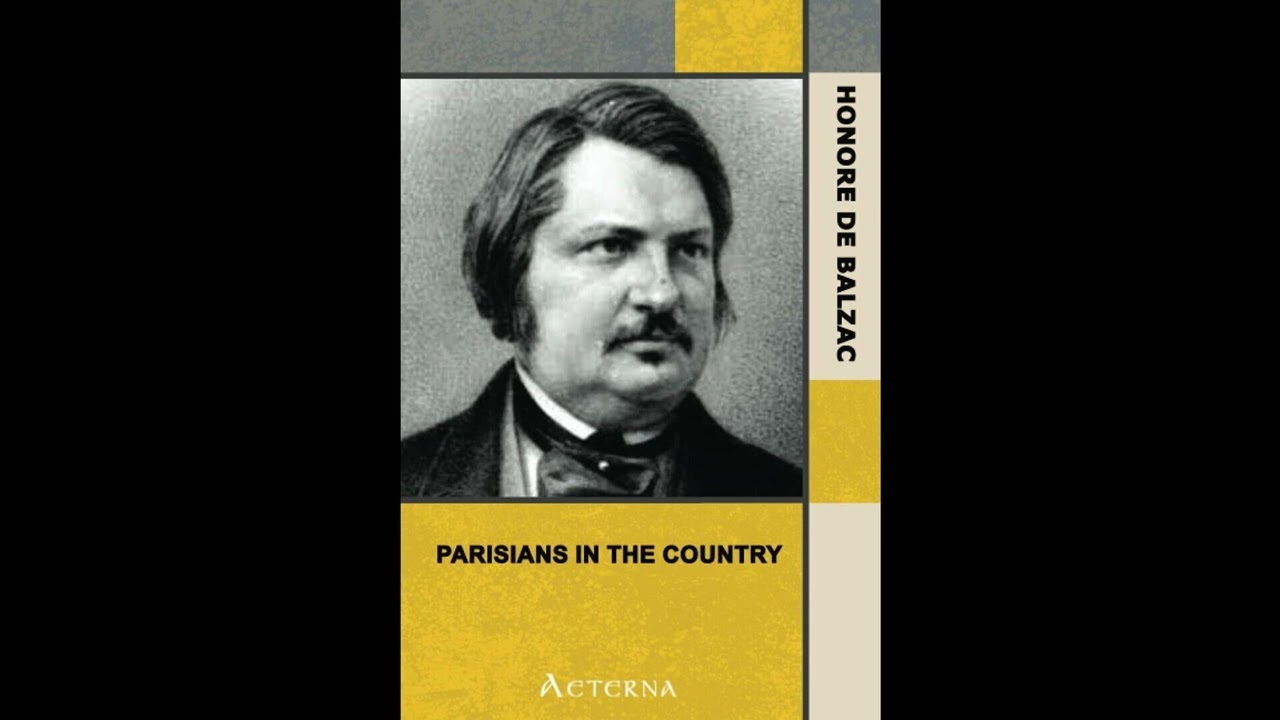
Parisians in the Country
Step into the bustling, ambitious, and often cynical world of Honoré de Balzac with "Parisians in the Country," a work that casts a knowing eye on the collision of metropolitan sophistication and provincial life. This selection from Balzac's immense Human Comedy project pulls back the curtain on the social dynamics that defined post-Napoleonic France, examining how ambition, desire, and the relentless pursuit of status played out across the varied landscapes of society. It offers listeners a chance to witness the enduring human drama of self-deception and the struggle for recognition, a story as relevant today in its observations of social performance and the yearning for belonging as it was nearly two centuries ago. Imagine a tranquil corner of the French countryside, perhaps a small estate or village lying just far enough from Paris to retain its rustic charm, yet close enough for the city’s influence to ripple through it like a stone dropped in a pond. Into this seemingly placid setting arrive a contingent of the city’s fashionable set—men and women whose lives are woven from gossip, social climbing, and calculated flirtations. They bring with them the elaborate manners, the subtle cruelties, and the sharp wit forged in Parisian salons and drawing rooms, disrupting the quiet routines of the local gentry and the aspirations of the village inhabitants. A central narrative thread follows the intertwining fates of these urban interlopers and the established residents. Perhaps a young provincial hopes to use the arrival of these influential figures to ascend the social ladder, or a seasoned Parisian seeks to escape—or conquer—the boredom of country living through new intrigues. Romantic entanglements, financial schemes, and rivalries for prestige quickly develop, setting characters on paths that reveal their true motivations and expose the veneers of their carefully constructed public personas. The story meticulously details the subtle power plays, the whispered judgments, and the grand illusions that form the fabric of society, showing how status is gained, lost, or desperately maintained. Honoré de Balzac, born in Tours, France, at the close of the eighteenth century, stands as a colossus of French literature, an author whose prodigious output and relentless vision helped define the literary movement of realism. His life was as dramatic and driven as many of his characters. He harbored grand ambitions from an early age, pursuing first a career in law before abandoning it for writing, fueled by an insatiable desire for fame and fortune. His early years in Paris were marked by struggle, failed business ventures—including a printing press and a publishing house—and the writing of anonymous gothic novels to pay off mounting debts. It was in the 1820s and 1830s that Balzac began to find his distinctive voice, embarking on the monumental literary enterprise he would eventually call "La Comédie humaine" (The Human Comedy). This vast series of interconnected novels and stories aimed to create a comprehensive portrait of French society during his lifetime, depicting nearly every profession, social class, and moral dilemma imaginable. Driven by copious amounts of coffee and an almost monastic dedication to his craft, Balzac produced an astonishing body of work, including celebrated novels such as Eugénie Grandet, Le Père Goriot, Illusions perdues, and Splendeurs et misères des courtisanes. His keen observation, psychological insight, and unflinching depiction of human foibles secured his place as a pioneer of the modern novel, inspiring generations of writers from Gustave Flaubert to Émile Zola. "Parisians in the Country" exemplifies several key Balzacian themes, offering a clear window into his worldview. One prominent theme is the social climbing and ambition that permeated nineteenth-century French society. Characters, whether from the city or the countryside, are often driven by a desperate need to improve their station, secure advantageous marriages, or simply gain the recognition they believe they deserve. We see this enacted in the calculated efforts of a young man to impress a sophisticated Parisian lady, or the subtle maneuvers of a country squire hoping to elevate his family’s standing by associating with influential guests. Another central theme is the contrast between city and country life, which is directly foregrounded in the title itself. Balzac skillfully portrays the distinct values, moral codes, and forms of corruption found in each environment, often suggesting that while Parisian society might be more overtly cynical, provincial life is not without its own petty jealousies and narrow-mindedness. Furthermore, the influence of money and materialism on human relationships is never far from Balzac’s attention. Fortunes are made and lost, inheritances are fought over, and social standing is often inextricably linked to financial solvency. The text frequently illustrates how wealth dictates alliances, fuels deception, and shapes the destinies of individuals. Finally, the novel touches upon the power of illusion versus reality, particularly regarding romantic ideals and social perceptions. Characters often harbor grand notions about love, honor, or the purity of rural existence, only for these illusions to be shattered by the stark realities of human nature and the calculating motives of others. This is evident in the disillusionment of a character who idealizes a city newcomer, only to discover their true, less noble intentions. Balzac's productive years coincided with a period of immense upheaval and transformation in France. Following the fall of Napoleon and the subsequent Bourbon Restoration, France grappled with conflicting political ideologies and rapid social change. The old aristocratic order, while attempting to reassert itself, was steadily giving way to the rising power of the bourgeoisie—a class driven by industry, commerce, and the acquisition of wealth. This shift created new opportunities for social mobility but also intensified anxieties about status and identity. Balzac, a keen observer of these societal currents, captured the dynamic spirit of an age where traditional values clashed with burgeoning capitalism and the pursuit of individual ambition. His work emerged as a direct response to this changing world, documenting its complexities and moral ambiguities with an almost sociological precision. Listening to "Parisians in the Country" as an audiobook offers an intimate connection to Balzac’s world, allowing the listener to absorb the intricate details and social commentary with focused attention. A skilled narrator breathes life into Balzac’s meticulously drawn characters, distinguishing between the affected airs of the urbanites and the more grounded, though often equally flawed, personalities of the countryside. The pacing of the narration can enhance the dramatic tension of a social slight, the gravity of a financial scheme, or the subtle humor inherent in Balzac’s observations. The spoken word allows the nuances of dialogue, the irony of a character’s internal thoughts, and the evocative descriptions of French landscapes and interiors to unfold, immersing you fully in the atmosphere of nineteenth-century France over its several hours of storytelling. It’s an opportunity to truly hear the intricate workings of a society laid bare by one of literature’s most insightful chroniclers.
Enjoyed Parisians in the Country? A few ways to support us
Audible & Amazon links are affiliate; we may earn a small commission at no extra cost.
About this production
Human narration by a volunteer reader from LibriVox.org, the public-domain audiobook project. LibriVox volunteers record literary works whose copyright has expired in the United States, releasing the resulting recordings into the public domain.
Parisians in the Country by Honoré de Balzac. The underlying text is in the U.S. public domain. We do not republish any modern copyrighted edition, translation, or commentary.
The 4K cinematic visuals accompanying this audiobook are generated by an AI image model from prompts derived from the source text. No copyrighted photos, paintings, or stock footage are used. AI generation is disclosed on every video on our YouTube channel as required by YouTube's altered/synthetic content policy.
English subtitles are transcribed from the LibriVox recording with OpenAI Whisper. Translations into the 11 other supported languages are produced by Meta's NLLB-200 neural translation model. No human translator's copyrighted translation is used.
Questions about sourcing or rights? See our DMCA & Sourcing policy or contact us.
Enjoyed this audiobook?
If you'd like to own a copy of Parisians in the Country or hear a professionally produced edition, the links below help support free audiobook production at no extra cost to you.
As an Amazon Associate we earn from qualifying purchases. Audible / print links are affiliate.