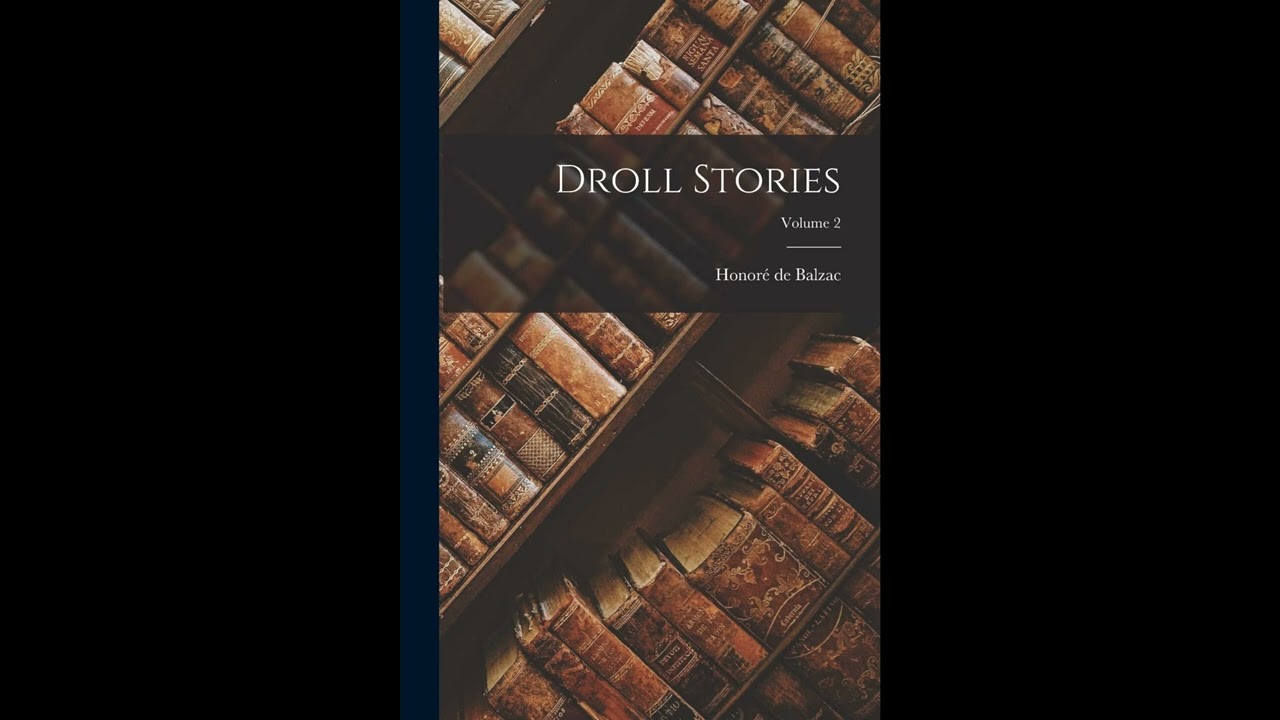
Droll Stories; Volume 2
Step back into a world where wit and human folly reigned supreme, long before the complexities of modern life dimmed the sparkle of a clever jest. Honoré de Balzac, the titan of French realism, offers a different facet of his genius in Droll Stories; Volume 2. Far from the detailed social panoramas of his grander novels, this collection presents a series of often scandalous, always amusing tales penned in a deliberately archaic style. It’s a delightful departure, a playful wink from an author known for his serious chronicling of society, revealing his deep appreciation for the foundational humor and earthy wisdom of French literary tradition. For anyone seeking insight into the enduring quirks of human nature or a lighthearted glimpse into a bygone era, this volume provides both hearty laughter and astute observation, proving that the more things change, the more certain aspects of our desires and deceptions remain comfortingly familiar. This specific volume transports the listener primarily to the Loire Valley during the French Renaissance—a period brimming with social change, religious fervor, and a certain uninhibited spirit. The setting is less about grand historical events and more about the intimate lives lived within castles, abbeys, and bustling market towns. Within these stories, one encounters a colorful cast of characters: cunning monks, amorous knights, virtuous (and not-so-virtuous) ladies, shrewd merchants, and spirited students, all navigating the labyrinthine paths of love, lust, ambition, and deception. Each story is a self-contained vignette, a small window into human behavior, where the central conflict often arises from the clash between desire and decorum, or between individual cunning and societal expectations. While there isn't a single overarching plot arc connecting these diverse narratives, a consistent thread runs through them all: the comedy inherent in human weakness and resourcefulness. Listeners will encounter situations ranging from elaborate schemes to secure a clandestine meeting, to mistaken identities leading to uproarious misunderstandings, and clever retorts that dismantle pretense. The "droll" nature of the tales implies a certain bawdiness and a frank appraisal of carnal appetites, but always delivered with a knowing smile rather than outright vulgarity. Balzac sets out to satirize, gently mock, and ultimately celebrate the enduring capacity of men and women to pursue their passions, often in the most inventive or ridiculous ways imaginable, without ever revealing the final delightful twists each short piece contains. Born Honoré Balzac in Tours in 1799, the author we know today as one of the pillars of European letters changed his name to Honoré de Balzac in 1822, subtly indicating his aristocratic aspirations. His early life was marked by a difficult relationship with his mother and a strict education. After a brief and unhappy stint in law, he dedicated himself to writing, driven by an almost superhuman ambition and an urgent need to escape mounting debts. His publishing ventures, particularly an ill-fated printing business, further exacerbated his financial woes, forcing him into a relentless schedule of writing, often fueled by strong coffee, enduring for hours into the night. His most ambitious project, "La Comédie humaine" (The Human Comedy), was an attempt to provide a comprehensive literary fresco of French society during the Bourbon Restoration and the July Monarchy. This monumental series, comprised of nearly 100 novels and novellas, includes such celebrated titles as Père Goriot, Eugénie Grandet, and Lost Illusions, establishing him as a pioneering figure of literary realism. Balzac meticulously constructed a fictional universe where characters reappear across different works, allowing for a profound sense of continuity and depth as they navigate the complexities of social class, ambition, and moral compromise. His literary output was prodigious, marked by an acute observation of character and social detail, making him a foundational figure in the development of the modern novel and a crucial link between Romanticism and the Naturalism that followed. He ultimately married Eveline Hanska, a Polish countess, after a long courtship, but died shortly thereafter in 1850, leaving behind a body of work that continues to shape our understanding of the novel’s potential. Beneath the laughter and bawdy humor, Balzac subtly comments on enduring human traits. One consistent theme is the relentless pursuit of desire, whether it is for love, lust, or even a good meal. Stories often present characters, regardless of their station—a pious abbot or a noble lady—as driven by very human appetites, sometimes to their comical undoing. For example, one might encounter a monk employing a convoluted stratagem to enjoy a forbidden feast, or a lady feigning an illness to escape a dull husband and meet a lover. This highlights a second theme: the inherent hypocrisy often present in social structures and religious institutions, where outward piety or decorum often masks very earthy intentions, serving as a gentle yet pointed satire. Another significant thread running through these tales is the celebration of wit and cunning as tools for navigating a complex world. Many characters succeed not through strength or virtue, but through their quick thinking, clever deceptions, and command of language. These stories are full of verbal jousting, clever retorts, and elaborate ruses, showing a deep appreciation for the power of intelligence and ingenuity. Finally, Balzac often touches upon the theme of social mobility and the fluid nature of hierarchy, albeit within the confines of a Renaissance setting. Characters from various social strata interact, and often, it is not birthright but intelligence and resourcefulness that dictate who emerges victorious or at least amused from a given predicament. The mid-19th century in France, the era of the July Monarchy, saw a society grappling with the aftermath of revolution and empire, a growing bourgeoisie, and the first stirrings of industrialization. Balzac, deeply immersed in chronicling this evolving landscape in his "Human Comedy," chose to look backward for his "Droll Stories." The full collection, published in three "decades" between 1832 and 1837, represented a conscious stylistic choice to echo the bawdy, vigorous spirit of Renaissance authors like François Rabelais. At a time when literary tastes were moving towards realism and detailed social observation, Balzac’s decision to adopt archaic language and embrace tales of medieval France was both a tribute to a rich literary past and a refreshing counterpoint to the seriousness of his more contemporary works. It allowed him to comment on human foibles with a lighter, more universal touch, free from the specific political and social pressures of his own time, by framing them in a more distant, less controversial historical mirror. To truly appreciate the archaic charm and sly humor of Balzac's Droll Stories, listening aloud offers an unparalleled opportunity. A skilled narrator breathes life into the distinctive phrasing, the playful alliterations, and the varied cadences Balzac so carefully crafted, making the comedic timing and character voices truly shine. With a run length of several hours, this volume is perfectly suited for commutes, household chores, or simply relaxing with a cup of tea, allowing the listener to absorb a few tales at a time or indulge in a longer session. Pay attention to how the narrator brings out the subtle differences in character, from the pompous to the sly, and how they navigate Balzac's unique narrative style, transporting you directly to the castles and taverns of old France. The atmosphere it creates is one of convivial amusement, a literary treat designed to lighten the spirit and sharpen the wit.
Enjoyed Droll Stories; Volume 2? A few ways to support us
Audible & Amazon links are affiliate; we may earn a small commission at no extra cost.
About this production
Human narration by a volunteer reader from LibriVox.org, the public-domain audiobook project. LibriVox volunteers record literary works whose copyright has expired in the United States, releasing the resulting recordings into the public domain.
Droll Stories; Volume 2 by Honoré de Balzac. The underlying text is in the U.S. public domain. We do not republish any modern copyrighted edition, translation, or commentary.
The 4K cinematic visuals accompanying this audiobook are generated by an AI image model from prompts derived from the source text. No copyrighted photos, paintings, or stock footage are used. AI generation is disclosed on every video on our YouTube channel as required by YouTube's altered/synthetic content policy.
English subtitles are transcribed from the LibriVox recording with OpenAI Whisper. Translations into the 11 other supported languages are produced by Meta's NLLB-200 neural translation model. No human translator's copyrighted translation is used.
Questions about sourcing or rights? See our DMCA & Sourcing policy or contact us.
Enjoyed this audiobook?
If you'd like to own a copy of Droll Stories; Volume 2 or hear a professionally produced edition, the links below help support free audiobook production at no extra cost to you.
As an Amazon Associate we earn from qualifying purchases. Audible / print links are affiliate.