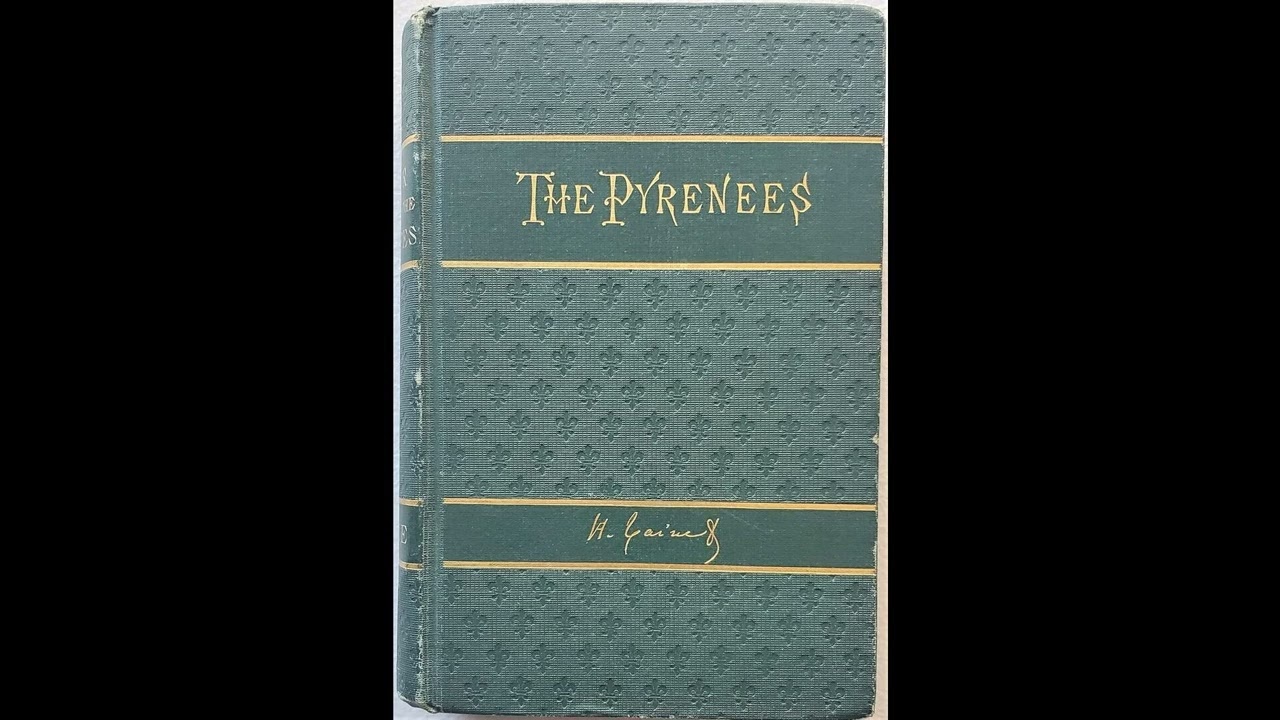
A Tour Through The Pyrenees
Step into a world where observation becomes an art, and the very landscape holds the key to understanding humanity. Hippolyte Adolphe Taine’s A Tour Through The Pyrenees offers more than just a travelogue; it presents a profound engagement with a region where nature’s grandeur meets layers of history and distinct culture. For listeners today, this work provides a literary escape to a majestic mountain range, seen through the eyes of one of the 19th century’s most rigorous intellects. It is a chance to witness the world with a heightened sense of perception, to learn how a critical mind makes sense of the physical world and its human imprints, and to find a thoughtful antidote to modern hurriedness in Taine’s patient, analytical gaze. Taine’s account ushers us into the majestic expanse of the Pyrenees, the formidable mountain chain that forms a natural border between France and Spain. The setting itself emerges as a central entity, presented in vivid, scientific detail, yet imbued with a sense of awe. The narrative unfolds as a methodical yet deeply personal progression through diverse terrains: from the verdant slopes and pastoral valleys that characterize the foothills, up to the stark, craggy peaks where snow persists even in summer. Taine, as the discerning narrator, is our primary companion, a figure whose intellectual curiosity shapes every observation. He interacts not so much with a cast of individual characters, but with the collective spirit of the region’s inhabitants – the shepherds, the villagers, the pilgrims – each painted with broad strokes that emphasize their connection to their environment. The story, rather than following a conventional plot with external conflicts, centers on an internal, intellectual quest. Taine seeks to comprehend the essence of the Pyrenees: its geological formation, its flora and fauna, the distinctive folkways and historical legacy of its people. His "conflict" is the challenge of precise documentation and interpretation, the task of synthesizing disparate observations into a coherent understanding. We watch him grapple with the sheer scale of the mountains, contrast ancient ruins with modern life, and discern the subtle influences of climate and geography on human character. The arc of this narrative builds not towards a dramatic climax, but towards a cumulative intellectual portrait, a detailed and systematic unveiling of the Pyrenean world through the lens of a keen, analytical mind. Hippolyte Adolphe Taine (1828-1893) was a towering figure in 19th-century French intellectual life, renowned as a critic, historian, and philosopher. Born in Vouziers, France, he received an exceptional education, graduating at the top of his class from the prestigious École Normale Supérieure. His early academic promise led to a distinguished career, culminating in his appointment as professor of aesthetics and art history at the École des Beaux-Arts in Paris, and later his election to the Académie française. Taine was deeply influenced by the positivist philosophy of Auguste Comte and the scientific advancements of his era, which shaped his belief in a deterministic view of human behavior and culture. He famously posited that human actions, thoughts, and artistic creations could be understood as products of three primary factors: race (heredity), milieu (environment), and moment (historical context). This rigorous, almost scientific approach defined his literary criticism and historical works, making him a highly influential, if sometimes controversial, figure. Among his most celebrated contributions are his multi-volume History of English Literature (1864) and The Origins of Contemporary France (1875-1893), the latter a sweeping and critical examination of the French Revolution and its aftermath. Taine’s systematic methodology placed him at the forefront of the Naturalist movement, demonstrating how observation and analysis could be applied not only to scientific phenomena but also to the complexities of human society and artistic expression. Within A Tour Through The Pyrenees, several profound themes rise to the fore. One prominent idea is the powerful interplay between nature and human endeavor. Taine consistently draws attention to the sublime grandeur of the mountain landscape – its towering peaks, deep gorges, and dramatic weather patterns – contrasting it with the tenacity and adaptations of human life. For instance, he might describe the stark, geological reality of a high mountain pass, then immediately pivot to an account of the isolated, centuries-old villages nestled within such harsh conditions, showing how human culture is shaped by, and struggles against, the indifference of the natural world. Another significant theme is the enduring legacy of history imprinted upon place. Taine demonstrates how the Pyrenees are not merely a geographical feature but a palimpsest of historical events and successive cultures. He presents descriptions of ancient Roman roads still discernible, the ruins of medieval castles perched strategically on hilltops, and the enduring customs of local populations that echo ancient traditions. Through detailed observations of a specific region, such as the architecture of a village or the remnants of a local superstition, he illustrates how the "moment" – the historical context – leaves indelible marks on the "milieu," making the landscape itself a living archive of human experience. This work emerged during a fascinating period in the mid-to-late 19th century, a time marked by significant cultural, political, and scientific shifts. In France, the Second Empire gave way to the Third Republic, a period of national introspection and a renewed focus on French identity. Intellectually, it was an era when scientific rationalism and positivism were challenging traditional Romantic ideals, advocating for empirical observation and systematic analysis. This was also a time of burgeoning interest in travel, not just for leisure, but for ethnographic and geographical study. Railways were expanding, making formerly remote regions more accessible, and travel writing was gaining traction as a genre that could blend personal experience with serious academic inquiry. Taine’s approach resonated deeply with this zeitgeist. His meticulous observations and analytical framework offered a way to understand a specific region of France not just romantically, but scientifically, seeing it as a unique blend of "race, milieu, and moment." The book serves as a perfect demonstration of his critical method applied to the physical world, contributing to the broader movement of Naturalism that emphasized objectivity and determinism in art and thought. It allowed readers to vicariously experience the Pyrenees through a lens that was both descriptive and intellectually rigorous, providing insights into regional identity at a time when national unity was a key concern. Listening to A Tour Through The Pyrenees as an audiobook offers a singular opportunity to fully immerse oneself in Taine's rich descriptive prose and analytical mind. The narrator’s voice becomes the conduit for Taine’s precise observations, allowing the listener to visualize the grandeur of the mountains, the nuances of the local cultures, and the subtle shifts in climate and topography that Taine so carefully delineates. The run length of several hours makes this an ideal companion for long drives, contemplative walks, or extended periods of focused listening, providing ample time to absorb the intricacies of Taine’s thought. Listeners will find themselves drawn into the rhythm of his descriptions, the meticulous pacing of his arguments, and the careful articulation of his intellectual discoveries, making the very act of listening a reflective intellectual pursuit in itself.
Enjoyed A Tour Through The Pyrenees? A few ways to support us
Audible & Amazon links are affiliate; we may earn a small commission at no extra cost.
About this production
Human narration by a volunteer reader from LibriVox.org, the public-domain audiobook project. LibriVox volunteers record literary works whose copyright has expired in the United States, releasing the resulting recordings into the public domain.
A Tour Through The Pyrenees by Hippolyte Adolphe Taine. The underlying text is in the U.S. public domain. We do not republish any modern copyrighted edition, translation, or commentary.
The 4K cinematic visuals accompanying this audiobook are generated by an AI image model from prompts derived from the source text. No copyrighted photos, paintings, or stock footage are used. AI generation is disclosed on every video on our YouTube channel as required by YouTube's altered/synthetic content policy.
English subtitles are transcribed from the LibriVox recording with OpenAI Whisper. Translations into the 11 other supported languages are produced by Meta's NLLB-200 neural translation model. No human translator's copyrighted translation is used.
Questions about sourcing or rights? See our DMCA & Sourcing policy or contact us.
Enjoyed this audiobook?
If you'd like to own a copy of A Tour Through The Pyrenees or hear a professionally produced edition, the links below help support free audiobook production at no extra cost to you.
As an Amazon Associate we earn from qualifying purchases. Audible / print links are affiliate.