A Distinguished Provincial at Paris
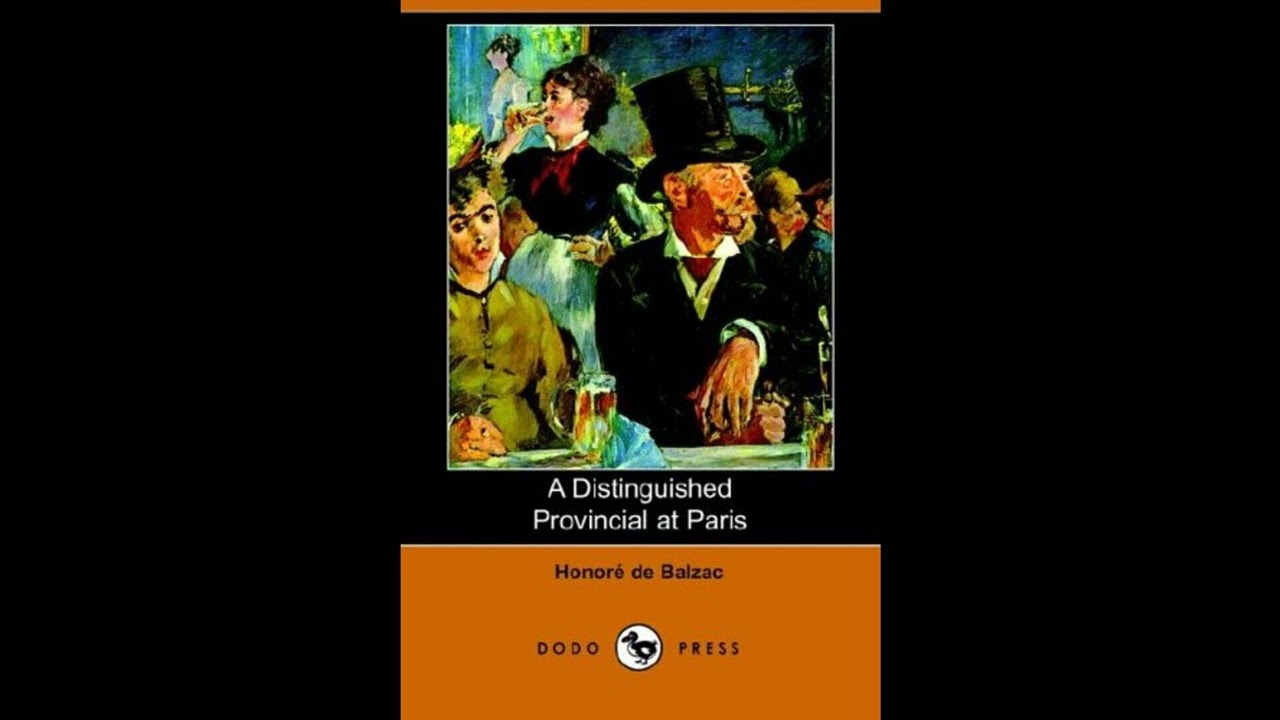
Imagine a young dreamer, full of talent and boundless ambition, arriving in a bustling metropolis with nothing but his aspirations and a burning desire for recognition. This archetypal struggle, the clash between provincial idealism and urban cynicism, lies at the heart of Honoré de Balzac's "A Distinguished Provincial at Paris." Originally published in the nineteenth century, this narrative remains strikingly relevant in any era where social climbing, the pursuit of fame, and the brutal realities of success dictate public life. Balzac pulls back the curtain on the mechanisms of society that elevate and then discard individuals, offering a mirror to our own contemporary struggles with identity, integrity, and the cost of public acclaim. The story plunges into early nineteenth-century Paris, seen through the eager, yet increasingly jaded, eyes of Lucien Chardon de Rubempré. Lucien, a handsome young poet, has fled his provincial hometown, convinced his literary genius will conquer the capital. He finds Paris a ruthless landscape, less a sanctuary for art and more a battleground for social influence and financial gain. Lucien quickly discovers the world of Parisian letters intertwines with the often corrupt realm of journalism. His initial attempts to publish poetry meet indifference. He finds a foothold writing for newspapers, learning that opinion can be bought, reputations manufactured, and moral principles easily compromised for profit. He falls under the influence of cynical journalist Étienne Lousteau and manipulative courtesan Coralie, each encounter stripping away Lucien's innocence and revealing the brutal transactional nature of social and literary success. As Lucien navigates this treacherous world, he experiences the intoxicating highs of fleeting celebrity and the crushing lows of public scorn and financial ruin. He witnesses firsthand how artistic integrity can be sacrificed on the altar of commercial expediency. His romantic entanglements prove equally fraught, complicating his professional life and leading him into deeper debt and moral compromise. The central conflict becomes Lucien's desperate struggle to maintain artistic aspirations and personal dignity amidst the seductive pressures of money, power, and fleeting fame that threaten to consume him. Honoré de Balzac, born Honoré Balssa in Tours, France, in 1799, lived a life as dramatic and ambitious as many of his fictional characters. He abandoned law studies to pursue writing, despite early financial struggles and failed ventures. These experiences undoubtedly sharpened his observations of society's economic pressures and the struggle for social mobility. He even added the aristocratic "de" to his surname in 1822, reflecting his burgeoning social ambitions. Balzac dedicated himself to an immense literary project, La Comédie humaine (The Human Comedy), a vast series of nearly 100 interconnected novels and novellas. This monumental undertaking sought to depict every social stratum and moral type, creating a fictional universe with recurring characters. "A Distinguished Provincial at Paris" is a pivotal section within this broader vision. His meticulous detail, psychological acuity, and keen eye for social dynamics established him as a founding figure of literary Realism. Balzac passed away in Paris in 1850, leaving behind a body of work that influenced generations of writers and provides an unparalleled sociological record of his era. "A Distinguished Provincial at Paris" masterfully articulates several enduring themes. One central concern is the destructive nature of unchecked ambition when untethered from moral principle. Lucien arrives in Paris dreaming of literary glory, but his desire for recognition and wealth quickly overshadows his artistic integrity. We see this acutely as he learns to write glowing reviews for books he despises or savage critiques for those he admires, all dictated by financial incentives or journalistic rivalries. This compromise of artistic vision for commercial gain is presented not as an anomaly, but as the standard operating procedure within Parisian literary circles. Another significant theme is the corrupting power of the emerging press. Balzac portrays newspapers not as objective purveyors of truth, but as instruments of manipulation, capable of making or breaking reputations based on fleeting fashion or personal vendetta. Lucien's experiences reveal how public opinion can be manufactured, how flattery and slander become commodities, and how sensationalism often eclipses genuine critical engagement. The novel also foregrounds the stark contrast between provincial idealism and Parisian cynicism, illustrating how naive aspirations are systematically dismantled by the city's ruthless social machinery, forcing difficult choices between integrity and survival. The fluidity of social mobility is also a constant presence, showing how quickly one can rise or fall based on connections, luck, and adaptability. Balzac's "A Distinguished Provincial at Paris" is deeply embedded in the social and political landscape of early nineteenth-century France, specifically the tumultuous period following the Napoleonic Wars. This era was characterized by profound societal shifts: rapid urbanization drew countless young people like Lucien from the provinces to Paris in search of opportunity, creating a fertile ground for both aspiration and disillusionment. The aristocracy's grip on power was loosening, while a new bourgeois class, driven by commerce and finance, was ascendant. Crucially, this period saw the explosive growth and increasing influence of the printed press. Newspapers and journals became powerful forces, not just for disseminating information, but for shaping public opinion and influencing cultural trends. The novel reflects a society grappling with shifting class definitions and the complex interplay between money, power, and art—a world ripe for Balzac's unflinching realistic observations. Experiencing "A Distinguished Provincial at Paris" as an audiobook brings Balzac's lively world to life in an immersive way. Its substantial length, typically several hours, makes it an ideal companion for commutes, long walks, or quiet evenings, allowing ample time to absorb its detail. A skilled narrator can illuminate Balzac's prose, giving distinct voices to the cynical journalists, ambitious poets, and shrewd social climbers, while capturing the atmospheric bustle of nineteenth-century Paris. The carefully modulated pacing allows listeners to fully appreciate the author's meticulous social observations and the psychological depth of his characters, making Lucien de Rubempré's dilemmas resonate with powerful immediacy.
Enjoyed A Distinguished Provincial at Paris? A few ways to support us
Audible & Amazon links are affiliate; we may earn a small commission at no extra cost.
About this production
Human narration by a volunteer reader from LibriVox.org, the public-domain audiobook project. LibriVox volunteers record literary works whose copyright has expired in the United States, releasing the resulting recordings into the public domain.
A Distinguished Provincial at Paris by Honore De Balzac. The underlying text is in the U.S. public domain. We do not republish any modern copyrighted edition, translation, or commentary.
The 4K cinematic visuals accompanying this audiobook are generated by an AI image model from prompts derived from the source text. No copyrighted photos, paintings, or stock footage are used. AI generation is disclosed on every video on our YouTube channel as required by YouTube's altered/synthetic content policy.
English subtitles are transcribed from the LibriVox recording with OpenAI Whisper. Translations into the 11 other supported languages are produced by Meta's NLLB-200 neural translation model. No human translator's copyrighted translation is used.
Questions about sourcing or rights? See our DMCA & Sourcing policy or contact us.
Enjoyed this audiobook?
If you'd like to own a copy of A Distinguished Provincial at Paris or hear a professionally produced edition, the links below help support free audiobook production at no extra cost to you.
As an Amazon Associate we earn from qualifying purchases. Audible / print links are affiliate.