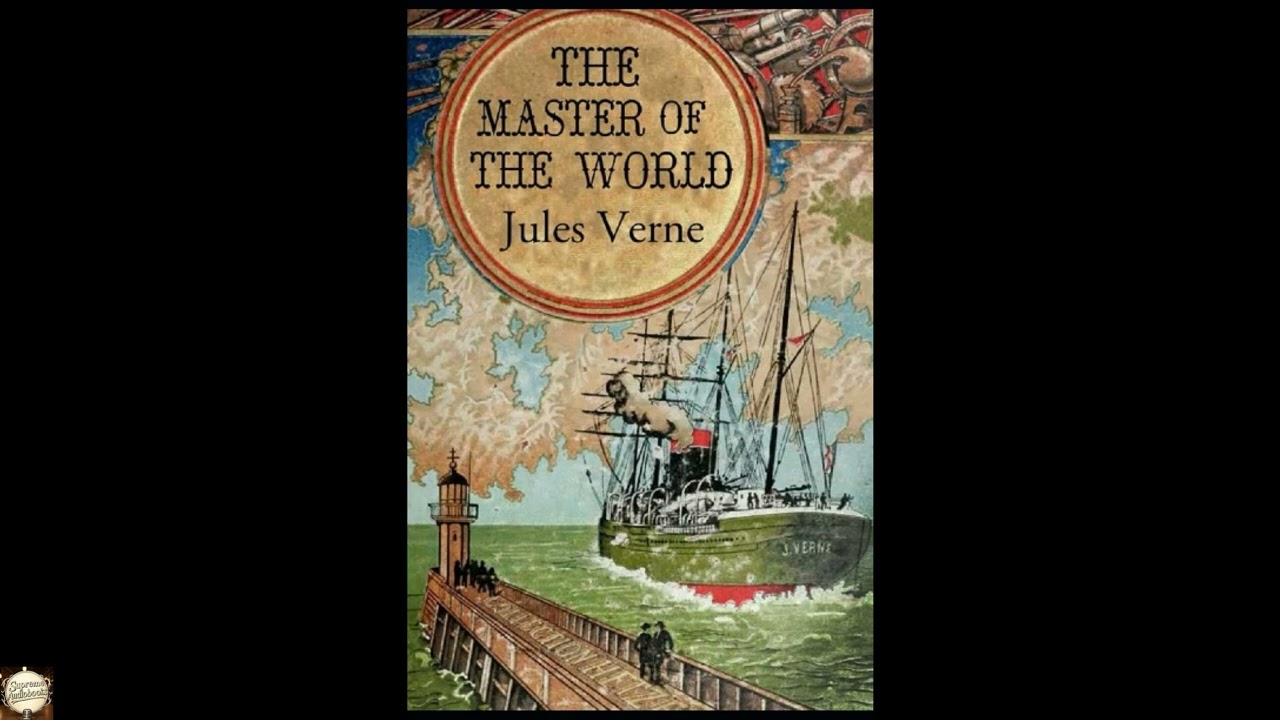
The Master of the World Annotated
In a world increasingly shaped by unprecedented technological advances, where the lines between science fiction and reality often blur, Jules Verne’s The Master of the World resonates with startling clarity. This prescient novel, a late-period offering from the legendary French author, grapples with themes that remain fiercely relevant: the unchecked ambition of genius, the ethical responsibilities that accompany scientific power, and humanity's inherent fear of the unknown and the uncontrollable. It asks pressing questions about who should wield such power, and what happens when an individual decides to unilaterally dictate the future. This annotated edition provides listeners not just with a thrilling narrative, but with a deeper understanding of Verne's vision, his scientific inspirations, and the lasting impact of his ideas on our collective imagination. The narrative plunges listeners into the early years of the twentieth century in the United States, where a series of bizarre and inexplicable phenomena are terrorizing the populace. Strange lights streak across the night sky at impossible speeds, objects appear and disappear without a trace, and mysterious, rumbling tremors shake the ground in isolated areas. The authorities are baffled, and fear grips the nation. Chief Inspector John Strock, a methodical and determined detective from Washington, D.C., receives the impossible assignment of unraveling these mysteries. His investigation leads him to the remote, untamed landscapes of the Great Dismal Swamp, the Adirondack Mountains, and the desolate Badlands, each site bringing him closer to a truth far stranger than he could have imagined. Strock soon learns that these events are not natural occurrences, but the deliberate acts of an unseen force – an individual of extraordinary intellect and engineering prowess. This enigmatic figure, known only as "The Master of the World," commands an incredible vehicle, the "Terror," capable of operating as a submarine, an automobile, an airship, and a speedboat, moving with unimaginable speed and stealth. Strock, driven by a commitment to law and order, finds himself caught in a desperate pursuit, eventually becoming a prisoner aboard the very machine he seeks to understand. He observes firsthand the terrifying capabilities of the Terror and the chilling vision of its creator, Robur, a man convinced of his own superiority and determined to make the world acknowledge his dominion through fear and wonder. The story builds toward a climactic confrontation where Strock must decide whether to side with humanity's limitations or risk his life to challenge an unfettered genius. Jules Verne, born in Nantes, France, in 1828, established himself as one of the most influential writers in literary history. Initially studying law at his father's urging, Verne soon gravitated towards writing for the theater before meeting publisher Pierre-Jules Hetzel, a partnership that would redefine popular literature. Hetzel encouraged Verne to combine scientific accuracy with thrilling adventure, leading to the creation of the Voyages Extraordinaires series, a collection of dozens of novels that blended science, geography, and imagination. Verne’s work earned him recognition not just in France but globally, establishing him as a pioneer of what would later be termed science fiction. He passed away in 1905, leaving behind a legacy that continues to inspire inventors, scientists, and storytellers alike. Verne’s prolific output included such iconic tales as Twenty Thousand Leagues Under the Seas, which introduced Captain Nemo and his advanced submarine the Nautilus; Journey to the Center of the Earth, a descent into the planet’s geological wonders; and Around the World in Eighty Days, a breathless race against the clock. These stories, along with The Master of the World, cemented Verne's place in the literary canon as a visionary who predicted technological marvels long before their invention – from submarines and spacecraft to giant airships and global communication. His fiction not only entertained but also ignited public interest in scientific discovery and exploration, pushing the boundaries of what readers believed possible. The Master of the World enacts several profound themes relevant even today. One central idea involves the inherent dangers of technological hubris. Robur, the reclusive inventor, builds his fantastic machine, the Terror, not for the betterment of humanity, but to assert his dominance and challenge established authority. His isolation and refusal to share his knowledge reflect a deep distrust of mankind, portraying genius unmoored from ethical considerations. For instance, Strock's observations of the Terror's destructive potential, and Robur's cold indifference to the chaos he causes, serve as a stark warning about the consequences when power is concentrated in the hands of an unchecked individual. Another significant theme centers on the conflict between individual liberty and collective security. Strock represents the law, the ordered society that Robur so vehemently rejects. Robur operates outside all national boundaries and legal constraints, demonstrating absolute freedom and scientific prowess, but at the cost of societal harmony and peace. The fear he instills in the public, and the inability of world governments to track or stop him, highlights the fragility of existing structures when confronted by radical innovation in the wrong hands. The annotated edition further clarifies how Verne's narrative critiques or celebrates such figures within their historical context, offering insight into the scientific and philosophical debates of his era. Verne wrote and published The Master of the World in 1904, a period marked by astounding technological progress alongside rising international tensions. The early twentieth century witnessed the rapid development of automobiles, the fledgling stages of aviation with the Wright brothers' historic flight only a year prior, and the widespread adoption of electricity. This era stirred both immense optimism for scientific advancement and a growing unease about the potential misuse of such power. Writers like Verne, who had long championed the wonders of science, began to reflect a more pessimistic outlook in their later works, perhaps recognizing that human nature often lags behind technological capability. The looming threat of global conflict and the escalating arms race among nations undoubtedly influenced Verne's portrayal of a rogue inventor using advanced technology for self-serving rather than altruistic purposes, tapping into anxieties about the destructive potential of human ingenuity. Listening to The Master of the World Annotated as an audiobook offers a uniquely immersive way to experience Verne's thrilling narrative and the context surrounding it. A skilled narrator brings Strock's relentless determination and Robur's chilling resolve to life, allowing listeners to visualize the mysterious flying machines and frantic pursuits with vivid clarity. The annotations are woven seamlessly into the production, providing invaluable insights into Verne’s scientific predictions, historical references, and literary techniques without interrupting the flow of the story. The pacing of the narration enhances the suspense as Strock closes in on his target, while distinct voice work for the characters deepens the dramatic impact of their exchanges. Over several hours of listening, this format allows for an intimate engagement with Verne's prescient vision and a deeper appreciation for the genius behind this gripping tale.
Enjoyed The Master of the World Annotated? A few ways to support us
Audible & Amazon links are affiliate; we may earn a small commission at no extra cost.
About this production
Human narration by a volunteer reader from LibriVox.org, the public-domain audiobook project. LibriVox volunteers record literary works whose copyright has expired in the United States, releasing the resulting recordings into the public domain.
The Master of the World Annotated by Jules Verne. The underlying text is in the U.S. public domain. We do not republish any modern copyrighted edition, translation, or commentary.
The 4K cinematic visuals accompanying this audiobook are generated by an AI image model from prompts derived from the source text. No copyrighted photos, paintings, or stock footage are used. AI generation is disclosed on every video on our YouTube channel as required by YouTube's altered/synthetic content policy.
English subtitles are transcribed from the LibriVox recording with OpenAI Whisper. Translations into the 11 other supported languages are produced by Meta's NLLB-200 neural translation model. No human translator's copyrighted translation is used.
Questions about sourcing or rights? See our DMCA & Sourcing policy or contact us.
Enjoyed this audiobook?
If you'd like to own a copy of The Master of the World Annotated or hear a professionally produced edition, the links below help support free audiobook production at no extra cost to you.
As an Amazon Associate we earn from qualifying purchases. Audible / print links are affiliate.