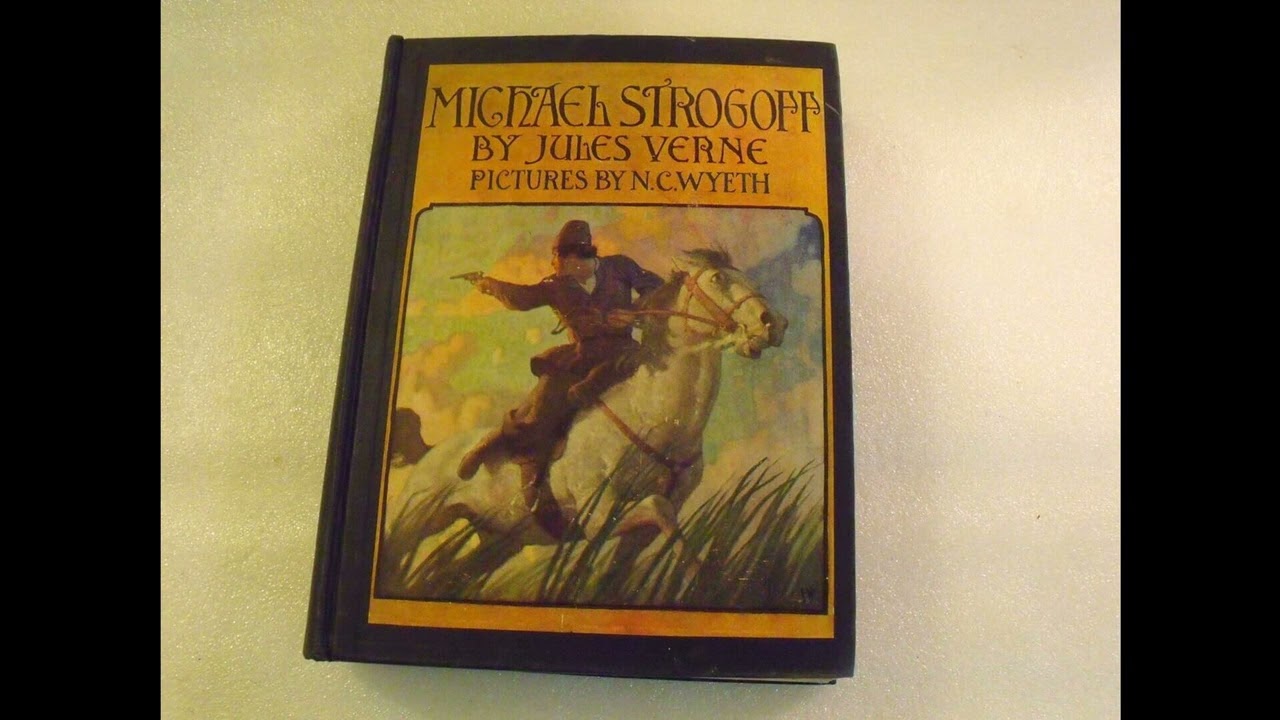
Michael Strogoff: A Courier of the Czar (Scribner Illustrated Classics)
In a world of instant communication and global interconnectedness, it’s easy to forget the sheer audacity and perilous stakes of delivering a message across a continent. Michael Strogoff: A Courier of the Czar plunges listeners into such a world, offering a pulse-pounding tale of duty, resilience, and survival against overwhelming odds. Jules Verne’s 1876 novel, a triumph of adventure fiction, remains as compelling today as it was nearly 150 years ago, speaking to the enduring human spirit in the face of impossible challenges and the critical importance of a single individual’s courage. This is a story about loyalty tested to its breaking point and the quiet heroism that can change the course of nations, a narrative that resonates deeply with anyone who has ever faced an unyielding obstacle. The story unfolds against the sprawling backdrop of Imperial Russia in the mid-19th century. News reaches the Czar that his brother, the Grand Duke, stationed in Irkutsk, Siberia, is under siege. A Tartar rebellion, instigated by the treacherous Feofar-Khan and aided by a turncoat general, is sweeping across the vast Siberian plains, cutting off all telegraph lines and threatening to dismantle the empire’s eastern reaches. With no other option, the Czar calls upon Michael Strogoff, a man renowned for his unwavering loyalty and extraordinary physical prowess, to undertake a desperate and almost suicidal mission. Strogoff must carry a crucial, coded message to the Grand Duke, warning him of the impending betrayal and providing vital strategic information. His quest begins in Moscow, a frantic dash across thousands of miles of hostile territory, through forests, rivers, and barren steppes, all while disguised as a simple merchant. Every mile brings new dangers: natural hazards, the watchful eyes of Tartar spies, and the ever-present threat of betrayal from within Russian lines. Along the way, Strogoff encounters Nadia, a young woman traveling to reunite with her exiled father, and two foreign correspondents, the British Harry Blount and the French Alcide Jolivet, whose paths intermittently cross with his. These chance encounters complicate his mission, forcing him to balance his personal feelings and the desire to aid others with the absolute secrecy and solitary focus his imperial directive demands. He must suppress his true identity, even when it means enduring indignities and witnessing injustices he longs to prevent, all for the sake of the message he carries, a message that holds the fate of an empire. Jules Verne, born in Nantes, France, in 1828, stands as a foundational figure in the development of adventure fiction and is often recognized for his visionary contributions to what would later be called science fiction. Verne initially studied law, a path his father encouraged, but his true passions lay in literature and the theater. He moved to Paris, where he struggled as a playwright, eventually finding his stride after meeting publisher Pierre-Jules Hetzel. Hetzel recognized Verne’s unique ability to blend scientific speculation with thrilling narratives, encouraging him to write adventure stories that educated as much as they entertained. This partnership led to the publication of Verne's groundbreaking "Voyages Extraordinaires" series, which included iconic works such as Twenty Thousand Leagues Under the Seas, detailing Captain Nemo's submarine adventures, and Around the World in Eighty Days, a breathless race against time. His stories often featured incredible technological advancements, detailed geographical descriptions, and a sense of wonder at the potential of human ingenuity. Verne’s influence spread globally, making him one of the most translated authors in history, and his narratives continue to inspire generations of readers and writers with their blend of rigorous research, imaginative leaps, and compelling characterizations until his death in 1905. At its core, Michael Strogoff is a profound examination of duty and loyalty. Michael’s commitment to the Czar and his mission is absolute, transcending personal comfort, safety, and even family ties. A particularly poignant scene occurs when Strogoff, having been captured by the Tartars, sees his own mother among the prisoners. To maintain his cover and protect his critical mission, he is forced to endure her suffering without revealing himself, a devastating test of his resolve. This moment powerfully illustrates the immense personal sacrifice demanded by his oath. The book also showcases human resilience and endurance, not only physical but psychological. Strogoff faces extreme physical hardships – long marches, brutal weather, famine, and violence – yet he consistently pushes through. His unwavering spirit, even after a cruel punishment intended to blind him, demonstrates the extraordinary capacity of the human will to overcome adversity and remain steadfast in purpose. Furthermore, the narrative highlights the critical role of communication in conflict. The entire plot revolves around a message, a small piece of paper that carries the weight of an empire’s destiny. The Tartars’ first act of rebellion is to cut the telegraph lines, emphasizing the power of information and the strategic importance of its swift and secure transmission. Strogoff’s isolated mission becomes a testament to human communication in its purest, most desperate form, showing how a single piece of intelligence can turn the tide of war. The book also implicitly touches upon themes of imperialism and the clash of cultures, set against the backdrop of Russia’s expansion into Siberia and its conflicts with indigenous groups, providing a dramatic stage for Strogoff's personal heroics within a larger geopolitical struggle. Michael Strogoff was published in 1876, a period marked by significant imperial expansion and growing international tensions. The "Great Game," a strategic rivalry between the British and Russian Empires for supremacy in Central Asia, was in full swing, creating a fascination with distant lands and geopolitical intrigue. Russia’s expansion eastward into Siberia and its attempts to solidify control over its vast territories provided a timely and relevant setting for Verne’s story. The telegraph, a relatively new technology, had transformed communication, but its vulnerability in remote areas made a human courier’s mission all the more dramatic and vital. Culturally, it was an era of intense public interest in exploration, scientific discovery, and adventure narratives, making Verne’s blend of factual detail and high-stakes drama particularly appealing to a wide audience hungry for stories of courage and resourcefulness in exotic locales. Listening to Michael Strogoff: A Courier of the Czar as an audiobook offers a uniquely immersive experience, allowing the listener to truly inhabit the vastness of Verne’s world. The extensive run length, stretching across several hours, is perfectly suited for extended sessions, whether during a long drive, daily commutes, or while engaging in household tasks, offering a deep dive into the narrative without interruption. A skilled narrator brings Verne's meticulously detailed descriptions of the Siberian landscape and the various characters to life, making the perilous trek feel immediate and visceral. Pay close attention to the shifts in pacing, from moments of intense action and narrow escapes to periods of quiet, desperate endurance. The varied voices given to characters like the stalwart Strogoff, the pragmatic Nadia, and the often-comic journalists Blount and Jolivet, enrich the dialogue and deepen the atmosphere of this classic tale of daring and devotion.
Enjoyed Michael Strogoff: A Courier of the Czar (Scribner Illustrated Classics)? A few ways to support us
Audible & Amazon links are affiliate; we may earn a small commission at no extra cost.
About this production
Human narration by a volunteer reader from LibriVox.org, the public-domain audiobook project. LibriVox volunteers record literary works whose copyright has expired in the United States, releasing the resulting recordings into the public domain.
Michael Strogoff: A Courier of the Czar (Scribner Illustrated Classics) by Jules Verne. The underlying text is in the U.S. public domain. We do not republish any modern copyrighted edition, translation, or commentary.
The 4K cinematic visuals accompanying this audiobook are generated by an AI image model from prompts derived from the source text. No copyrighted photos, paintings, or stock footage are used. AI generation is disclosed on every video on our YouTube channel as required by YouTube's altered/synthetic content policy.
English subtitles are transcribed from the LibriVox recording with OpenAI Whisper. Translations into the 11 other supported languages are produced by Meta's NLLB-200 neural translation model. No human translator's copyrighted translation is used.
Questions about sourcing or rights? See our DMCA & Sourcing policy or contact us.
Enjoyed this audiobook?
If you'd like to own a copy of Michael Strogoff: A Courier of the Czar (Scribner Illustrated Classics) or hear a professionally produced edition, the links below help support free audiobook production at no extra cost to you.
As an Amazon Associate we earn from qualifying purchases. Audible / print links are affiliate.