From the Earth to the Moon: and Round the Moon
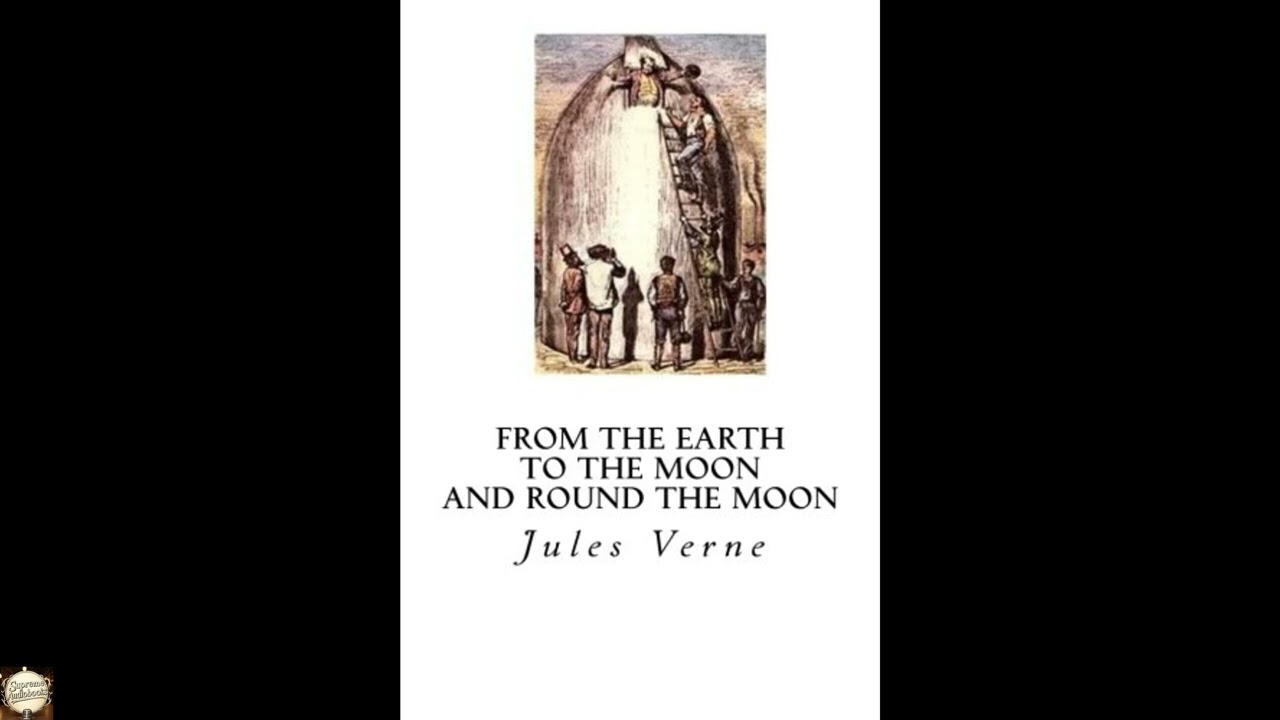
Imagine a world where the greatest minds, fresh from the crucible of war, turn their formidable talents to an audacious dream: touching the moon. Jules Verne's From The Earth to the Moon: and Round The Moon brings precisely that vision to life – a thrilling, meticulously imagined tale of human ambition soaring skyward. Written over a century and a half ago, this foundational work of scientific speculation remains startlingly relevant, a testament to our ceaseless desire to reach beyond terrestrial bounds. It offers not just a story, but a blueprint for wonder, reminding us that yesterday's fantasy can become tomorrow's reality. The narrative opens in the aftermath of the American Civil War, where the members of the Baltimore Gun Club, a society of artillery experts, find themselves restless without a conflict to fuel their engineering prowess. Their visionary president, Impey Barbicane, proposes an astounding project: to build a cannon colossal enough to fire a projectile to the moon. This idea electrifies the club and the world. Detailed plans for the Columbiad, an immense cannon cast into the earth near Tampa, Florida, meticulously address every scientific and practical consideration from metallurgy to ballistics. International excitement builds as funds pour in from nations across the globe, eager to participate in this grand endeavor. As construction progresses, Captain Nicholl, a brilliant inventor of armor plating, emerges to challenge Barbicane’s calculations and the very premise of the project. Their rivalry, born of professional pride and scientific debate, adds tension to the unified pursuit. Then, as final preparations are made, a flamboyant and adventurous Frenchman, Michel Ardan, arrives with an even more astonishing proposal: he doesn't just want the projectile to reach the moon; he wants to be inside it. Ardan's audacious plan transforms the scientific experiment into an unparalleled human adventure. With Barbicane and Nicholl reluctantly joining him inside the specially designed aluminum projectile, the stage is set for an epic voyage. The world watches with bated breath as the colossal cannon fires, launching the intrepid trio into the vastness of space. As they hurtle toward their lunar destination, they face the challenges of weightlessness, make scientific observations of their celestial environment, and experience the awe of witnessing Earth receding and the Moon growing ever larger – a breathtaking cosmic view few could have imagined in Verne’s era. Jules Verne, born on February 8, 1828, in Nantes, France, grew up in a port city that undoubtedly sparked his lifelong fascination with travel, engineering, and distant lands. Though initially studying law in Paris, Verne soon abandoned the legal profession for his true calling: writing. His early career saw him dabble in theater, but his fortunes truly turned with his collaboration with publisher Pierre-Jules Hetzel. Hetzel recognized Verne’s unique talent for blending thrilling adventure with cutting-edge scientific speculation, encouraging him to write what would become the "Voyages Extraordinaires" series. This prolific series cemented Verne's reputation as a literary pioneer, making him a household name around the world. He eventually settled in Amiens, France, where he continued to write until his death on March 24, 1905. His works include enduring classics such as Twenty Thousand Leagues Under the Seas, which plunged readers into the ocean depths aboard Captain Nemo’s Nautilus, and Around the World in Eighty Days, a breathless race against time across continents. Verne's visionary storytelling and uncanny ability to anticipate future technologies – from submarines and aircraft to space travel – firmly established him as a founding figure of science fiction, translated more than almost any other author in history. From The Earth to the Moon vividly showcases human ingenuity and the boundless potential of collective endeavor. The detailed scientific explanations of the cannon's construction, the projectile’s design, and the calculations required for such a feat underscore Verne’s profound belief in reason and scientific advancement. For instance, the painstaking description of the Columbiad's casting, dug directly into the Florida soil and lined with masonry, highlights the meticulous planning and engineering prowess required. This ingenuity extends to the characters' problem-solving in space, adapting to new conditions with inventive solutions. Another prominent theme is the spirit of adventure and the pursuit of the unknown, embodied by Michel Ardan. His effervescent personality and unwavering desire to be the first human to reach the moon exemplify a uniquely human drive to push boundaries and to witness the sublime. The narrative balances scientific realism with this unbridled enthusiasm, making the quest not just an intellectual exercise but an emotional and heroic one. This work also examines the contrast between scientific rivalry and international cooperation, as nations contribute to the grand project even as characters like Barbicane and Nicholl spar over technical details, ultimately uniting for the greater goal. Jules Verne composed From the Earth to the Moon in 1865, with its sequel Round the Moon following in 1870, periods marked by immense societal and technological upheaval. The American Civil War had just concluded, leaving a generation of engineers and soldiers, like the Gun Club members, with vast technical skills and a lingering restlessness. Verne shrewdly tapped into this contemporary reality, envisioning these very talents redirected from wartime destruction to peacetime scientific conquest. The mid-to-late nineteenth century, the zenith of the Industrial Revolution, was an era of rapid advancements in engineering, metallurgy, and transportation. New inventions were transforming daily life, and the public held an eager fascination with scientific discovery. Verne's novels emerged from this fertile ground, reflecting the era's optimism about scientific progress and its belief that human ingenuity could overcome any obstacle. Listening to From The Earth to the Moon: and Round The Moon as an audiobook offers a singular experience, breathing new life into Verne's pioneering narrative. The "several hours" run length allows the listener to fully immerse themselves in the meticulous details of the cannon's construction and the breathtaking descriptions of celestial mechanics. A skilled narrator differentiates the personalities of the spirited Michel Ardan, the pragmatic Impey Barbicane, and the skeptical Captain Nicholl, bringing their lively debates and humorous exchanges into vivid focus. Listen for the palpable build-up of suspense as the launch countdown proceeds, the shift in atmosphere once the projectile leaves Earth's gravity, and the sheer wonder conveyed in the observations from inside their cramped lunar vehicle. The spoken word enhances the sense of eyewitness participation in one of literature's most ambitious scientific endeavors, allowing the listener to truly hear the optimism, the scientific precision, and the poetic grandeur of Verne’s singular vision.
Enjoyed From the Earth to the Moon: and Round the Moon? A few ways to support us
Audible & Amazon links are affiliate; we may earn a small commission at no extra cost.
About this production
Human narration by a volunteer reader from LibriVox.org, the public-domain audiobook project. LibriVox volunteers record literary works whose copyright has expired in the United States, releasing the resulting recordings into the public domain.
From the Earth to the Moon: and Round the Moon by Jules Verne. The underlying text is in the U.S. public domain. We do not republish any modern copyrighted edition, translation, or commentary.
The 4K cinematic visuals accompanying this audiobook are generated by an AI image model from prompts derived from the source text. No copyrighted photos, paintings, or stock footage are used. AI generation is disclosed on every video on our YouTube channel as required by YouTube's altered/synthetic content policy.
English subtitles are transcribed from the LibriVox recording with OpenAI Whisper. Translations into the 11 other supported languages are produced by Meta's NLLB-200 neural translation model. No human translator's copyrighted translation is used.
Questions about sourcing or rights? See our DMCA & Sourcing policy or contact us.
Enjoyed this audiobook?
If you'd like to own a copy of From the Earth to the Moon: and Round the Moon or hear a professionally produced edition, the links below help support free audiobook production at no extra cost to you.
As an Amazon Associate we earn from qualifying purchases. Audible / print links are affiliate.