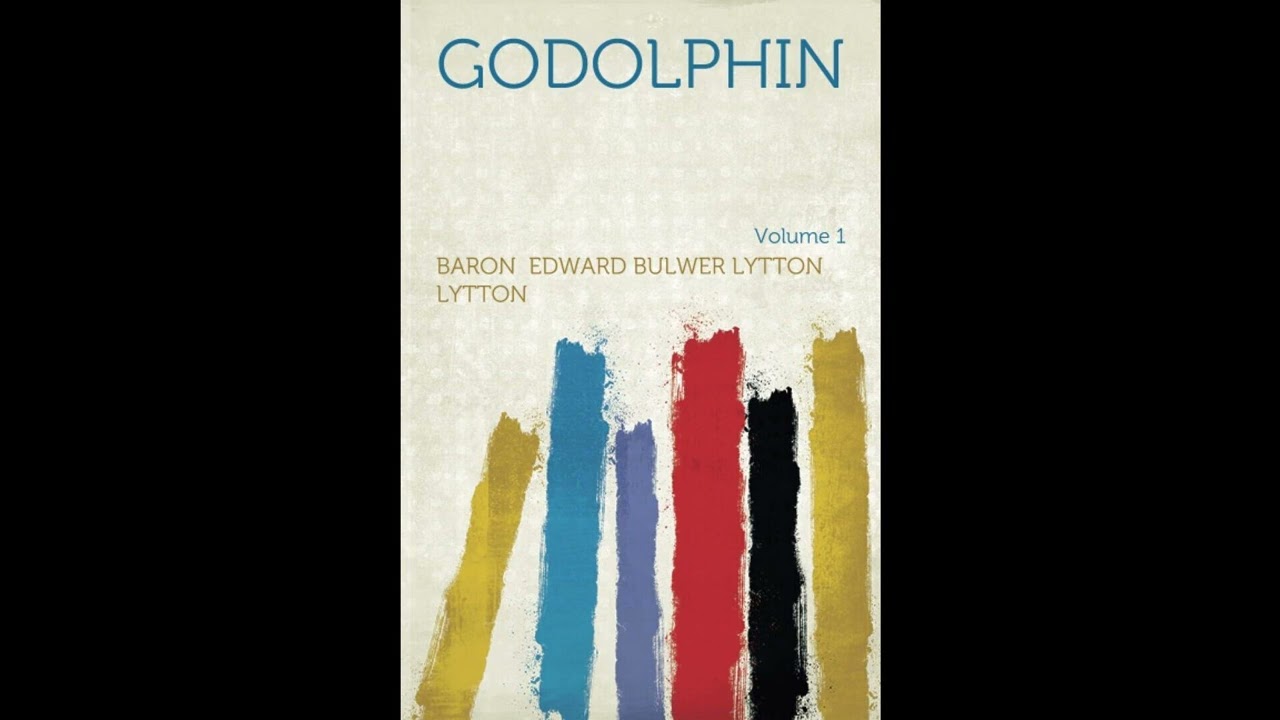
Godolphin
Godolphin presents a character study wrapped in the glittering, often deceptive, world of 19th-century English high society. Edward Bulwer Lytton, a master chronicler of social ambition and personal struggle, introduces us to a young man whose keen intellect and sensitive soul are perpetually at odds with the demands and temptations of his era. This story resonates even today, probing the universal human desire for meaning and fulfillment amidst the superficialities of status and wealth. Listeners will find in Godolphin's quest a familiar reflection of their own struggles to define happiness, to navigate ambition, and to discern genuine affection from the allure of fleeting passions. It’s a compelling look at how external pressures can shape, and sometimes distort, promising spirits. The narrative introduces Percy Godolphin, a young man of talent and romantic idealism, whose quiet upbringing contrasts sharply with the demanding world he is destined to enter. His intellect promises greatness, but his sensitive temperament leaves him susceptible to life's grand ideals and profound disappointments. Upon entering London's fashionable circles, his path quickly intersects with two pivotal figures: Fanny, a woman of simple goodness and devoted affection, and Lady Wilhelmina, a sophisticated, cynical beauty whose charm masks a shrewd understanding of societal maneuvering. As Godolphin rises through a complex social hierarchy, he grapples with conflicting forces. His initial idealism is gradually eroded by glittering, yet hollow, pursuits of ambition and status. This central conflict drives the story, as Godolphin's choices propel him through phases of disillusionment. The narrative shifts from London's drawing rooms to the artistic havens of Italy, where new experiences and loves—notably with the passionate, ill-fated Lucilla—test his understanding of love, purpose, and self-worth. Bulwer Lytton details Godolphin's internal and external struggles as he pursues an elusive ideal, often mistaking societal validation or fleeting passion for lasting contentment. The tale follows Godolphin’s earnest, if misguided, attempts to reconcile his inner world with external realities, through relationships and decisions that profoundly shape his character. Edward Bulwer Lytton, born in 1803, was a prominent and prolific figure in 19th-century English literature and politics. From a distinguished and wealthy family, he received his education at Cambridge, fostering his intellectual ambitions. His early life included a scandalous elopement and a difficult marriage to Rosina Doyle Wheeler, ending in a separation that fueled public gossip and personal animosity. Despite these turbulences, Bulwer Lytton maintained a relentless writing pace, producing novels, plays, poems, and essays. He gained fame with early novels like Pelham (1828), which helped define the "dandy novel," and quickly followed with "Newgate novels" such as Paul Clifford (1830) and Eugene Aram (1832), depicting criminals in a sympathetic light. Bulwer Lytton's literary range was immense, encompassing historical epics like The Last Days of Pompeii (1834) and Rienzi (1835), as well as philosophical and occult fiction such as Zanoni (1842). Later, he found success with domestic novels like The Caxtons (1849) and My Novel (1853). Beyond literature, he served as a Member of Parliament and Colonial Secretary, eventually becoming Baron Lytton in 1866. His influence on Victorian culture was considerable, coining enduring phrases like "the pen is mightier than the sword" and "the great unwashed." He died in 1873, leaving an immense literary legacy reflecting the complex social and intellectual currents of his age. One central theme Bulwer Lytton renders in Godolphin is the conflict between romantic idealism and cynical realism. Percy Godolphin begins life with a soul attuned to beauty, truth, and elevated sentiment, envisioning a world where merit and passion lead to fulfillment. However, the sophisticated, often morally ambiguous world of London society consistently challenges these ideals. For instance, Godolphin's early attraction to Lady Wilhelmina is less about genuine affection and more about the allure of her sharp intellect and social standing—a stark contrast to the simple love offered by Fanny. This dynamic shows how societal pressures can distort personal values, prompting individuals to prioritize worldly success over authentic emotional connection. The novel powerfully illustrates the disillusionment that can follow when an idealist confronts the pragmatic, often self-serving, mechanisms of the social sphere. Another theme is the corrupting influence of ambition and superficiality within high society. Bulwer Lytton meticulously details the intricate dance of reputation, wealth, and power, revealing how these elements can hollow out individuals and relationships. Characters prioritize social climbing and appearances above genuine human connection or moral integrity. Godolphin, despite his innate goodness, is repeatedly drawn into this superficial vortex, making decisions that compromise his happiness for perceived status or fleeting excitement. The novel demonstrates that while success and admiration might seem appealing, they often come at the cost of personal authenticity and inner peace. His pursuit of various women—Fanny's domesticity, Wilhelmina's intellectualism, Lucilla's intense passion—highlights his restless search for meaning beyond the gilded cage of his circumstances. Published in 1833, Godolphin emerged at a pivotal moment in British history—the cusp of the high Victorian era, immediately following the transformative 1832 Reform Act. This period featured immense social change, industrial expansion, and an increasing focus on moral rectitude and class distinctions. The novel reflects the anxieties and aspirations of a society grappling with its identity, moving from Regency excesses towards a more structured, yet complex, moral landscape. Writers keenly observed the impact of burgeoning wealth and industrialization on social hierarchies and individual psychology. Bulwer Lytton, a Member of Parliament for much of his life, engaged deeply with these contemporary issues. His novel critiqued the superficiality and moral compromises within society's upper echelons. It captured public fascination with character studies that interrogated the human condition against rapidly shifting social norms. The novel's focus on ambition, disillusionment, and authentic selfhood resonated strongly with an audience navigating a world where traditional values were challenged by new forms of power and influence, making it a powerful social commentary disguised as a personal drama. Listening to Godolphin as an audiobook offers a unique opportunity to immerse oneself in Bulwer Lytton's prose and the nuanced psychological landscape of his characters. The several hours of narration allow listeners to absorb the gradual unfolding of Percy Godolphin's life, his evolving relationships, and his profound internal conflicts. A skilled narrator brings a vital layer, guiding the listener through sophisticated dialogue and detailed descriptions of 19th-century England and Italy. The pacing often reflects the leisurely, reflective style common to novels of this period, giving ample time to contemplate the philosophical questions Bulwer Lytton poses. Distinct voices given to characters like Godolphin, the pragmatic Lady Wilhelmina, and the gentle Fanny breathe life into their interactions, enhancing the atmosphere of societal grandeur and personal struggle. This format transforms a classic literary work into an immediate, intimate encounter with a bygone world and its enduring human dilemmas.
Enjoyed Godolphin? A few ways to support us
Audible & Amazon links are affiliate; we may earn a small commission at no extra cost.
About this production
Human narration by a volunteer reader from LibriVox.org, the public-domain audiobook project. LibriVox volunteers record literary works whose copyright has expired in the United States, releasing the resulting recordings into the public domain.
Godolphin by Edward Bulwer Lytton Baron Lytton. The underlying text is in the U.S. public domain. We do not republish any modern copyrighted edition, translation, or commentary.
The 4K cinematic visuals accompanying this audiobook are generated by an AI image model from prompts derived from the source text. No copyrighted photos, paintings, or stock footage are used. AI generation is disclosed on every video on our YouTube channel as required by YouTube's altered/synthetic content policy.
English subtitles are transcribed from the LibriVox recording with OpenAI Whisper. Translations into the 11 other supported languages are produced by Meta's NLLB-200 neural translation model. No human translator's copyrighted translation is used.
Questions about sourcing or rights? See our DMCA & Sourcing policy or contact us.
Enjoyed this audiobook?
If you'd like to own a copy of Godolphin or hear a professionally produced edition, the links below help support free audiobook production at no extra cost to you.
As an Amazon Associate we earn from qualifying purchases. Audible / print links are affiliate.