Slave Narratives Georgia Narratives Part 3
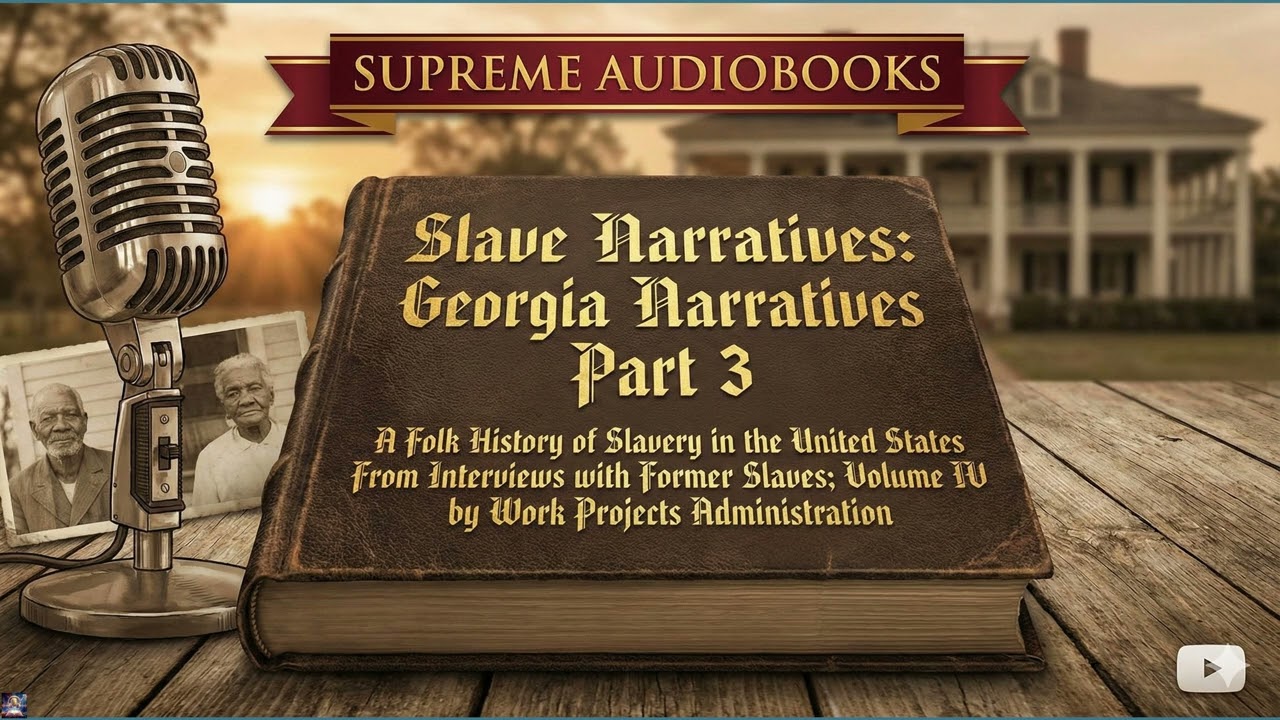
The echoes of history, often silenced or distorted in official records, find their most potent voice in the direct accounts of those who lived through it. Slave Narratives Georgia Narratives Part 3 offers precisely that: an unvarnished, deeply human window into the lived experience of slavery and its aftermath, as told by the very individuals who endured its injustices. This collection is more than just historical document; it is a profound act of witness, a testament to resilience, and a stark reminder of a past that continues to shape the present. For listeners today, these voices cut through academic abstraction, offering an intimate, visceral understanding of what it meant to be considered property, to fight for dignity, and to grasp for freedom in a world that denied it. It is a necessary listen for anyone seeking to understand the foundational struggles for human rights in America. This particular volume brings together a range of personal stories from former slaves in Georgia, each narrative a distinct thread contributing to a larger, agonizing panorama of life under bondage and the challenging years following emancipation. The collection sets its scene primarily across the plantations and rural landscapes of Georgia, a state deeply entrenched in the cotton economy and thus reliant on enslaved labor. The "main characters" are the aged men and women, interviewed decades after their emancipation, who courageously share their memories. They recount their childhoods spent in the cotton fields, the daily routines dictated by the arbitrary will of their enslavers, and the constant threat of violence, separation, or sale. The narratives detail the meager rations, the rough clothing, and the ubiquitous sound of the overseer's whip. Beyond the physical hardships, a central conflict emerges in the spiritual and emotional struggle for self-preservation against a system designed to strip away identity and hope. These individuals speak of their families, often torn apart by sale, and their desperate attempts to maintain connections or reunite after freedom. They describe acts of subtle resistance—feigning illness, slowing work, preserving African cultural traditions in secret—alongside more overt attempts at escape. The narratives also move beyond 1865, painting a complex picture of "freedom" as a new set of challenges: the struggle for land, employment, education, and protection from racial violence during Reconstruction and the rise of Jim Crow. While no single "arc" of a fictional plot exists, the collective trajectory of these stories reveals the enduring human spirit striving for autonomy against overwhelming odds. The "author" of these Georgia narratives, and indeed the broader collection of slave narratives, is "Unknown" in the traditional sense, as these are transcribed oral histories. However, the true genesis of this monumental work lies with the Federal Writers' Project (FWP), a division of the Works Progress Administration (WPA), established in 1935 during the Great Depression. The FWP employed writers, editors, and other unemployed white-collar workers to produce guidebooks, historical records, and other publications. Among its most significant undertakings was the "Slave Narratives: A Folk History of Slavery in the United States From Interviews with Former Slaves," a project spearheaded by folklorist B.A. Botkin. Between 1936 and 1938, thousands of interviews were conducted across seventeen Southern states, collecting firsthand accounts from the last generation of formerly enslaved people, many of whom were in their eighties and nineties. The interviewers, both Black and white, sought to document the experiences of slavery before these crucial voices were lost to time. These dedicated individuals traveled to rural communities, homes, and care facilities, meticulously recording testimonies. The FWP's commitment to preserving these oral histories, despite the inherent challenges of memory, dialect, and the power dynamics of the interview setting, represents an invaluable contribution to American historical understanding and a profound act of giving voice to the voiceless. Several powerful themes resonate through the Georgia narratives. One of the most striking is the resilience of the human spirit in the face of unimaginable oppression. Time and again, these individuals recount brutal conditions—whippings, forced separations, relentless labor—yet their stories are also filled with instances of quiet defiance, unwavering faith, and the sustaining power of community. One former slave might describe how they secretly learned to read, risking severe punishment, embodying the yearning for knowledge that no chain could entirely bind. Another might recall how their family maintained their spiritual practices, adapting them to survive the Christianized environment, demonstrating an unbreakable cultural identity. Another pervasive theme is the brutality and dehumanization inherent in the institution of slavery. The narratives offer unvarnished accounts of physical violence, not just as punishment but as an everyday tool of control. They speak of the casual cruelty, the denial of basic human rights, and the profound trauma of seeing loved ones sold away without recourse. A poignant example might be a former slave detailing the sound of a mother crying for her child taken to another plantation, an image that transcends mere description and conveys the deep emotional scars left by such practices. These detailed recollections serve as an undeniable indictment of a system built on subjugation. The collection of slave narratives emerged at a unique juncture in American history. The 1930s were a period of immense social and economic upheaval, marked by the Great Depression, which spurred the federal government into unprecedented social programs like the New Deal. The FWP was a direct outcome of this era, designed to put unemployed writers back to work. Culturally, there was a growing interest in American folklore and the experiences of ordinary people, a movement sometimes linked to social realism in literature. Politically, despite the official end of slavery decades prior, racial segregation and discrimination were deeply entrenched under Jim Crow laws, particularly in the South. This context shaped both the collection of the narratives and their subsequent reception. The project was driven by a desire to preserve history, recognizing that the generation of formerly enslaved people was rapidly dying out. There was also an implicit aim to reconcile a fragmented national identity by confronting, albeit sometimes imperfectly, the legacy of slavery. The narratives offered a direct challenge to romanticized or sanitized versions of the antebellum South, presenting a stark, often uncomfortable truth from the perspective of those who suffered most. Their collection represented a monumental effort to bridge the chasm between official historical accounts and the lived reality of millions. Listening to Slave Narratives Georgia Narratives Part 3 as an audiobook transforms historical documents into living testimonies. The very nature of these accounts, originating as oral histories, means that the spoken word is their truest form. A skilled narrator breathes life into these decades-old voices, allowing the listener to grasp the rhythms of speech, the subtle inflections, and the raw emotion embedded within each story. The pacing often reflects the careful, sometimes hesitant, way these memories were shared, allowing moments of reflection and gravity. The narrative voice can evoke the deep weariness, the quiet determination, or the lingering pain in these individuals' recollections, making their experiences intimately tangible. It is in the audio format that the power of these personal histories, preserved from a time often misrepresented, finds its most potent and immediate connection with a contemporary audience.
Enjoyed Slave Narratives Georgia Narratives Part 3? A few ways to support us
Audible & Amazon links are affiliate; we may earn a small commission at no extra cost.
About this production
Human narration by a volunteer reader from LibriVox.org, the public-domain audiobook project. LibriVox volunteers record literary works whose copyright has expired in the United States, releasing the resulting recordings into the public domain.
Slave Narratives Georgia Narratives Part 3. The underlying text is in the U.S. public domain. We do not republish any modern copyrighted edition, translation, or commentary.
The 4K cinematic visuals accompanying this audiobook are generated by an AI image model from prompts derived from the source text. No copyrighted photos, paintings, or stock footage are used. AI generation is disclosed on every video on our YouTube channel as required by YouTube's altered/synthetic content policy.
English subtitles are transcribed from the LibriVox recording with OpenAI Whisper. Translations into the 11 other supported languages are produced by Meta's NLLB-200 neural translation model. No human translator's copyrighted translation is used.
Questions about sourcing or rights? See our DMCA & Sourcing policy or contact us.
Enjoyed this audiobook?
If you'd like to own a copy of Slave Narratives Georgia Narratives Part 3 or hear a professionally produced edition, the links below help support free audiobook production at no extra cost to you.
As an Amazon Associate we earn from qualifying purchases. Audible / print links are affiliate.
More by Unknown
The Poetical Works; Gay's Fables; and Somerville's Chase. With Memoirs and Critical
Beggars Bush - From the Works of Francis Beaumont and John Fletcher (Volume 2 of 10)- Full Audiobook
Cattle and Their Diseases Embracing Their History and Breeds, Crossing and Breeding,- Full Audiobook