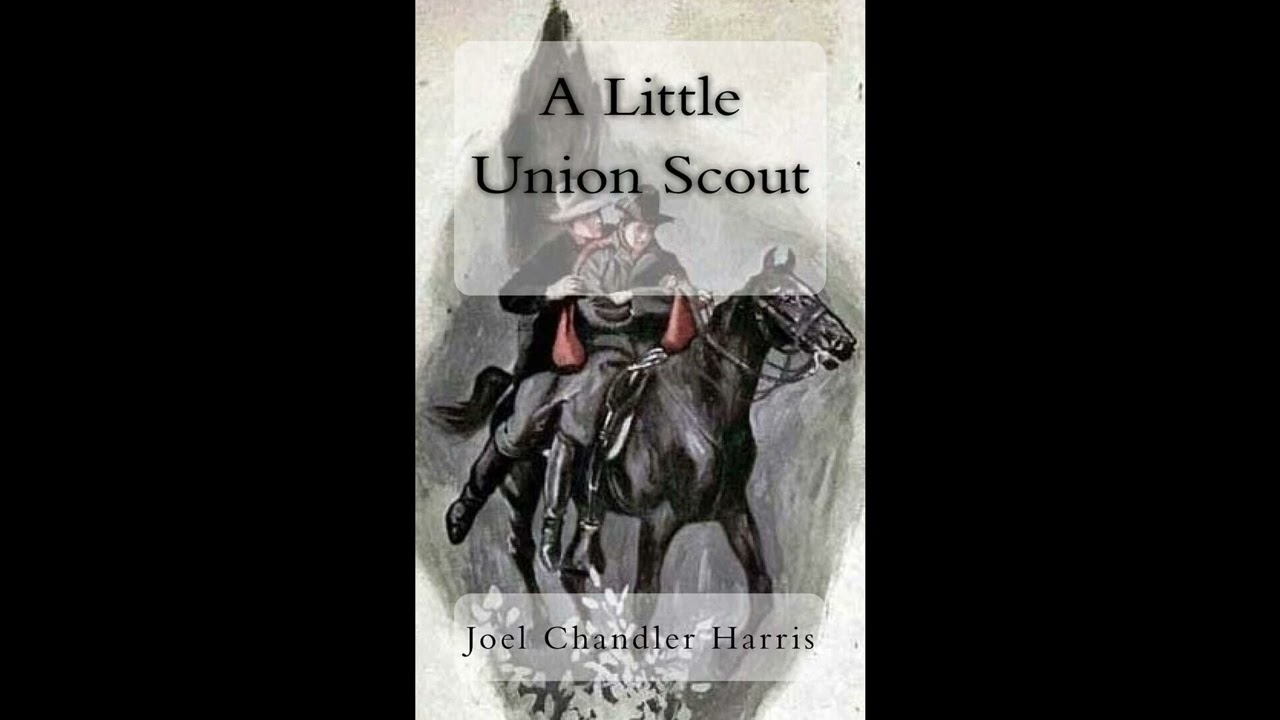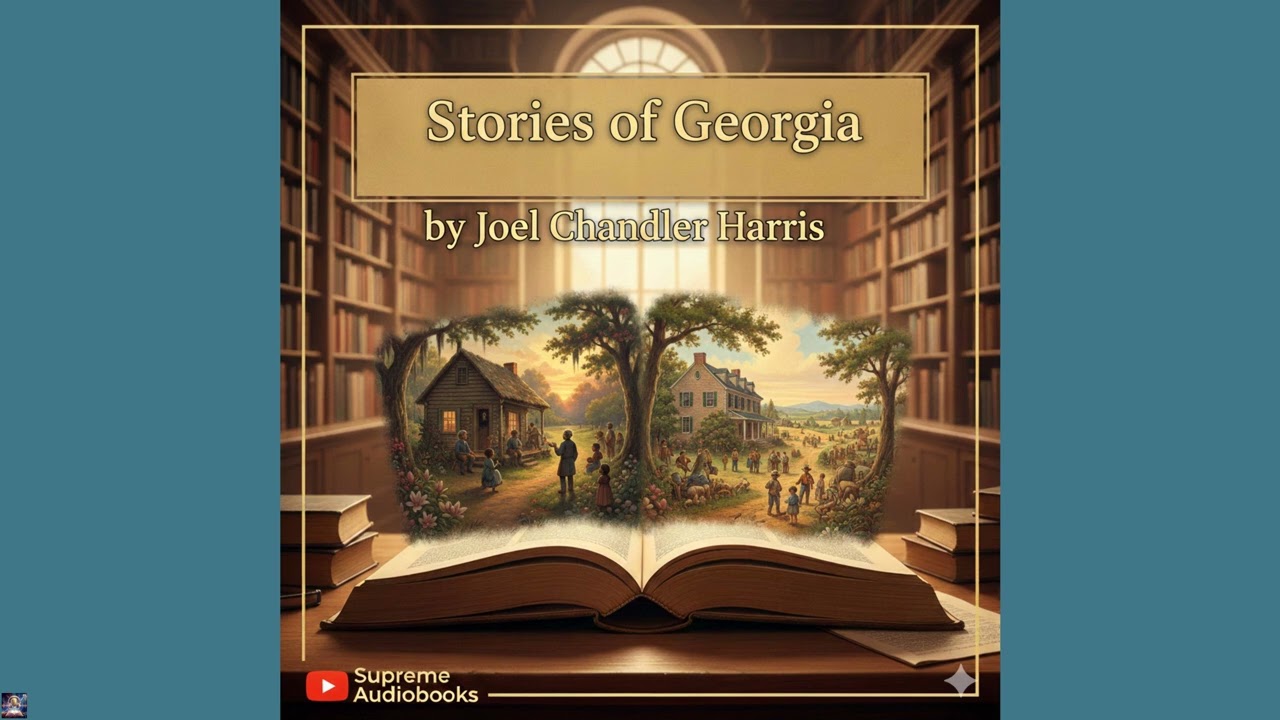
Stories of Georgia - Joel Chandler Harris
Step into a particular moment in American storytelling with Stories of Georgia - Joel Chandler Harris, a collection that opens a unique window into the American South. This isn't merely a series of tales; it is an important historical document, a preservation of oral traditions, and a foundational text in American folk literature. Listeners today will find themselves transported to a landscape steeped in myth and memory, where animal fables carry surprising wit and wisdom, and where the echoes of a complex historical period still resonate. Harris's work is celebrated for its linguistic capture of a bygone era and continues to spark conversations about cultural representation and the very nature of authorship. The collection primarily draws from the rich vein of African-American folktales that Joel Chandler Harris meticulously gathered during his early life in Georgia. The most famous of these are the "Uncle Remus" stories, presented as narratives shared by an elderly, formerly enslaved man named Uncle Remus to a young white boy, often referred to as "the little boy." The setting is typically a rural Southern plantation or farm during the period immediately following the Civil War. These stories often feature a cast of anthropomorphic animals, most notably the cunning Br'er Rabbit, the perpetually outwitted Br'er Fox, and other creatures like Br'er Bear and Br'er Wolf. At their core, the stories are fables of wit versus brawn. Br'er Rabbit, despite his small stature, consistently outmaneuvers his larger, more predatory adversaries through cleverness, deception, and a knack for psychological manipulation. He might use flattery, feigned helplessness, or trickery involving a tar-baby to escape danger or gain an advantage. The central conflict in many of these tales revolves around the endless chase between Br'er Fox and Br'er Rabbit, a dance of predator and prey where the presumed victim often turns the tables. While individual stories are self-contained, they collectively paint a picture of resilience, resourcefulness, and a subversive humor that often allowed the less powerful to assert their agency, if only in narrative form. The overall arc is less about a single climactic event and more about the ongoing ebb and flow of these relationships, a continuous cycle of challenges and triumphs that reflect larger societal dynamics in miniature. Joel Chandler Harris, born in Eatonton, Georgia, in 1848, led a life that uniquely positioned him to become a chronicler of Southern folklore. An illegitimate child, Harris experienced a challenging youth marked by poverty. At the age of thirteen, he became an apprentice typesetter at The Turnwold Plantation newspaper, located on a plantation owned by Joseph Addison Turner. This crucial period, lasting four years, placed Harris in close proximity to the enslaved people on the plantation, from whom he absorbed a vast array of oral traditions, fables, and dialect. This informal education proved far more influential on his literary career than any formal schooling. After the Civil War, Harris moved through various newspaper jobs before landing at the Atlanta Constitution in 1876, where he would work for nearly a quarter-century as an associate editor. It was during his tenure at the Atlanta Constitution that Harris began to publish the stories that would make him famous. His first collection, Uncle Remus: His Songs and His Sayings, appeared in 1880, achieving immediate popularity. He followed this with several other Uncle Remus collections, including Nights with Uncle Remus (1883) and Uncle Remus and His Friends (1892), as well as other fiction like Mingo and Other Sketches in Black and White. Harris himself maintained a quiet, unassuming demeanor, often shying away from public attention despite his widespread fame. He died in 1908, having secured his place in American letters, albeit a controversial one, as a key figure in the collection and popularization of African-American folklore. One of the central themes woven through these stories is the preservation of oral tradition. Harris’s meticulous attention to dialect and narrative structure aimed to capture the authentic voice and rhythm of the tales as he heard them. This effort saved countless stories from obscurity, making them accessible to a wider audience and providing invaluable insight into a rich cultural heritage. Another potent theme is the power of the trickster archetype, embodied most famously by Br'er Rabbit. His consistent ability to outsmart physically stronger characters serves as a powerful metaphor for the triumph of intellect and cunning over brute force, resonating deeply with audiences who might themselves feel disempowered or marginalized. For instance, the famous "Tar-Baby" story, where Br'er Rabbit’s anger and impulsiveness lead to his capture, only for his quick thinking about being "born and bred in the briar patch" to secure his escape, vividly illustrates how wit can overcome seemingly insurmountable obstacles. The stories also engage with themes of social hierarchy and resistance, often in a veiled or allegorical manner. The dynamic between the animals—the strong preying on the weak, the weak using their wits to survive—can be read as a commentary on power structures within human society, particularly in the post-slavery South. The tales frequently suggest that conventional strength does not always guarantee success and that alternative forms of power, like cleverness and knowledge, are equally, if not more, potent. These narrative strategies allowed for a critique of prevailing conditions that might have been impossible to voice more directly. Harris's work emerged in a complex post-Civil War America, a period marked by Reconstruction, the rise of Jim Crow laws, and profound racial tensions. As the country grappled with its identity and the legacy of slavery, there was a growing interest in American folklore and regional literature. Harris’s collection of stories, rooted in the oral traditions of enslaved people, offered a glimpse into a world that was rapidly changing or, in many cases, being suppressed. At the same time, his portrayal of Uncle Remus and the plantation setting contributed to the "Lost Cause" narrative prevalent in the South, which often romanticized the antebellum period and glossed over the harsh realities of slavery. His books became popular partly because they offered a sentimental, non-threatening vision of Black-white relations that appealed to a predominantly white readership, even as they preserved valuable cultural narratives. Listening to Stories of Georgia as an audiobook offers an experience unlike reading the text on a page. The inherent oral nature of these fables, originally told aloud, finds its truest expression when performed. A skilled narrator breathes life into Uncle Remus's distinctive dialect and the varied personalities of Br'er Rabbit, Br'er Fox, and the other creatures, allowing the listener to fully appreciate the humor, wisdom, and emotional nuances embedded in the storytelling. The length, spanning several hours, makes it an ideal companion for long drives, quiet evenings, or moments needing a touch of folk wisdom. The pacing, often reflective of traditional storytelling rhythms, invites a contemplative engagement, allowing the listener to absorb the narratives and their underlying lessons in an immersive, atmospheric way. Pay attention to the subtle inflections, the rhythm of the dialogue, and how the narrator crafts distinct voices for each character, deepening the connection to this foundational American literary work.
Enjoyed Stories of Georgia - Joel Chandler Harris? A few ways to support us
Audible & Amazon links are affiliate; we may earn a small commission at no extra cost.
About this production
Human narration by a volunteer reader from LibriVox.org, the public-domain audiobook project. LibriVox volunteers record literary works whose copyright has expired in the United States, releasing the resulting recordings into the public domain.
Stories of Georgia - Joel Chandler Harris by Joel Chandler Harris. The underlying text is in the U.S. public domain. We do not republish any modern copyrighted edition, translation, or commentary.
The 4K cinematic visuals accompanying this audiobook are generated by an AI image model from prompts derived from the source text. No copyrighted photos, paintings, or stock footage are used. AI generation is disclosed on every video on our YouTube channel as required by YouTube's altered/synthetic content policy.
English subtitles are transcribed from the LibriVox recording with OpenAI Whisper. Translations into the 11 other supported languages are produced by Meta's NLLB-200 neural translation model. No human translator's copyrighted translation is used.
Questions about sourcing or rights? See our DMCA & Sourcing policy or contact us.
Enjoyed this audiobook?
If you'd like to own a copy of Stories of Georgia - Joel Chandler Harris or hear a professionally produced edition, the links below help support free audiobook production at no extra cost to you.
As an Amazon Associate we earn from qualifying purchases. Audible / print links are affiliate.