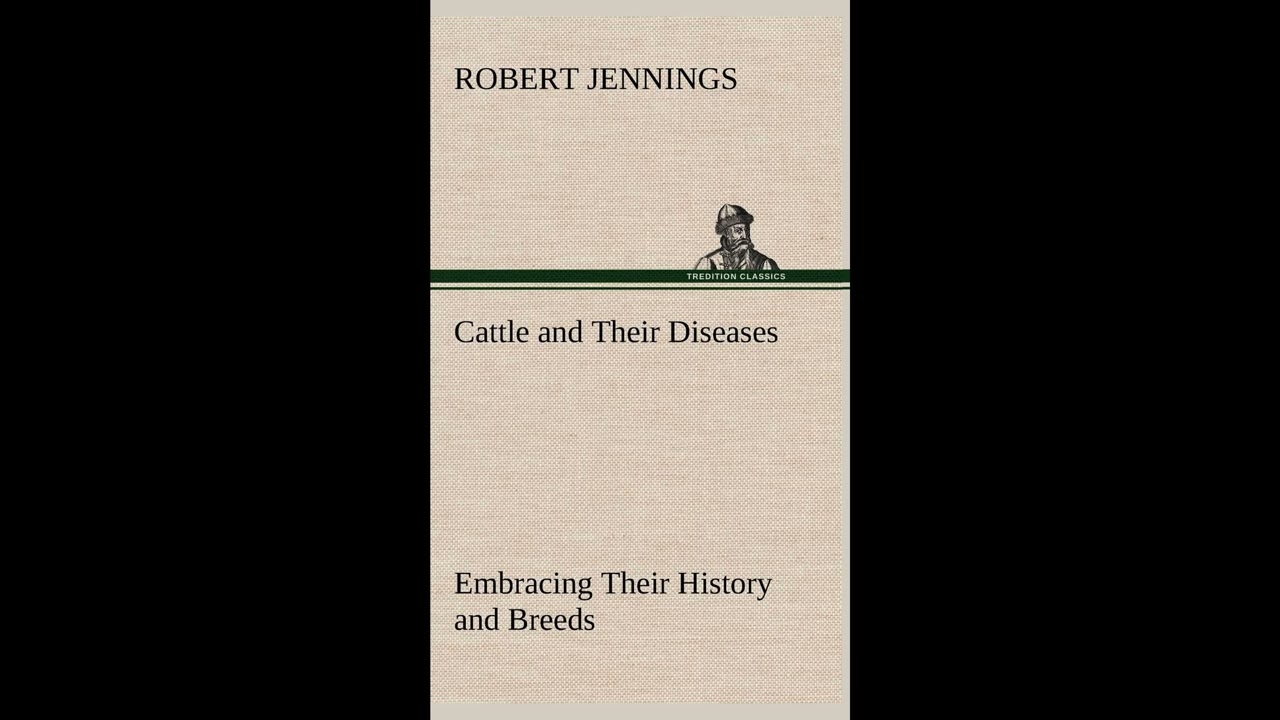
Cattle and Their Diseases Embracing Their History and Breeds, Crossing and Breeding,- Full Audiobook
The full title, "Cattle and Their Diseases Embracing Their History and Breeds, Crossing and Breeding," immediately signals a text of profound practical and historical significance. This isn’t a whimsical pastoral; it’s a foundational compendium of knowledge, a detailed guide that shaped the very bedrock of animal husbandry for generations. For anyone curious about the origins of modern agriculture, the meticulous science behind responsible livestock management, or simply the daily challenges and triumphs of feeding a growing world, this extensive work offers an unparalleled window into an essential human endeavor. It bridges the gap between our agrarian past and the principles that still govern our food systems today, providing a thorough education in the careful, often demanding, stewardship required to maintain healthy and productive herds. This extensive volume systematically unfurls the complex world of cattle, starting with a historical survey of their origins and domestication, tracing their development alongside human civilization. Listeners are introduced to a taxonomy of breeds, moving through the distinct characteristics of various types – their strengths, their ideal uses, and the specific environments in which they thrive. The text meticulously details the anatomical structures of cattle, laying a groundwork for understanding their physiology and common ailments. It then transitions into the art and science of crossing and breeding, explaining principles of genetics and selection long before the molecular era, focusing on the practical application of these concepts to improve herds for milk production, meat quality, or draft capabilities. The methods described are those honed through centuries of observation and trial, codified here for maximum effectiveness. The core of the work, and perhaps its most immediate practical application, addresses the myriad diseases that can afflict cattle. It catalogues symptoms with precise observation, offering diagnostic pathways that would have been invaluable in a time when veterinary science was developing rapidly but was not always immediately accessible. The descriptions extend to discussions of prevention – covering hygiene, appropriate nutrition, housing, and pasture management – laying stress on the idea that good health is not merely the absence of disease but the proactive creation of optimal conditions. From parasitic infestations to bacterial infections and viral outbreaks, the book methodically outlines understanding, care, and practical treatments, emphasizing early detection and robust preventative measures. The narrative arc, if one considers the progression of knowledge, moves from a broad historical and classificatory overview to intensely practical application. It guides the listener through the identification of a healthy animal, to the signs of distress, to the specifics of intervention, and finally to the long-term strategies for developing a resilient and productive herd. While specific remedies might reflect the knowledge of its period, the underlying logic – detailed observation, systematic classification, and a holistic approach to animal welfare – remains strikingly sound. It’s an instruction manual for responsible, effective husbandry, designed to equip the farmer with both the theoretical understanding and the practical skills needed to succeed. The precise identity of the author of "Cattle and Their Diseases" has been lost to time, a common occurrence for practical or scientific treatises from earlier eras where collective knowledge often superseded individual renown. Such works frequently emerged from the accumulated expertise of agricultural societies, veterinary colleges, or experienced practitioners, sometimes compiled by an editor who synthesized various contributions. The designation of "Unknown" for this extensive and detailed volume does not diminish its authority; rather, it highlights its role as a compendium of established best practices and scientific understanding of its day, representing a consensus of knowledge rather than the singular vision of a literary artist. Instead of a single biographical narrative, we see evidence of a tradition. The text itself speaks to the diligent observation of countless farmers, veterinarians, and scientists over generations. This collective intellectual effort created a comprehensive understanding of animal anatomy, physiology, pathology, and genetics. It is likely that the primary compiler or author was deeply immersed in the agricultural sciences, possibly associated with one of the burgeoning agricultural colleges or government departments that began to flourish in the late 19th and early 20th centuries, periods marked by significant advancements in systematic farming and veterinary medicine. The enduring nature of the information, even when specific treatments have evolved, underscores that this work draws from a wellspring of practical wisdom. It is a testament to the dedication of those who sought to formalize and disseminate crucial knowledge, ensuring that the health and productivity of livestock — vital for societal well-being — could be maintained and improved. This book stands as a foundational document within the canon of agricultural science, a historical marker demonstrating how methodical inquiry and observation were applied to real-world challenges. One significant idea woven throughout the text is the theme of human stewardship over nature. The book isn't merely a detached observation of cattle; it advocates for active, informed management. For example, when detailing preventative measures for common diseases like tuberculosis or foot rot, the book doesn't just list symptoms; it recommends specific housing improvements, dietary changes, and sanitation protocols. This demonstrates a belief that humans have a responsibility, and the capacity, to actively shape the health and productivity of their animals, not simply react to problems. It is a philosophy of proactive engagement and careful cultivation rather than passive acceptance. Another core idea is the advancement of knowledge through systematic observation and classification. The meticulous descriptions of various cattle breeds, each with their unique lineage and characteristics, exemplify this. Similarly, the detailed diagnostic trees provided for different ailments — noting everything from changes in respiration to variations in milk quality — showcase a rigorous scientific methodology applied to a practical field. This reflects a commitment to understanding the natural world through careful categorization and empirical evidence, driving towards predictable outcomes and efficient solutions in the face of uncertainty. The very structure of the book, moving from general history to specific disease protocols, underscores this methodical approach. This kind of thorough, systematic agricultural text likely emerged during a period of intense scientific and industrial transformation, generally corresponding to the late 19th and early 20th centuries. This era saw rapid urbanization in many parts of the Western world, creating an ever-growing demand for reliable, large-scale food production. As populations concentrated in cities, the need for efficient agricultural practices became paramount, shifting farming from subsistence toward a more commercial and scientific enterprise. Simultaneously, advancements in germ theory and microscopy were revolutionizing medical and veterinary science, allowing for a deeper understanding of disease etiology and prevention. Agricultural colleges and experiment stations, often supported by government initiatives, were being established to conduct research and disseminate best practices. Works such as "Cattle and Their Diseases" served as essential textbooks and reference guides for farmers, veterinarians, and students in these institutions. They reflected a broader societal push to apply scientific rigor to all aspects of life, including the seemingly traditional realm of agriculture. The comprehensive nature of the book suggests an intent to consolidate existing knowledge and present it in an accessible yet authoritative manner, a crucial step in modernizing the livestock industry and ensuring food security for an expanding and increasingly urbanized populace. Listening to "Cattle and Their Diseases" as an audiobook offers a unique way to engage with its detailed information. The narrator's steady pacing and clear articulation allow the dense, technical descriptions of anatomy, disease, and breeding methods to unfold with clarity. Without the need to physically turn pages or decipher potentially archaic script, one can absorb the specifics of cattle care, the intricacies of their history, and the often-complex explanations of veterinary science as a continuous narrative. It's an excellent companion for long commutes, while working on other tasks that leave the mind free, or simply for an immersive study experience where the spoken word can bring a historical educational text to life, allowing the listener to appreciate the cadence and authoritative tone of scientific communication from a past era.
Enjoyed Cattle and Their Diseases Embracing Their History and Breeds, Crossing and Breeding,- Full Audiobook? A few ways to support us
Audible & Amazon links are affiliate; we may earn a small commission at no extra cost.
About this production
Human narration by a volunteer reader from LibriVox.org, the public-domain audiobook project. LibriVox volunteers record literary works whose copyright has expired in the United States, releasing the resulting recordings into the public domain.
Cattle and Their Diseases Embracing Their History and Breeds, Crossing and Breeding,- Full Audiobook. The underlying text is in the U.S. public domain. We do not republish any modern copyrighted edition, translation, or commentary.
The 4K cinematic visuals accompanying this audiobook are generated by an AI image model from prompts derived from the source text. No copyrighted photos, paintings, or stock footage are used. AI generation is disclosed on every video on our YouTube channel as required by YouTube's altered/synthetic content policy.
English subtitles are transcribed from the LibriVox recording with OpenAI Whisper. Translations into the 11 other supported languages are produced by Meta's NLLB-200 neural translation model. No human translator's copyrighted translation is used.
Questions about sourcing or rights? See our DMCA & Sourcing policy or contact us.
Enjoyed this audiobook?
If you'd like to own a copy of Cattle and Their Diseases Embracing Their History and Breeds, Crossing and Breeding,- Full Audiobook or hear a professionally produced edition, the links below help support free audiobook production at no extra cost to you.
As an Amazon Associate we earn from qualifying purchases. Audible / print links are affiliate.

![Common Diseases of Farm Animals [1919 ] by Robert Alexander Craig — free full audiobook](https://img.youtube.com/vi/GTSJNi23Cis/mqdefault.jpg)