Myths and Legends of the Sioux
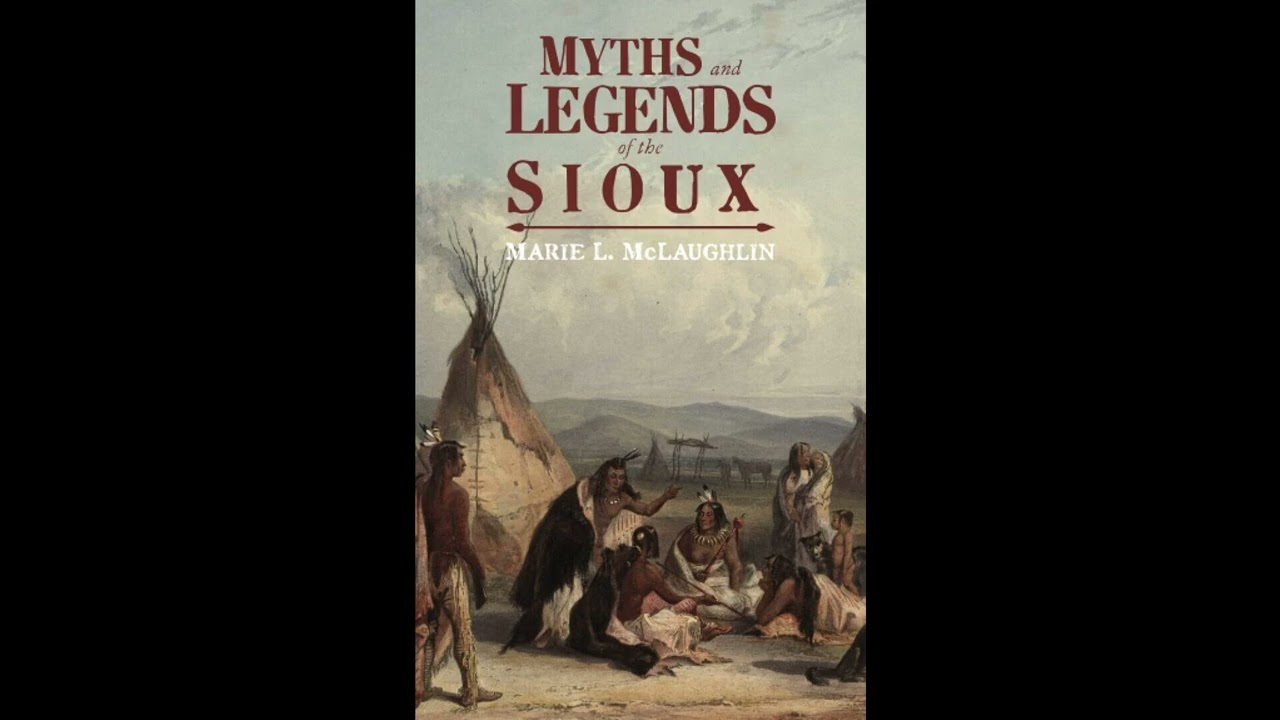
For millennia, stories have been the very sinews of human culture, binding generations to the wisdom of their ancestors and explaining the world around them. Among the indigenous peoples of North America, this oral tradition formed the bedrock of identity, history, and spiritual understanding. Marie L. McLaughlin’s Myths and Legends of the Sioux offers a rare and crucial window into this profound tradition, presenting a collection of tales that do more than merely entertain; they invite the listener into a worldview shaped by respect for the natural world, a keen sense of humor, and an enduring moral compass. This book is not just a historical document; it is a living testament to the power of narrative, providing insights into a spiritual and philosophical heritage that remains deeply resonant today, teaching lessons of humility, interconnectedness, and the eternal cycle of life. The narratives gathered here transport listeners to the vast plains and sacred landscapes inhabited by the Dakota, Lakota, and Nakota peoples. Here, the world itself is a protagonist, with mountains, rivers, and the endless sky bearing witness to the deeds of gods, spirits, animals, and humans. Central to many stories is Wakan Tanka, the Great Mystery, the ultimate creative force whose will shapes existence. We meet figures like Iktomi, the Spider-Trickster, whose cunning—and often self-defeating foolishness—serves to teach important lessons about human foibles and the consequences of arrogance. Other tales feature courageous young warriors, wise elders, and powerful animal spirits such as bears, coyotes, and eagles, each playing a vital role in the cosmic drama. The arc of these stories is not a singular narrative progression, but a comprehensive worldview. They explain the origins of the world, how the stars came to hang in the night sky, and why certain animals possess their unique characteristics. Listeners will hear about the creation of human beings, the establishment of sacred ceremonies, and the acquisition of essential tools and knowledge. There are stories of human struggles against the elements, against spiritual adversaries, and against their own imperfections. Through these narratives, a listener gains an understanding of the Sioux cosmology—a world imbued with spirit, where every creature and phenomenon holds meaning, and where humans are but one part of a vast, interconnected web of life, constantly striving for balance and understanding. Marie L. McLaughlin, born Marguerite Waden in 1842, possessed a uniquely suited background for this endeavor. The daughter of a French-Canadian fur trader and a Mdewakanton Dakota mother, she grew up fluent in both Dakota and English, bridging two distinct cultural worlds from her earliest days. Her bicultural upbringing provided her with an intimate understanding of the Sioux language and customs that few outside observers could ever attain. She married Major James McLaughlin, a United States Indian Agent, and spent decades living and working on various Sioux reservations, including Devils Lake and Standing Rock. This immersion allowed her to establish deep trust and rapport with the elders and storytellers of the community. It was from these revered figures that she diligently collected the tales that comprise Myths and Legends of the Sioux, published in 1916. Unlike many anthropologists of her era who approached indigenous cultures with a detached, academic lens, McLaughlin was an "insider-outsider," deeply respected by the communities she documented. Her work stands as a monumental achievement in the preservation of oral literature, providing a written record of stories that were traditionally passed down through generations by spoken word, ensuring their survival for future audiences. Her dedication to accuracy and respect for the sources makes her collection a cornerstone of indigenous American literature and ethnography. She passed away in 1932, leaving behind a legacy of profound cultural preservation. At the heart of these Sioux narratives lies a profound emphasis on harmony with nature. Each story underscores the sacred relationship between humans, animals, and the physical environment. For instance, tales recounting how specific animal species came to be, or explaining their attributes, frequently highlight the animals' inherent wisdom and their role as teachers or spiritual guides for humanity. A common thread reveals that disrespect for the natural world or its creatures often leads to imbalance and negative consequences, reinforcing the idea that all life is interconnected and must be treated with reverence. The stories vividly depict a world where the buffalo is revered as a provider, the eagle as a messenger to the Great Mystery, and the land itself as a sacred mother. Another prominent theme is the trickster archetype, most often embodied by Iktomi, the Spider. Iktomi’s adventures, while often humorous and sometimes chaotic, serve as crucial moral parables. He might trick other animals out of their food or attempt to deceive humans, but his schemes invariably backfire, leaving him in an embarrassing or painful situation. These narratives, rather than simply mocking, offer poignant lessons about pride, greed, and the importance of humility and wisdom. Through Iktomi’s blunders, listeners learn about proper conduct, the consequences of selfishness, and the sometimes-unpredictable nature of existence, all while being thoroughly entertained by his antics. The collection also consistently reinforces the importance of community and tradition, illustrating how customs and ceremonies bind people together and provide continuity. When Marie L. McLaughlin compiled and published Myths and Legends of the Sioux in 1916, America was undergoing a period of intense cultural and political change. The reservation system was firmly entrenched, and federal policies aimed at "civilizing" and assimilating Native Americans were widespread. There was a prevailing, often tragic, belief among some policymakers and scholars that indigenous cultures were "vanishing," making efforts to document their oral traditions appear urgent. McLaughlin's work emerged from this climate, but it transcended the often-colonial lens of contemporary ethnography. Her collection was not merely a scientific observation of a foreign culture; it was an act of profound cultural affirmation, preserving narratives at a time when the very existence of these traditions was under existential threat. It served as an invaluable counter-narrative to the dominant American story, asserting the richness and resilience of Sioux intellectual and spiritual life. To experience Myths and Legends of the Sioux as an audiobook is to truly bring these ancient tales back to their natural form. These stories were meant to be spoken aloud, heard around campfires, and absorbed through the rhythm and nuance of a skilled storyteller's voice. The length of several hours allows for a sustained immersion, letting the listener settle into the distinct worldviews and narrative styles. A good narration will honor the deliberate pacing inherent in oral traditions, allowing the listener to absorb the wisdom and the often-subtle humor. Listen for the particular inflections given to different characters—the solemnity of a creation myth, the mischief of Iktomi, the earnestness of a young hero. The spoken word allows the atmosphere of the plains, the reverence for the spirits, and the profound connection to the land to truly resonate, recreating the very essence of how these myths were originally shared and understood.
Enjoyed Myths and Legends of the Sioux? A few ways to support us
Audible & Amazon links are affiliate; we may earn a small commission at no extra cost.
About this production
Human narration by a volunteer reader from LibriVox.org, the public-domain audiobook project. LibriVox volunteers record literary works whose copyright has expired in the United States, releasing the resulting recordings into the public domain.
Myths and Legends of the Sioux by Marie L. McLaughlin. The underlying text is in the U.S. public domain. We do not republish any modern copyrighted edition, translation, or commentary.
The 4K cinematic visuals accompanying this audiobook are generated by an AI image model from prompts derived from the source text. No copyrighted photos, paintings, or stock footage are used. AI generation is disclosed on every video on our YouTube channel as required by YouTube's altered/synthetic content policy.
English subtitles are transcribed from the LibriVox recording with OpenAI Whisper. Translations into the 11 other supported languages are produced by Meta's NLLB-200 neural translation model. No human translator's copyrighted translation is used.
Questions about sourcing or rights? See our DMCA & Sourcing policy or contact us.
Enjoyed this audiobook?
If you'd like to own a copy of Myths and Legends of the Sioux or hear a professionally produced edition, the links below help support free audiobook production at no extra cost to you.
As an Amazon Associate we earn from qualifying purchases. Audible / print links are affiliate.