Seven English Cities
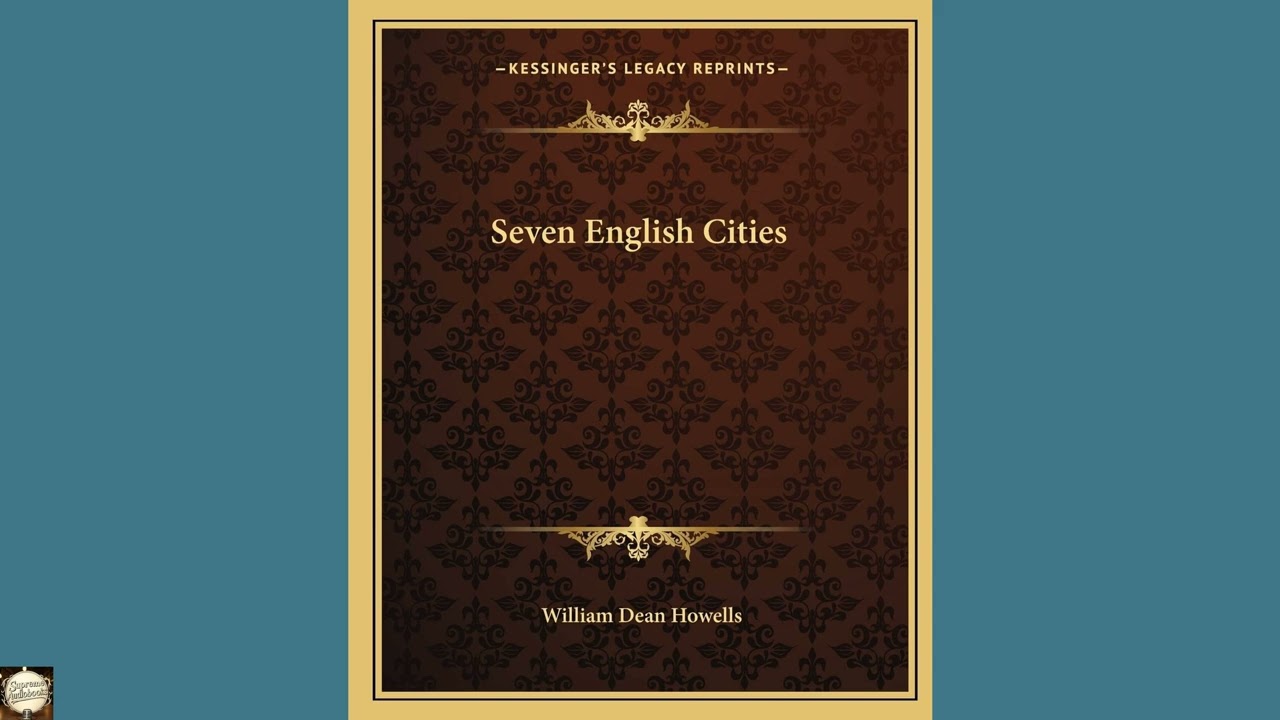
Step into the bustling avenues and quiet corners of late Victorian England through the discerning eyes of one of America's most celebrated literary figures. William Dean Howells' Seven English Cities is not merely a travelogue; it is a profound act of cultural observation, a meticulous record of an era, and a gentle mirror reflecting the evolving relationship between two nations. For today's listener, this audiobook offers an unparalleled opportunity to experience England—from its grand historical monuments to its everyday street life—filtered through the keen intellect and humane sensibility of a writer renowned for his realism. It speaks to the enduring allure of foreign lands, the subtle humor of cross-cultural encounters, and the timeless search for understanding beyond superficial appearances, making it as relevant for a modern armchair traveler as it was for Howells’s contemporary audience. The narrative of Seven English Cities unfolds as a thoughtful peregrination across a landscape steeped in history and throbbing with the pulse of modern life. Howells, ever the attentive American observer, guides listeners through a succession of distinct urban centers, each revealing a unique facet of the English character. His journey is less about specific destinations and more about the accumulation of impressions, the quiet dialogues with strangers, and the deep, often surprising connections he draws between what he sees and what he understands of human nature. We follow him as he notes the subtle nuances of social etiquette, the enduring weight of tradition against the backdrop of industrial progress, and the quiet dignity of ordinary citizens going about their lives. There is no grand quest or dramatic confrontation; instead, the story lies in Howells’s sustained engagement with his surroundings, his patient deciphering of English manners and customs, and his ongoing internal conversation about what it means to be both an outsider and an appreciative guest in a venerable land. Listeners will find themselves immersed in a journey that, while physical, is primarily intellectual and emotional. Howells introduces us not to named protagonists in a fictional drama, but to the collective spirit of these cities – the architecture, the parks, the bustling markets, and the quiet academic halls all become characters in their own right. He captures the rhythm of daily existence, from the clatter of horse-drawn carriages on cobblestone streets to the hushed reverence within ancient cathedrals. His "plot," if one can call it that, is the gradual unfolding of his own perceptions, the shedding of preconceived notions, and the deepening of his appreciation for England's complex identity. Through his careful prose, we experience the subtle shifts in atmosphere from one city to the next, sensing the particular charm of a university town, the industrial grit of a northern center, or the historical weight of a cathedral city, all without the need for a manufactured dramatic climax. The true excitement lies in the unfolding panorama of British life, rendered with honesty and warmth. William Dean Howells, born in Ohio in 1837, stood as a towering figure in American letters during the late 19th and early 20th centuries, often dubbed the "Dean of American Letters." His early life saw him move through various journalistic roles, sharpening his observational skills and his command of language. A pivotal moment came with his appointment as consul to Venice by Abraham Lincoln in 1861, an experience that profoundly broadened his worldview and provided rich material for later writings, including travel essays. Upon his return to the United States, he quickly rose through the ranks of the literary establishment, most notably serving as editor of the prestigious Atlantic Monthly from 1871 to 1881, a position through which he championed emerging writers and new literary forms. Howells became the foremost proponent of literary realism in America, advocating for a truthful portrayal of life, free from the romanticized embellishments of earlier traditions. He believed literature should depict the commonplace, the moral dilemmas of everyday people, and the social structures that shaped their lives. His major novels, such as The Rise of Silas Lapham (1885) and A Modern Instance (1882), exemplify this commitment, dissecting the complexities of social mobility and marital discord with an unsparing yet compassionate eye. He was a prolific writer across genres—novels, short stories, essays, and criticism—and his influence extended beyond his own output; he mentored younger writers like Stephen Crane and Frank Norris, fostering a new generation of American voices committed to realism. His extensive body of work secured his place as a crucial bridge between the American literary giants of the mid-19th century and the nascent modernists of the early 20th, continually pushing the boundaries of what American fiction could achieve. Within Seven English Cities, Howells deftly enacts several enduring themes, beginning with the persistent cultural observation and comparison between America and England. He frequently contrasts the perceived brusqueness of American efficiency with the ingrained politeness and stratified social customs he encounters across the Atlantic. For instance, he might subtly highlight the English deference to tradition in daily interactions or their particular brand of self-deprecating humor, inviting listeners to consider the shared linguistic heritage that nonetheless produces distinct cultural expressions. Another powerful theme is the nature of travel itself and the search for authentic experience. Howells grapples with the tourist's dilemma: how to move beyond the superficial postcard views and truly apprehend a place. He reflects on moments when he feels genuinely immersed versus those when he feels like a mere spectator, perhaps during a visit to a bustling market where he observes local commerce rather than just a grand historical site. Furthermore, the work subtly addresses social realism and class structure, even in a travelogue setting. Howells, with his realist inclinations, doesn't shy away from noting the clear divisions within English society, the different ways people live and interact based on their station. He might describe the demeanor of a hotel porter versus that of a landed gentleman, or the working conditions he observes in industrial towns, providing a grounded glimpse into the social fabric of Victorian England. Finally, a significant undercurrent is the interplay of past and present, as Howells continually measures England's ancient heritage against its contemporary transformations. He walks through Roman ruins and medieval cathedrals, reflecting on the weight of centuries, only to then observe the latest technological advancements or the changing face of urban planning, thus illuminating how history shapes and is simultaneously challenged by modern life. Howells published Seven English Cities in 1904, a period marked by profound shifts both culturally and politically, and within the literary landscape. The early 20th century was a time of burgeoning globalization and increased transatlantic travel, moving beyond the aristocratic "Grand Tour" to a more accessible form of tourism for a growing middle class. Anglo-American relations, having weathered previous periods of tension, were settling into a more amicable, though still complex, "special relationship" based on shared language and burgeoning economic ties, making an American perspective on England particularly resonant. In Britain, the immense reach of the British Empire was beginning to face challenges, and internally, social reforms were gaining momentum as industrialization continued to reshape the landscape and daily lives of its citizens. Literarily, this era saw realism firmly entrenched as the dominant mode, with Howells himself having been a crucial figure in its rise. Authors were increasingly interested in documenting contemporary life and social conditions with fidelity, rather than indulging in romantic escapism. Howells's decision to pen a travelogue rooted in keen observation rather than purely subjective impression fit perfectly into this realist ethos. It emerged at a moment when both American and British audiences were eager to understand their respective cultures better, and a discerning, unvarnished look at England through the eyes of a respected American literary voice offered a valuable perspective. The book therefore stands as a cultural artifact from a time of transition, capturing the last vestiges of an older England while anticipating the advent of the modern age. Listening to Seven English Cities as an audiobook transforms Howells’s careful observations into an immersive experience. The narrator's voice becomes your guide, conveying Howells’s thoughtful, often gentle wit and his precise descriptions with clarity and warmth. A skilled reader can bring out the nuances in Howells’s prose, making his comparisons between cultures all the more vivid and his reflections on the human condition resonate deeply. Over its several hours, the book's pacing encourages an unhurried appreciation of Howells’s journey, making it an ideal companion for long walks, commutes, or moments of quiet contemplation. Pay attention to the subtle shifts in tone as Howells moves from architectural descriptions to social commentary, or from personal anecdote to historical reflection. The richness lies not in dramatic dialogue, but in the authorial voice itself, in the careful crafting of each sentence to evoke a place, a feeling, or a cultural insight, allowing you to inhabit Victorian England as Howells saw it and to hear the echoes of his enduring wisdom.
Enjoyed Seven English Cities? A few ways to support us
Audible & Amazon links are affiliate; we may earn a small commission at no extra cost.
About this production
Human narration by a volunteer reader from LibriVox.org, the public-domain audiobook project. LibriVox volunteers record literary works whose copyright has expired in the United States, releasing the resulting recordings into the public domain.
Seven English Cities by William Dean Howells. The underlying text is in the U.S. public domain. We do not republish any modern copyrighted edition, translation, or commentary.
The 4K cinematic visuals accompanying this audiobook are generated by an AI image model from prompts derived from the source text. No copyrighted photos, paintings, or stock footage are used. AI generation is disclosed on every video on our YouTube channel as required by YouTube's altered/synthetic content policy.
English subtitles are transcribed from the LibriVox recording with OpenAI Whisper. Translations into the 11 other supported languages are produced by Meta's NLLB-200 neural translation model. No human translator's copyrighted translation is used.
Questions about sourcing or rights? See our DMCA & Sourcing policy or contact us.
View 10 famous quotes from this book →
Enjoyed this audiobook?
If you'd like to own a copy of Seven English Cities or hear a professionally produced edition, the links below help support free audiobook production at no extra cost to you.
As an Amazon Associate we earn from qualifying purchases. Audible / print links are affiliate.