April Hopes
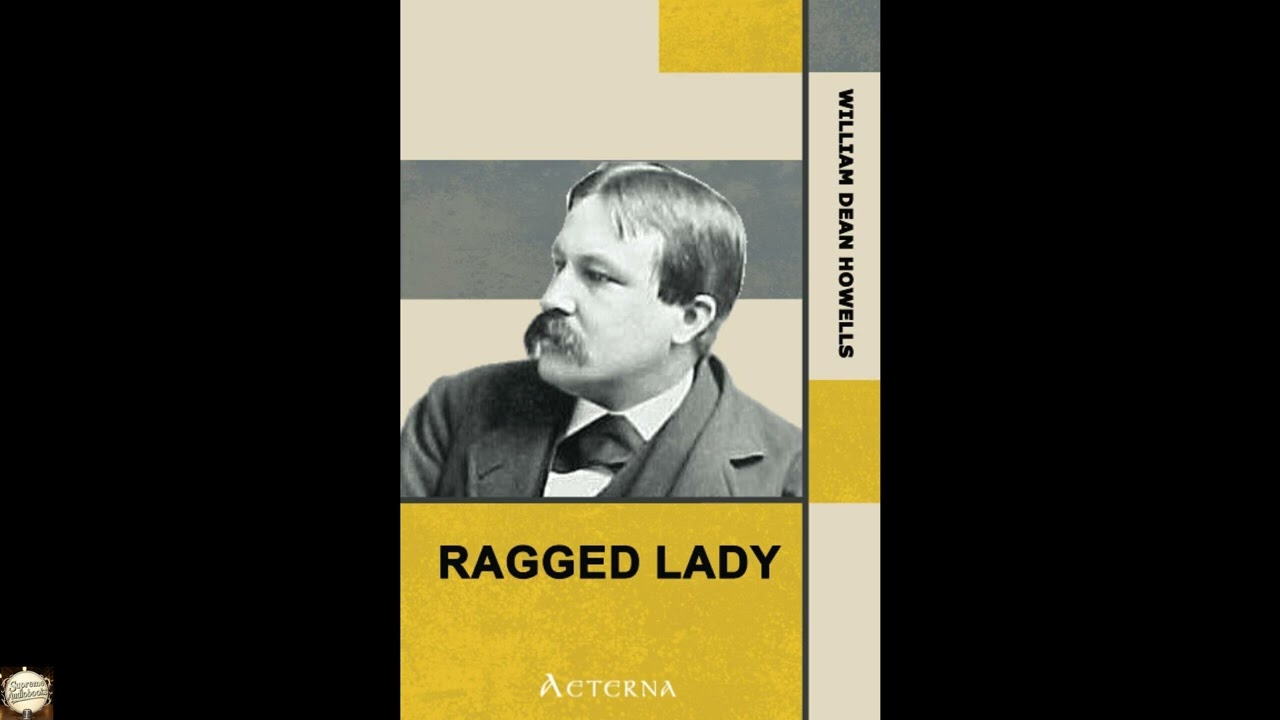
William Dean Howells’s April Hopes offers a window into the delicate dance of courtship and social expectation in late nineteenth-century America, a period marked by rapid change and a keen awareness of class distinctions. This isn't a story of grand adventures or dramatic societal upheaval, but rather a meticulous, deeply human examination of how two young people, seemingly destined for one another, navigate the treacherous waters of love, idealism, and the often-unspoken rules of their world. For modern listeners, it presents a compelling parallel to our own times, where the search for genuine connection often clashes with curated images and personal ideals. The book asks enduring questions about the nature of true affection, the compromises inherent in human relationships, and whether love can survive the harsh light of reality after the glow of initial infatuation fades. It's a novel that resonates because its characters grapple with dilemmas that feel profoundly familiar: the tension between what we imagine love to be and what it truly demands of us. The story introduces us to Dan Mavering, a charming and somewhat impressionable young man from Boston, enjoying a summer idyll at the fashionable watering holes of New England. During these languid, sun-drenched days, he meets Alice Pasmer, a young woman of striking beauty and an almost unyielding moral earnestness. Their initial attraction is swift and potent, leading to a quick engagement fueled by romantic ideals and mutual admiration. However, their burgeoning relationship is quickly tested by more than just the usual misunderstandings between lovers. Alice, with her strict Bostonian conscience and firm expectations, demands a moral purity and consistency from Dan that he, like most human beings, struggles to maintain. His small, often unintentional slips – a minor flirtation, a casual remark – are magnified through Alice's exacting lens, leading to repeated crises of conscience and fidelity. Their courtship becomes a cyclical pattern of ardent declarations, minor transgressions, profound apologies, and equally profound periods of doubt and alienation. The narrative meticulously tracks their emotional journey, from the idyllic settings of their first meetings to the more constrained environments of Boston society, where their individual characters and the practicalities of their future become starker. Howells masterfully renders the internal monologues and subtle interactions that reveal the widening chasm between Dan's good-hearted but somewhat impulsive nature and Alice's rigid idealism. The plot is not driven by external events so much as by the psychological complexities of the protagonists, their evolving understanding of themselves, and their slow, often painful confrontation with the realities of human imperfection and the demands of sustained intimacy. William Dean Howells (1837-1920) stands as one of the most significant literary figures of the late nineteenth and early twentieth centuries, often hailed as the "Dean of American Letters." Born in Martins Ferry, Ohio, Howells’s early life was marked by a self-directed education and practical experience in journalism, a path that would deeply inform his realistic approach to fiction. He worked as a printer and newspaper reporter, cultivating a keen observational eye for the nuances of American life and speech. His career took a pivotal turn with an appointment as U.S. consul to Venice during the Civil War, an experience that broadened his cultural horizons and influenced his aesthetic sensibilities. Upon returning to America, Howells settled in Boston, which was then the heart of American literary culture. He quickly ascended to the editorship of the prestigious Atlantic Monthly in 1871, a position he held for a decade, during which he championed emerging American and European realist writers. He became a close friend and intellectual confidant to literary giants such as Mark Twain and Henry James, forming a formidable triumvirate that shaped the direction of American fiction. Howells was a prolific author himself, producing over a hundred books across various genres, though he is best known for his novels. Works like A Modern Instance and The Rise of Silas Lapham cemented his reputation as the foremost proponent and practitioner of literary realism in America, focusing on the everyday lives, moral dilemmas, and social mobility of middle-class Americans in the post-Civil War era. April Hopes effectively dramatizes the theme of romantic idealism colliding with the practicalities and imperfections of real-world relationships. Dan and Alice initially fall for idealized versions of one another, a common pitfall that Howells dissects with precision. Alice's almost impossibly high moral standards, for instance, lead her to perceive Dan's human flaws as monumental betrayals, illustrating how an inflexible ideal can destroy potential happiness. The novel also carefully examines the subtle but powerful influence of social class and family expectations on individual choices. Dan comes from a somewhat more relaxed, established background, while Alice's family, though respectable, embodies a stricter, more principled — and perhaps less financially comfortable — New England sensibility. The pressures exerted by their respective families and societal norms, particularly regarding financial stability and moral conduct, underscore the notion that marriage in this era was often as much a social contract as a personal bond. Furthermore, Howells uses the narrative to dissect the psychological complexities of his characters, showing how self-deception and internal conflict shape their actions and perceptions. Dan's struggles with his own perceived failings, and Alice's difficulty in reconciling her idealized vision of love with the realities of human nature, provide a nuanced portrayal of youthful introspection and moral growth—or lack thereof. For example, Alice’s unwavering insistence on Dan’s absolute moral purity, without accounting for human fallibility, is not simply an external conflict but a deep-seated internal battle within her own rigid sense of righteousness. This detailed rendering of inner lives, rather than relying on dramatic external events, defines the book's realist project. The late nineteenth century, the period in which April Hopes was written and published, was a time of immense social and economic transformation in America, often referred to as the Gilded Age. Following the Civil War, the nation experienced rapid industrialization, urbanization, and a significant rise in wealth for some, leading to new social stratification and anxieties about materialism versus traditional values. Culturally, there was a growing desire for literature that reflected this new reality, moving away from the more overtly romantic and sentimental styles that had previously dominated. Howells, along with contemporaries like Henry James and Mark Twain, was instrumental in forging American realism, a literary movement that sought to depict life truthfully, focusing on ordinary people and their everyday struggles rather than heroic figures or fantastical plots. April Hopes emerges directly from this cultural milieu, serving as a social commentary on the manners, morals, and psychological intricacies of the rising middle and upper classes, particularly concerning courtship and marriage in a society grappling with its own identity. Listening to April Hopes as an audiobook offers a unique opportunity to immerse oneself in Howells's careful prose and keen observations. The experience allows the listener to fully appreciate the deliberate pacing of nineteenth-century narrative, where character development and psychological insight unfold gradually through detailed descriptions and nuanced dialogue. A skilled narrator brings Howells's distinctive voice to life, highlighting the author's subtle irony and his sympathetic yet critical portrayal of Dan and Alice. The unfolding drama of their relationship, punctuated by moments of tender affection and sharp disagreement, gains texture and immediacy through spoken performance. The run length of several hours provides ample time to settle into the period atmosphere, following the ebb and flow of their emotional struggles, making the social commentary and the intricate dance of human connection more immediate and resonant. The voice performance can illuminate the subtle class distinctions and moralizing tones present in the dialogue, drawing the listener into the world of Gilded Age New England with an intimacy that printed text alone might not always convey.
Enjoyed April Hopes? A few ways to support us
Audible & Amazon links are affiliate; we may earn a small commission at no extra cost.
About this production
Human narration by a volunteer reader from LibriVox.org, the public-domain audiobook project. LibriVox volunteers record literary works whose copyright has expired in the United States, releasing the resulting recordings into the public domain.
April Hopes by William Dean Howells. The underlying text is in the U.S. public domain. We do not republish any modern copyrighted edition, translation, or commentary.
The 4K cinematic visuals accompanying this audiobook are generated by an AI image model from prompts derived from the source text. No copyrighted photos, paintings, or stock footage are used. AI generation is disclosed on every video on our YouTube channel as required by YouTube's altered/synthetic content policy.
English subtitles are transcribed from the LibriVox recording with OpenAI Whisper. Translations into the 11 other supported languages are produced by Meta's NLLB-200 neural translation model. No human translator's copyrighted translation is used.
Questions about sourcing or rights? See our DMCA & Sourcing policy or contact us.
Enjoyed this audiobook?
If you'd like to own a copy of April Hopes or hear a professionally produced edition, the links below help support free audiobook production at no extra cost to you.
As an Amazon Associate we earn from qualifying purchases. Audible / print links are affiliate.