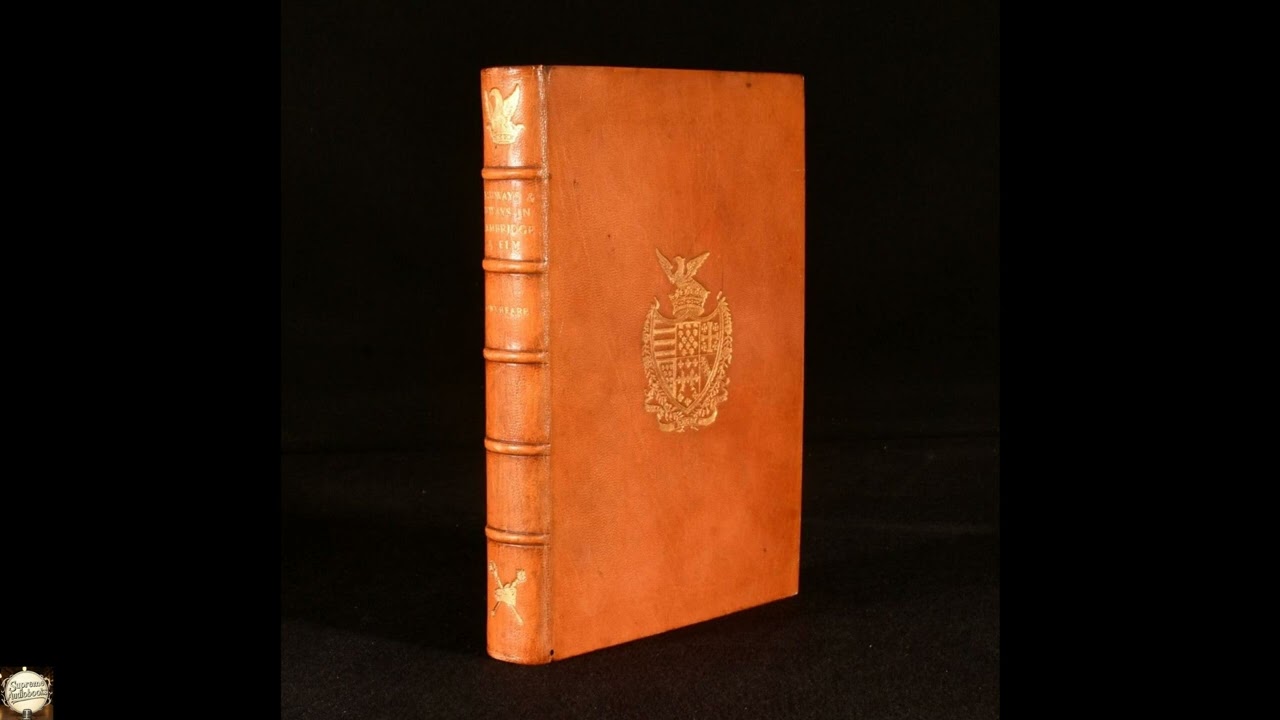
Highways and byways in Cambridge and Ely (The highways & byways series)
Step back in time to the turn of the last century, to an England where the rhythm of life moved at a gentler pace, yet where intellectual curiosity burned bright. This remarkable audiobook, "Highways and byways in Cambridge and Ely," offers more than a simple geographical account; it is an invitation to witness these ancient English locales through the eyes of a keen observer, a literary companion who acts as your personal guide to the hallowed grounds of Cambridge University and the majestic grandeur of Ely Cathedral. Why revisit these descriptions today? Because they offer a unique window into a specific historical moment, allowing us to compare the past with the present, to appreciate the enduring beauty of these places, and to find solace in the rich strata of history that underlies our modern world. It is a work that speaks to the power of place and the human impulse to document, understand, and celebrate our shared heritage. The story, if one can call it such in a descriptive work, unfolds as an eloquent topographical progression. We begin amidst the venerable colleges of Cambridge, a city steeped in academic tradition and architectural splendor. The narrative guides us through the labyrinthine courts, past the quiet cloisters, and along the picturesque Backs where the River Cam meanders gently. We are introduced to the particularities of college life, the venerable customs, and the quiet dignity of institutions like King’s College, with its breathtaking chapel, and the historic precincts of St. John’s or Trinity. The implied "main character" here is the inquisitive traveler, the discerning eye that observes the interplay of students and dons, the ancient stone and the fresh greenery, the bustling market square and the serene academic sanctuaries. It is a gentle immersion into a world where scholarship and tradition are woven into the very fabric of daily existence. From the intellectual heart of Cambridge, the narrative then expands, leading us outwards into the wider Cambridgeshire landscape. The "byways" alluded to in the title become apparent as we traverse the flat, often misty, Fens—a distinct geographical region with its own unique history and character. The prose paints vivid pictures of this landscape, its waterways, and the small villages that dot its expanses. The tension, or rather the shift in focus, lies in the transition from the concentrated human endeavor of the university city to the more expansive, natural, and agricultural setting. The arc of the story culminates in the powerful emergence of Ely Cathedral on the horizon, its colossal form rising dramatically from the surrounding flatness, a truly unforgettable architectural presence that dominates its surroundings. The "Highways & Byways series," of which this volume is a part, represents a significant contribution to the genre of regional travel writing and topographical literature in Britain. Published around the turn of the 20th century, these books were designed to offer both practical guidance and literary pleasure, appealing to a growing middle class interested in domestic tourism and cultural heritage. While the specific author of this particular volume is not recorded, the series typically featured accomplished writers, scholars, and local experts who brought a deep understanding and personal affection to their subjects. These contributors were united by a common aim: to meticulously document and lovingly depict the unique character of Britain’s counties, towns, and natural landscapes. The literary tradition that fostered such a series valued detailed observation, historical accuracy, and elegant prose. The books served as both armchair companions and practical guides for those undertaking railway excursions or bicycle tours. They offered readers an opportunity to engage with their own national identity through the lens of local distinctiveness, celebrating the beauty, history, and folklore embedded in every corner of the British Isles. The "Highways & Byways" volumes, therefore, hold a special place in the canon of descriptive literature, preserving a particular way of seeing and interpreting the landscape at a pivotal moment in British social and cultural history. Among the specific themes that run through this descriptive account is the enduring power of architectural heritage. The book’s detailed descriptions of structures like King’s College Chapel are not merely technical specifications; they evoke a sense of awe at human ingenuity and faith. We encounter passages that describe the chapel's soaring fan vaults, for instance, not just as a feat of engineering but as an expression of spiritual aspiration, the stone made to defy gravity and speak of eternity. Similarly, the grandeur of Ely Cathedral, particularly its celebrated Octagon, is presented as a monumental achievement, a testament to centuries of craftsmanship and the persistence of artistic vision even in geographically remote areas. Another prominent theme is the interplay between academic tradition and the march of time. The text often juxtaposes the ancient customs and hallowed halls of Cambridge University with the energy of contemporary student life. One might read of students punting lazily on the Cam, a scene that could have played out centuries ago, yet the subtle changes in dress or demeanor would signify the specific era of the book's writing. This creates a sense of continuity and change, illustrating how institutions adapt and endure while retaining their core identity. The volume implicitly celebrates how places like Cambridge manage to balance innovation with preservation, consistently renewing themselves while honoring their profound historical roots. This particular work emerged during a fascinating period in British history, roughly coinciding with the late Victorian and Edwardian eras. It was a time of increased national self-awareness, driven in part by imperial expansion and a growing appreciation for domestic identity. The rise of railway networks made travel within Britain more accessible to a wider populace, fueling an interest in regional exploration. Culturally, there was a widespread desire to document and preserve aspects of Britain's past—its historic buildings, quaint customs, and distinctive landscapes—in the face of burgeoning industrialization and perceived modernization. Literary tastes favored descriptive prose, local color, and a sense of informed nostalgia. These "Highways & Byways" books perfectly catered to this appetite, providing literate, thoughtful accounts that helped shape a national consciousness around heritage and place. They represented a collective effort to map the cultural and historical geography of Britain for a generation eager to understand its roots. To experience "Highways and byways in Cambridge and Ely" as an audiobook offers a singular opportunity to engage with its rich prose on a different level. The narration transforms the written word into a spoken guide, a friendly and knowledgeable companion leading you through the historic streets and serene landscapes. Listen for the unhurried pacing, which allows the detailed descriptions of Gothic arches, ancient libraries, and the quiet stretches of the Fens to truly sink in, evoking a strong sense of atmosphere. The narrator's voice becomes the very spirit of the anonymous observer, carrying the weight of history and the charm of discovery. This is an audiobook perfect for armchair travel, for quiet reflection, or for inspiring future explorations of these storied English locales, letting the sounds of the past wash over you as you absorb its meticulously crafted observations.
Enjoyed Highways and byways in Cambridge and Ely (The highways & byways series)? A few ways to support us
Audible & Amazon links are affiliate; we may earn a small commission at no extra cost.
About this production
Human narration by a volunteer reader from LibriVox.org, the public-domain audiobook project. LibriVox volunteers record literary works whose copyright has expired in the United States, releasing the resulting recordings into the public domain.
Highways and byways in Cambridge and Ely (The highways & byways series) by Frederic William Headley. The underlying text is in the U.S. public domain. We do not republish any modern copyrighted edition, translation, or commentary.
The 4K cinematic visuals accompanying this audiobook are generated by an AI image model from prompts derived from the source text. No copyrighted photos, paintings, or stock footage are used. AI generation is disclosed on every video on our YouTube channel as required by YouTube's altered/synthetic content policy.
English subtitles are transcribed from the LibriVox recording with OpenAI Whisper. Translations into the 11 other supported languages are produced by Meta's NLLB-200 neural translation model. No human translator's copyrighted translation is used.
Questions about sourcing or rights? See our DMCA & Sourcing policy or contact us.
Enjoyed this audiobook?
If you'd like to own a copy of Highways and byways in Cambridge and Ely (The highways & byways series) or hear a professionally produced edition, the links below help support free audiobook production at no extra cost to you.
As an Amazon Associate we earn from qualifying purchases. Audible / print links are affiliate.