Oxford
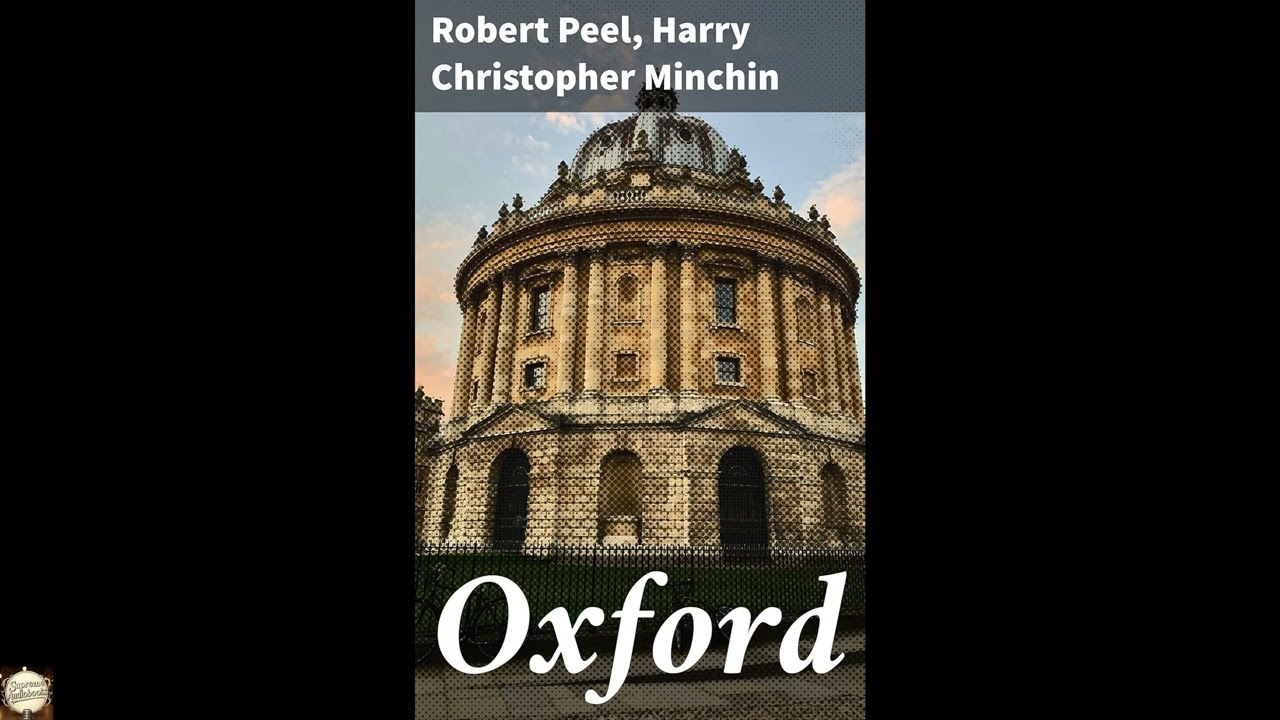
Step into the hallowed precincts and cobbled lanes of a world-renowned intellectual haven with Oxford, a profound and sweeping portrait that captures the very soul of this historic university city. More than just a guide or a chronicle, this book is an immersion into the enduring spirit of learning, tradition, and the architectural grandeur that defines Oxford. It offers listeners a chance to understand not merely the facts of its existence, but the atmosphere, the intellectual currents, and the human drama that have played out within its ancient walls for centuries. For anyone fascinated by the evolution of education, the power of place, and the intricate dance between past and present, Oxford remains a vital, illuminating text, as relevant today in its observations of institutional identity as when its components were first conceived. The account presented in Oxford sets its stage amidst the dreaming spires and verdant quads of its namesake city, painting a vivid picture of an institution whose roots stretch back into the medieval mists. Its main "characters" are less individuals and more the colleges themselves—Magdalen, Christ Church, Balliol, and countless others—each with their own distinct personality, architectural style, and storied past. The narrative follows the conceptual arc of Oxford's development, beginning with its nascent beginnings as a hub for scholars, through its periods of religious upheaval, its role in shaping British intellectual and political life, and its adaptation to the modern age. It details the daily routines of students and dons, the academic pursuits that defined eras, and the rituals that have persisted over generations. The central tension often lies in the balance between preservation and progress, between the weight of custom and the necessity of intellectual renewal. The book thoughtfully examines how Oxford has managed to retain its unique identity while continually reinventing itself, a constant negotiation that gives the "story" its quiet drama. Listeners gain a profound sense of the place not as a static museum, but as a living, breathing entity, perpetually shaped by its inhabitants and its broader societal role. The authorship of Oxford brings together two distinct yet complementary voices across generations, creating a singularly comprehensive vision. Robert Peel, born in 1788 and passing in 1850, was a colossal figure in 19th-century British politics, serving twice as Prime Minister. Before his illustrious political career, Peel was an outstanding student at Christ Church, Oxford, distinguishing himself in classics and mathematics. His time at Oxford instilled in him a profound respect for intellectual rigor and the institution's capacity to shape leaders. While his public life was dedicated to legislative reform—most notably the establishment of the Metropolitan Police Force and the repeal of the Corn Laws—his earlier writings and observations on Oxford provide an invaluable historical lens, reflecting the university's character during a period of significant national change. Harry Christopher Minchin, born in 1863 and living until 1941, stands as the later voice, offering a bridge to the early 20th century. Minchin was a respected literary critic, poet, and biographer, known for his work on figures such as Alfred, Lord Tennyson. His scholarly acumen and literary sensibility provided the framework for compiling, expanding upon, and updating the earlier insights into Oxford. Minchin’s contribution ensures the book's breadth, blending historical depth with a keen observation of contemporary university life in his own time. The unified perspective thus provided by Peel and Minchin creates a unique dialogue between the past and a more immediate present, allowing a fuller appreciation of Oxford's enduring legacy through differing historical vantage points. The text presents several enduring themes that resonate far beyond the university walls. One central theme is the power of tradition and continuity. The book consistently illustrates how Oxford’s ancient customs, from collegiate dinners to academic processions, are not mere relics but living expressions of its identity. For instance, descriptions of the ceremony of matriculation or the unchanging structure of college life, passed down through centuries, demonstrate how adherence to certain rituals helps maintain the institution’s sense of self amidst a changing world. Another prominent theme is the pursuit of knowledge and intellectual rigor. The authors portray Oxford as a crucible for thought, where debates flourish and scholarship is held in the highest esteem. Specific examples might include a detailed account of a disputation in the Bodleian Library or an anecdote about a particularly influential tutor, showing how the pursuit of learning is central to the university's mission, shaping generations of thinkers and leaders. A third significant theme is the influence of architecture and landscape on the human spirit. The descriptions of Oxford's physical environment—its quadrangles, chapels, gardens, and spires—are never merely decorative; they serve as a narrative force. The book often describes how the very stones of the colleges seem to breathe history, imbuing residents and visitors with a sense of awe and connection to past generations. Finally, the theme of the shaping of national identity through education runs throughout. The text subtly argues that Oxford has not just educated individuals but has fundamentally contributed to the character of British society, producing statesmen, poets, scientists, and theologians who left indelible marks on the nation and the world. These themes interweave, painting a comprehensive picture of a place defined by its historical weight and intellectual dynamism. The period spanning the contributions of Robert Peel and Harry Christopher Minchin was one of immense societal transformation for Britain. During Peel’s active years in the early to mid-19th century, the country experienced the profound social upheavals of the Industrial Revolution, growing calls for political reform, and the expansion of the British Empire. Oxford, as a bastion of tradition, found itself grappling with these external pressures, with debates about university reform—particularly concerning access and curriculum—beginning to gain momentum. The university was seen by some as resistant to change, while others viewed it as a vital guardian of national heritage. Later, in Minchin’s time, the late 19th and early 20th centuries saw Britain at the height of its imperial power, but also facing new challenges: social stratification, the rise of scientific naturalism, and eventually the cataclysm of the First World War. This book emerges from this environment, not merely as a celebration but as a thoughtful examination of how an ancient institution navigated modernity, continually seeking to define its role in a rapidly evolving world. It reflects the intellectual curiosity of an age that valued both historical continuity and critical observation, striving to understand the foundations of its own civilization. Listening to Oxford as an audiobook offers a uniquely immersive and contemplative experience. The duration, spanning several hours, is perfectly suited for absorbing the intricate details and reflective tone of the text, allowing one to truly settle into the rhythm of Oxford’s history and atmosphere. A skilled narrator can bring to life the gravitas of historical accounts, the subtle humor in anecdotal observations, and the descriptive beauty of the architectural passages. Listen for a pacing that is measured and deliberate, echoing the quiet scholarship the book describes. The voice should convey both authority and a sense of shared wonder, inviting you into the university's academic halls and secret gardens. While not a novel, the occasional quoted speech or historical observation gains greater impact when delivered by a thoughtful voice, enhancing the feeling of walking alongside scholars and statesmen through the centuries. The aural medium excels at creating an atmosphere, allowing the listener to mentally wander the cloisters and quadrangles, feeling the weight of history and the enduring pursuit of knowledge that saturates every page of this remarkable portrait.
Enjoyed Oxford? A few ways to support us
Audible & Amazon links are affiliate; we may earn a small commission at no extra cost.
About this production
Human narration by a volunteer reader from LibriVox.org, the public-domain audiobook project. LibriVox volunteers record literary works whose copyright has expired in the United States, releasing the resulting recordings into the public domain.
Oxford by Robert Peel and Harry Christopher Minchin. The underlying text is in the U.S. public domain. We do not republish any modern copyrighted edition, translation, or commentary.
The 4K cinematic visuals accompanying this audiobook are generated by an AI image model from prompts derived from the source text. No copyrighted photos, paintings, or stock footage are used. AI generation is disclosed on every video on our YouTube channel as required by YouTube's altered/synthetic content policy.
English subtitles are transcribed from the LibriVox recording with OpenAI Whisper. Translations into the 11 other supported languages are produced by Meta's NLLB-200 neural translation model. No human translator's copyrighted translation is used.
Questions about sourcing or rights? See our DMCA & Sourcing policy or contact us.
Enjoyed this audiobook?
If you'd like to own a copy of Oxford or hear a professionally produced edition, the links below help support free audiobook production at no extra cost to you.
As an Amazon Associate we earn from qualifying purchases. Audible / print links are affiliate.