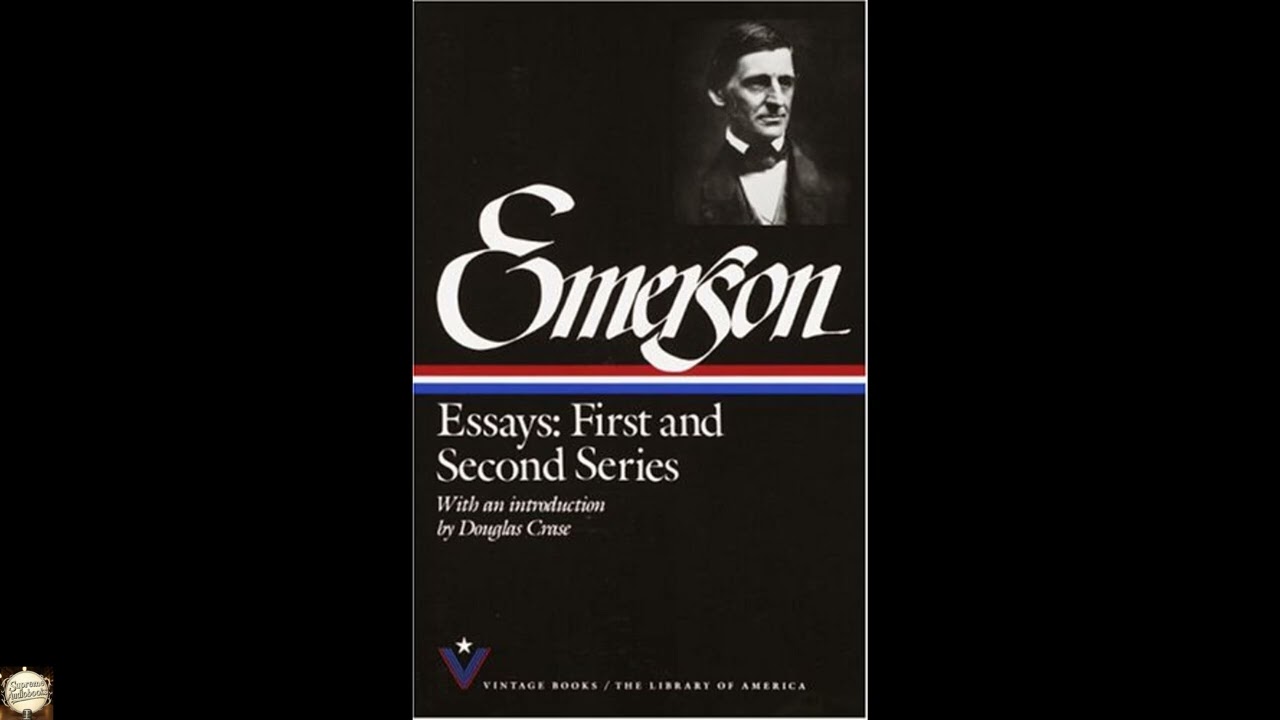
Ralph Waldo Emerson
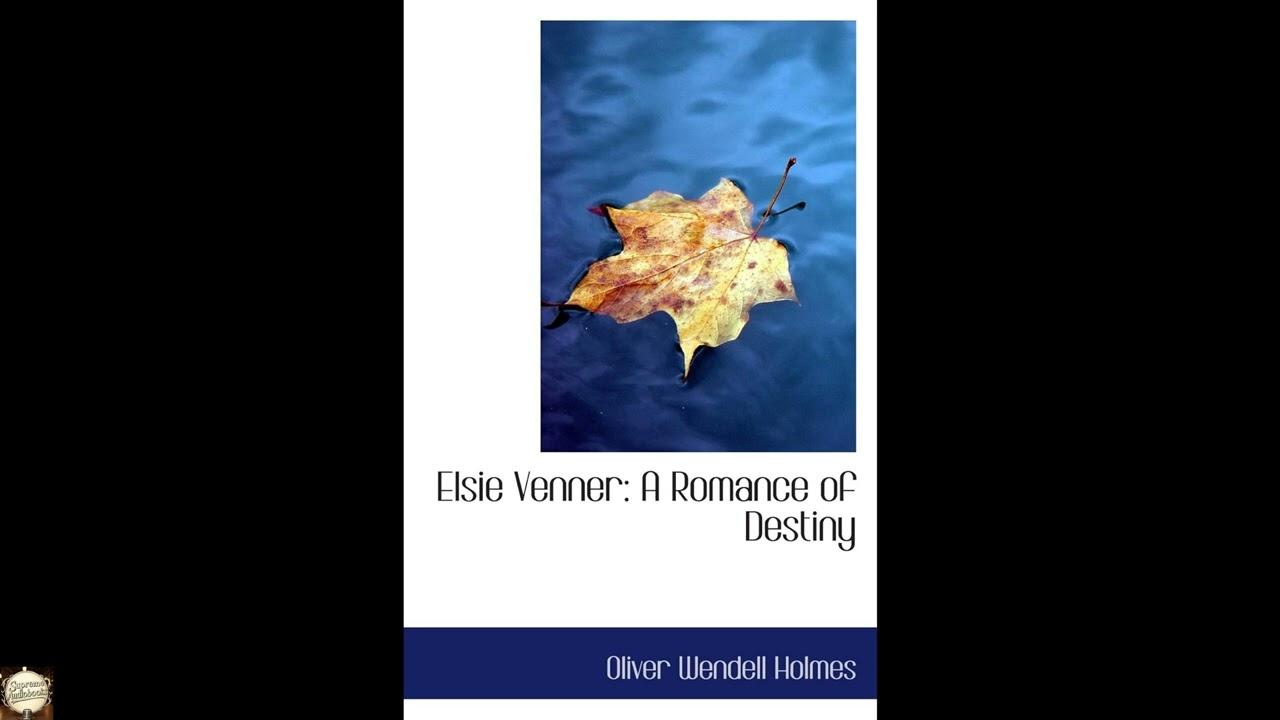
Before American thought truly found its voice, before its literature stood apart from European shadows, there was Ralph Waldo Emerson. His was the mind that articulated the very essence of American individualism, inviting listeners to trust their own intuition and find spiritual truth in the world around them. This audiobook presents a profound and intimate portrait of this pivotal figure, penned by a brilliant contemporary, Oliver Wendell Holmes. It offers not just a recounting of Emerson’s life, but a thoughtful assessment from someone who moved in the same rarefied intellectual circles, sharing the same New England air. For anyone seeking to understand the wellspring of American self-reliance, the roots of transcendentalism, and the enduring power of original thought, Holmes’s biography of Emerson remains an indispensable guide, illuminating how one man's vision reshaped a nation's consciousness and continues to resonate today. Oliver Wendell Holmes’s biographical account traces the remarkable trajectory of Ralph Waldo Emerson’s intellectual and spiritual awakening. We witness Emerson’s early life within the Unitarian ministry, observing his conscientious struggles with dogma and institutionalized religion. The narrative vividly details his pivotal decision to resign his pulpit, a move that liberated him from conventional expectations and set him on a path toward radical new thought. This crucial departure marks the beginning of Emerson’s emergence as an independent lecturer and essayist, a voice eager to articulate a philosophy deeply rooted in the American experience. Holmes then portrays Emerson’s move to Concord, Massachusetts, a locus of intense intellectual ferment. Here, Emerson became the central figure among a burgeoning group of thinkers, poets, and reformers who would coalesce into the Transcendentalist movement. The book brings to life Emerson’s role in founding The Dial, a journal that became a crucible for these transformative ideas. Listeners follow Emerson as he develops his core philosophical tenets – the inherent goodness of man, the sacredness of nature, and the paramount importance of individual intuition over established authority. It chronicles his powerful lectures, which captivated audiences across America, shaping an entire generation’s understanding of spirituality, self-improvement, and national identity, without revealing the full extent of his final legacy. The author of this perceptive biography, Oliver Wendell Holmes, Sr., was a towering figure in his own right, born in 1809 and passing in 1894. A multi-talented American, he was a distinguished physician, an anatomy professor at Harvard, a renowned lecturer, and a prolific man of letters. Holmes’s remarkable intellect allowed him to make significant contributions to both science—he coined the medical term "anesthesia"—and literature, where he was a beloved member of the Fireside Poets. His wit, erudition, and keen observations made him a celebrated essayist and poet, capable of both lighthearted verse and incisive social commentary. Holmes was not merely an admirer of Emerson; he was a contemporary and peer, part of the same vibrant intellectual landscape that defined nineteenth-century New England. This shared context lends a unique authority to his biography, allowing him to paint a nuanced portrait of Emerson, grounded in personal acquaintance and mutual respect. Beyond this work, Holmes penned other notable books such as The Autocrat of the Breakfast-Table, a series of conversational essays that garnered him widespread fame, as well as novels like Elsie Venner: A Romance of Destiny. His position as a central figure in the New England Renaissance ensures that his account of Emerson is informed by an insider's perspective, reflecting the spirit and ideas of their shared era. Several profound themes radiate from Emerson's life and writings, which Holmes carefully illuminates. Perhaps the most prominent is Self-Reliance, a concept Emerson champions throughout his essays and lectures. Holmes details how Emerson's own decision to leave the Unitarian ministry and forge his own intellectual path exemplifies this very principle, demonstrating a profound trust in his inner voice despite societal pressures. The biography shows Emerson’s commitment to living authentically, encouraging individuals to cultivate their unique genius rather than conforming to the expectations of the crowd. Another significant theme is Nature as a Spiritual Teacher. Emerson consistently argued that divine truth and moral guidance could be found in the natural world, outside the confines of churches and institutions. Holmes illustrates this by describing Emerson's deep connection to the landscapes of Concord, his walks in the woods, and how these experiences informed his philosophical insights. A third, overarching theme is Transcendentalism itself—the belief that an ideal spiritual reality exists beyond the empirical and scientific, accessible through intuition rather than reason. Holmes describes Emerson's role not just as a proponent but as a defining voice of this movement, shaping its emphasis on individual experience, self-discovery, and the inherent divinity in both humanity and nature. This biography emerged from a specific cultural and literary moment in America. It was written in the late nineteenth century, after Emerson’s passing, a period when the nation was taking stock of its intellectual heritage and the foundations laid by figures like Emerson. The mid-nineteenth century, when Emerson’s ideas first blossomed, was a time of immense social and political upheaval—the build-up to the Civil War, the abolitionist movement, and a burgeoning sense of distinct American identity. Emerson’s call for intellectual independence and a truly American literature resonated deeply in this environment, offering a philosophical framework for national self-definition. Holmes's work thus serves as a reflective assessment of a foundational figure, written by a contemporary looking back at an era that had profoundly shaped him and the nation. While Emerson’s idealism and romanticism had defined an earlier generation, the literary world was slowly shifting towards realism. Holmes’s biography, therefore, functions as both a celebration and an interpretation, offering insights into Emerson’s enduring relevance even as the cultural landscape continued to evolve. It provides a unique lens through which to understand not only Emerson but also the intellectual currents that flowed through the heart of nineteenth-century America. Listening to Oliver Wendell Holmes’s "Ralph Waldo Emerson" as an audiobook offers a singular opportunity to immerse oneself in the intellectual spirit of a bygone era. The narrator’s voice becomes the conduit for Holmes’s thoughtful prose, bringing to life the wit, wisdom, and personal insights of an author who knew Emerson intimately. Over several hours, listeners can absorb the subtle nuances of Holmes’s observations, his carefully crafted sentences, and his elegant recounting of Emerson’s profound impact. The spoken word allows Emerson’s radical ideas about self-reliance and nature to unfold with clarity, making complex philosophical concepts more accessible. It is an ideal companion for walks through nature, reflective moments, or quiet commutes, providing a deep, engaging dive into the life and mind of a figure whose thoughts continue to shape American identity.
Enjoyed Ralph Waldo Emerson? A few ways to support us
Audible & Amazon links are affiliate; we may earn a small commission at no extra cost.
About this production
Human narration by a volunteer reader from LibriVox.org, the public-domain audiobook project. LibriVox volunteers record literary works whose copyright has expired in the United States, releasing the resulting recordings into the public domain.
Ralph Waldo Emerson by Oliver Wendell Holmes. The underlying text is in the U.S. public domain. We do not republish any modern copyrighted edition, translation, or commentary.
The 4K cinematic visuals accompanying this audiobook are generated by an AI image model from prompts derived from the source text. No copyrighted photos, paintings, or stock footage are used. AI generation is disclosed on every video on our YouTube channel as required by YouTube's altered/synthetic content policy.
English subtitles are transcribed from the LibriVox recording with OpenAI Whisper. Translations into the 11 other supported languages are produced by Meta's NLLB-200 neural translation model. No human translator's copyrighted translation is used.
Questions about sourcing or rights? See our DMCA & Sourcing policy or contact us.
Enjoyed this audiobook?
If you'd like to own a copy of Ralph Waldo Emerson or hear a professionally produced edition, the links below help support free audiobook production at no extra cost to you.
As an Amazon Associate we earn from qualifying purchases. Audible / print links are affiliate.