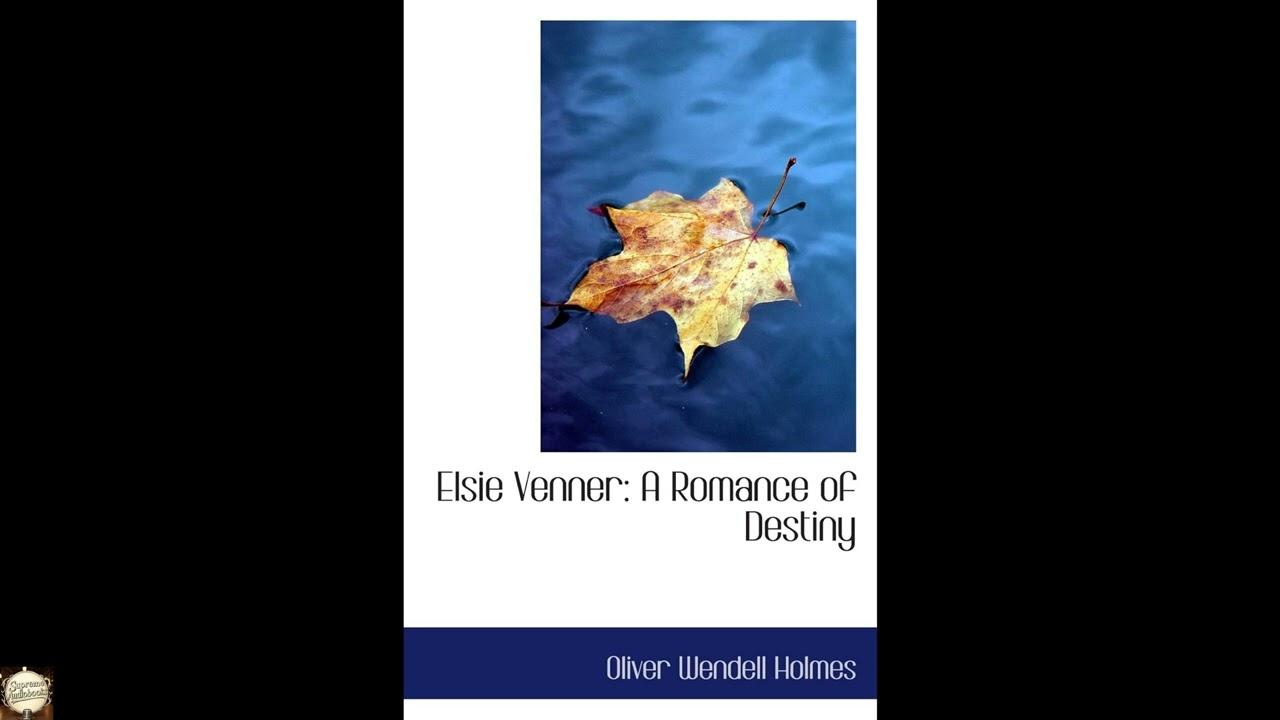
Elsie Venner: A Romance of Destiny
In the quiet corners of literary history stand certain works that defy easy categorization, narratives whose very origins seem shrouded in the mists of time, yet whose power to resonate remains undiminished. Elsie Venner: A Romance of Destiny is one such book, a classic story whose title alone hints at profound questions concerning fate, identity, and the enigmatic forces that shape a human life. It arrives in the modern ear as a compelling whisper from an era deeply concerned with the boundaries of human knowledge and the struggle between societal expectation and individual truth. Far from being a mere historical curiosity, this story speaks directly to contemporary anxieties about belonging, the nature of self, and the often-unseen struggles beneath polished surfaces. Listening to it today is to engage with a foundational text that challenges preconceptions and invites contemplation about what it truly means to be human, and how much control we genuinely possess over our own lives. The setting for this poignant tale is a seemingly tranquil New England community, a place of academic rigor and entrenched social norms, where appearances are often mistaken for reality. Here, the arrival of a young, earnest teacher named Bernard Langdon sets the stage for a drama that gradually unfolds with increasing intensity. Langdon, new to the staid routines of the town, quickly becomes aware of a singular figure who stands apart from the gossipy clatter and predictable rhythms of daily life: Elsie Venner. Elsie is the daughter of a prominent local physician, and she possesses an ethereal beauty, yet her demeanor is marked by an unsettling strangeness, an almost reptilian coolness that both repels and fascinates. She moves with an unusual grace, her eyes holding an expression that seems to pierce through the mundane, hinting at a secret world beneath her composed exterior. As Langdon settles into his new life, he — along with the reader — becomes an observer of Elsie’s peculiar existence. Her infrequent, intense expressions, her sudden bursts of emotion followed by periods of remote calm, and her palpable detachment from the common joys and sorrows of her peers all contribute to an aura of mystery. She is drawn to certain natural phenomena with an intensity that borders on the instinctual, and there are whispers, vague rumors connecting her to a local legend, a dark incident from the past involving a pregnant woman and a venomous snake. The narrative slowly, methodically builds around Elsie's enigmatic condition, her struggles within the confines of society's expectations, and Langdon's growing fascination with her. He finds himself caught between sympathy and fear, driven to understand the true nature of her "destiny" and whether it is a curse or merely a misunderstood aspect of her unique being. The story becomes a delicate dance between observation and introspection, as characters grapple with the implications of Elsie’s presence, culminating in choices and revelations that challenge the very fabric of their understanding. The literary world is graced by some works whose authors remain unknown, their genesis shrouded in the very mists of time they so eloquently depict. Elsie Venner: A Romance of Destiny holds such a distinction, emerging from a tradition where stories achieved canonical status not through individual celebrity, but through their inherent power and pervasive cultural resonance. It stands as a testament to the enduring human need for narrative, a story that has solidified its place in the literary consciousness despite the absence of a singular, identifiable hand guiding its initial composition. This particular text has often been seen as a profound meditation on the unconscious drives and the pre-rational forces that govern human behavior, long before such concepts became formalized in academic discourse. The enduring appeal of Elsie Venner lies not in a famous author's biography, but in the unique textual history of the work itself. It has been treated as a rediscovered treasure, a narrative that seems to have always existed, finally gathered and presented in the form we recognize today. Its survival and eventual recognition as "classic literature" speak to its deep-seated ability to articulate universal human dilemmas. It represents a strain of creative expression that values the story above the storyteller, allowing the intrinsic power of the narrative to define its legacy rather than the personal details of its creator. This anonymity, far from being a detraction, lends the work a sense of timeless, almost mythic authority, inviting listeners to engage directly with the unfiltered voice of the narrative. Several potent themes anchor Elsie Venner, making it a fertile ground for reflection. Foremost among these is the enduring debate concerning nature versus nurture, or perhaps more precisely, fate versus free will. Elsie herself embodies this conflict. Is her unsettling strangeness the result of an inescapable biological predisposition, or a product of her environment and the isolated life she leads? The narrative presents specific instances, like Elsie's intense reactions to music or her unusual rapport with animals, which force the characters, and the listener, to question the source of her singular nature. These moments provide concrete glimpses into the central dilemma, pushing us to consider how much of our character is predetermined and how much is shaped by choice and circumstance. Another powerful theme is the struggle of the outsider against societal conformity. Elsie's very existence challenges the rigid social structures and expectations of her New England town. Her unconventional beauty and enigmatic behavior set her apart, making her a target for both fascination and fear. The town's reactions to her—ranging from superstitious gossip to attempts at "civilizing" her—illustrate the discomfort many feel when confronted with that which they cannot easily categorize or control. The story deftly portrays the subtle pressures and outright condemnation faced by those who deviate from the norm, showing how deeply ingrained expectations can shape individual destinies. Furthermore, the narrative subtly but effectively touches upon the burgeoning recognition of the subconscious or unseen forces that influence human actions, foreshadowing later psychological theories by suggesting that deeper, less rational currents may be at play beneath the surface of polite society. The cultural and intellectual currents surrounding the emergence of Elsie Venner were complex, marked by profound shifts in how humanity perceived itself and its place in the world. It arrived during a period when scientific inquiry was rapidly expanding, challenging long-held religious and philosophical tenets. There was a growing interest in fields like psychology, anthropology, and medicine, even in their nascent forms, which began to question the purely spiritual or moralistic explanations for human behavior. This era witnessed a tension between the comforts of tradition and the unsettling implications of new discoveries, particularly regarding heredity and the origins of human nature. This work therefore resonates with the broader cultural anxieties of its time, a time when societies grappled with the implications of scientific determinism and the continued relevance of personal agency. The novel genre itself was evolving, moving beyond simpler moral allegories to embrace more complex character studies and psychological realism. Elsie Venner reflects this broader intellectual landscape by posing questions that science was beginning to address, yet grounding them in the familiar, emotionally charged context of a human romance. It represents a bold step in literature's capacity to engage with the scientific and philosophical quandaries that defined the age, using narrative to probe the most fundamental questions of what it means to be human. Listening to Elsie Venner: A Romance of Destiny as an audiobook offers a uniquely immersive experience, allowing the story's inherent mystery and psychological depth to unfold directly into the mind's ear. The narrator's voice becomes the conduit for the tale's atmospheric descriptions, painting vivid pictures of the New England town and Elsie's unsettling presence without the need for visual input. Listen for the pacing, which carefully builds suspense around Elsie's true nature, allowing her strangeness to gradually become more pronounced and compelling. The nuances of dialogue—from the academic pronouncements of the male characters to the hushed gossip of the townsfolk and Elsie's own cryptic utterances—are brought to life through distinct vocal interpretations, enhancing the characterization. The story's "several hours" run length is perfectly suited for deep listening, encouraging a sustained engagement with its thematic questions and allowing the subtly woven atmosphere to fully envelop you. It transforms what could be a silent read into an intimate, spoken encounter with a narrative that continues to provoke thought and stir the imagination.
Enjoyed Elsie Venner: A Romance of Destiny? A few ways to support us
Audible & Amazon links are affiliate; we may earn a small commission at no extra cost.
About this production
Human narration by a volunteer reader from LibriVox.org, the public-domain audiobook project. LibriVox volunteers record literary works whose copyright has expired in the United States, releasing the resulting recordings into the public domain.
Elsie Venner: A Romance of Destiny by Oliver Wendell Holmes. The underlying text is in the U.S. public domain. We do not republish any modern copyrighted edition, translation, or commentary.
The 4K cinematic visuals accompanying this audiobook are generated by an AI image model from prompts derived from the source text. No copyrighted photos, paintings, or stock footage are used. AI generation is disclosed on every video on our YouTube channel as required by YouTube's altered/synthetic content policy.
English subtitles are transcribed from the LibriVox recording with OpenAI Whisper. Translations into the 11 other supported languages are produced by Meta's NLLB-200 neural translation model. No human translator's copyrighted translation is used.
Questions about sourcing or rights? See our DMCA & Sourcing policy or contact us.
View 10 famous quotes from this book →
Enjoyed this audiobook?
If you'd like to own a copy of Elsie Venner: A Romance of Destiny or hear a professionally produced edition, the links below help support free audiobook production at no extra cost to you.
As an Amazon Associate we earn from qualifying purchases. Audible / print links are affiliate.