About Oliver Wendell Holmes
A prominent figure in nineteenth-century American letters, Oliver Wendell Holmes was born on August 29, 1809, in Cambridge, Massachusetts, and died in Boston on October 7, 1894. The son of a distinguished Calvinist minister, he received his education at Phillips Academy Andover and Harvard College, graduating in 1829. Though he initially studied law, a passion for medicine ultimately led him to Paris and Harvard Medical School, where he earned his M.D. in 1836. For decades, he served with distinction as a professor of anatomy and physiology, first at Dartmouth and later at Harvard, balancing a rigorous scientific career with a burgeoning literary life.
Holmes’s entry into the literary world was a natural outgrowth of his keen intellect and a wit sharpened by Bostonian society. He found a ready audience in the burgeoning American magazine landscape, particularly through The Atlantic Monthly, which he helped found. His early poetic success, notably the 1830 poem 'Old Ironsides,' famously rallied public sentiment to save the USS Constitution from demolition, demonstrating the immediate impact his words could have. This public affirmation encouraged his broader literary pursuits, leading to a prolific output that blended humor, social commentary, and philosophical inquiry.
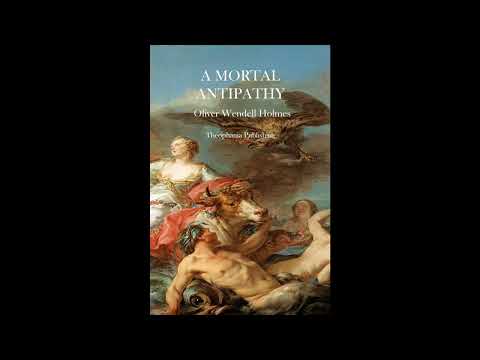
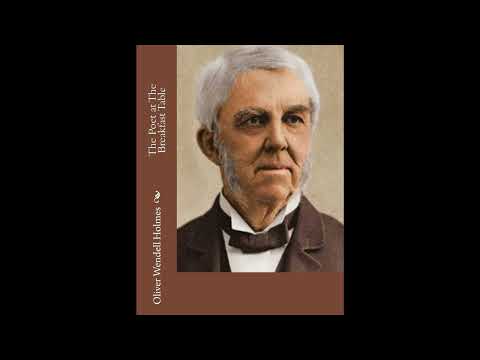
Among his most enduring contributions are the 'Breakfast-Table' series, where his unique blend of conversational prose and poetry shines. The Autocrat of the Breakfast-Table (1858) presents a series of delightful musings and discussions among a diverse group of boarders; The Professor at the Breakfast-Table (1860) continues these lively debates with a focus on deeper intellectual and spiritual questions; and The Poet at the Breakfast-Table (1872) offers more personal reflections through the eyes of its titular narrator. Beyond these, his novel Elsie Venner (1861) examined the controversial idea of inherited traits, while A Mortal Antipathy (1885) presented a psychological study of an unusual phobia. He also penned a significant biography of his contemporary, Ralph Waldo Emerson (1884), offering insight into a fellow New England luminary.
Holmes’s writing is marked by a distinctive style: urbane, genial, and often profoundly witty, skillfully weaving together scientific observation, philosophical contemplation, and Yankee common sense. He frequently employed a conversational tone, inviting readers to participate in the intellectual camaraderie of his fictional breakfast table. A recurring theme in his work is the interplay between science and spirituality, often illustrated with specific, relatable examples, as seen in the poem 'The Chambered Nautilus' from The Autocrat of the Breakfast-Table, which uses the natural growth of a shell to symbolize the soul’s progression. He also frequently commented on New England society and character, often with gentle satire.
As one of the celebrated Fireside Poets, Holmes played a crucial role in shaping a distinctly American literary voice in the 19th century, making poetry and essays accessible and appealing to a wide readership. His work helped define the 'Brahmin caste' of New England intellectuals, contributing significantly to American cultural identity. His blend of scientific rigor and literary artistry anticipated later literary movements, particularly in his early forays into psychological realism. Later writers valued his elegant prose and keen social observations, continuing to find relevance in his thoughtful critiques of society and human nature.
For listeners today, his observations on life, literature, and human character remain as thought-provoking and entertaining as ever, freely available as audiobooks.
More on Wikipedia →