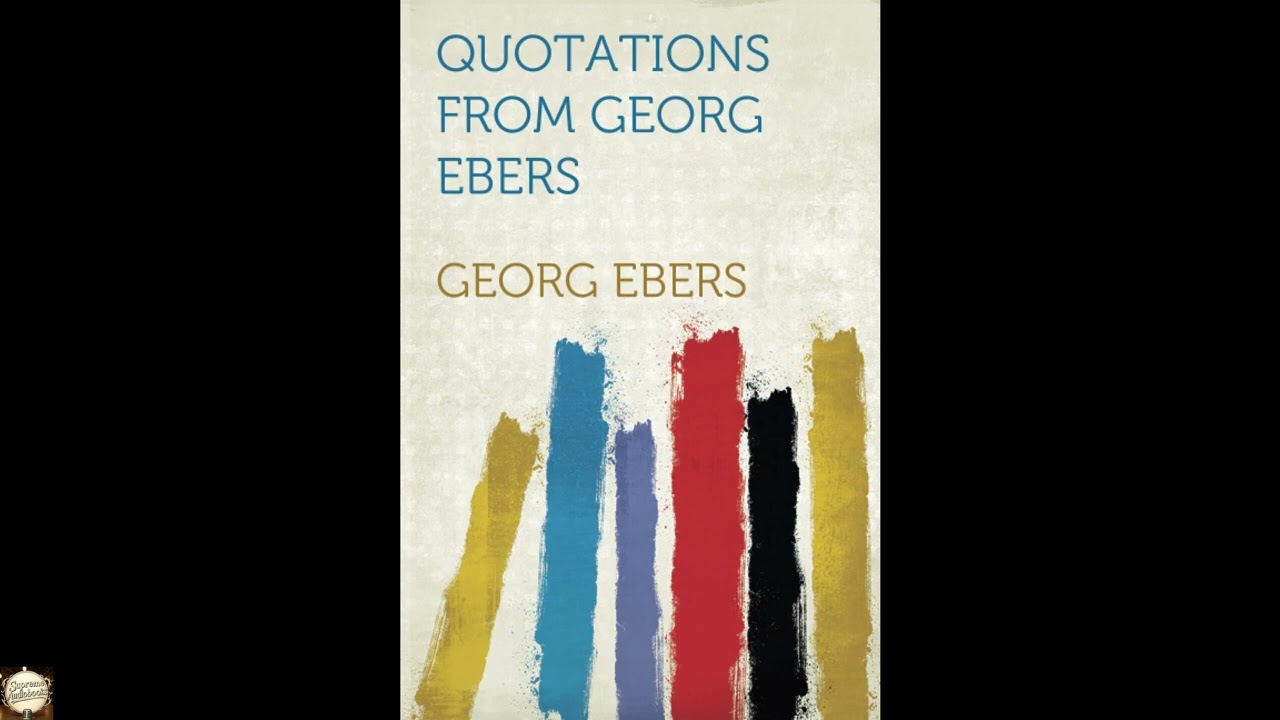
Quotations from Georg Ebers
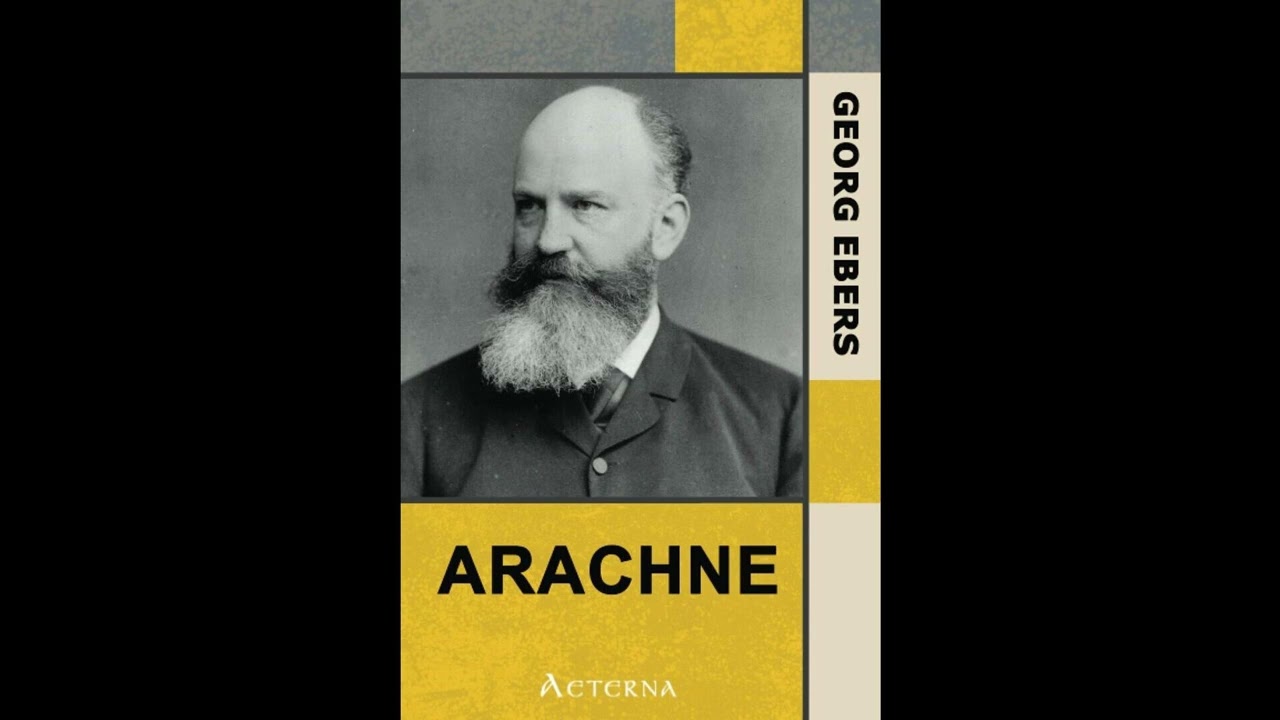
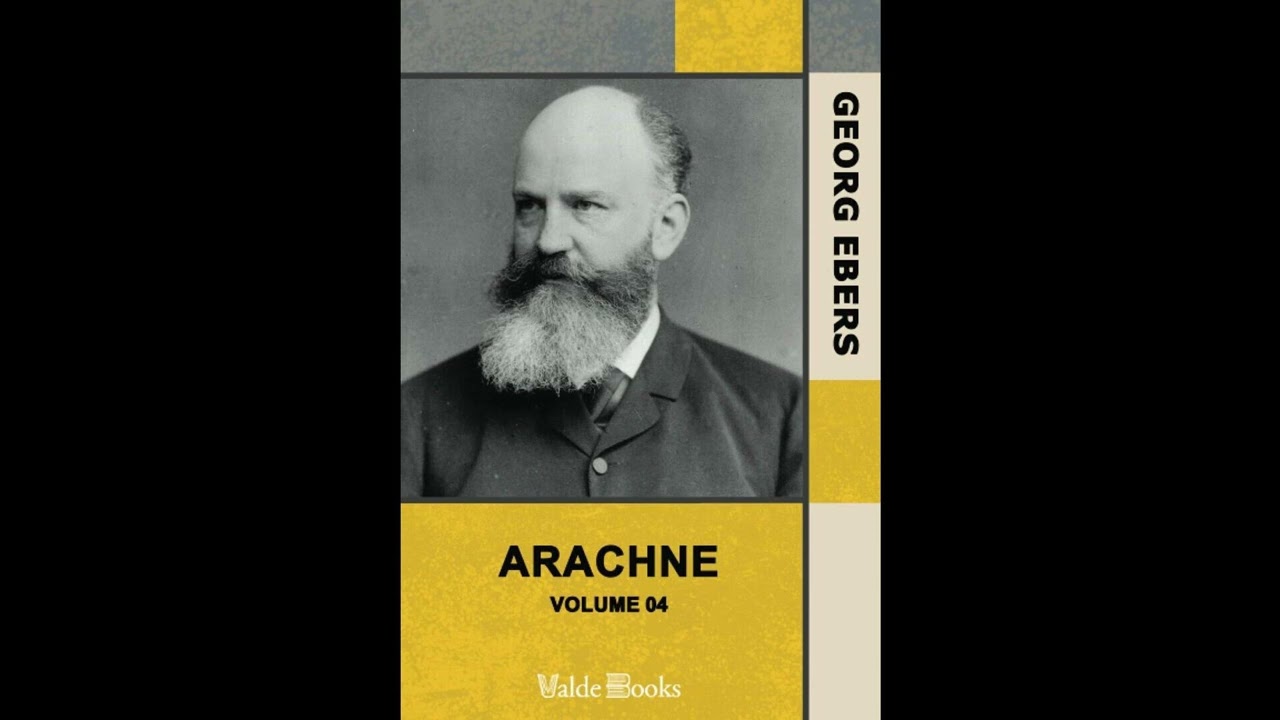
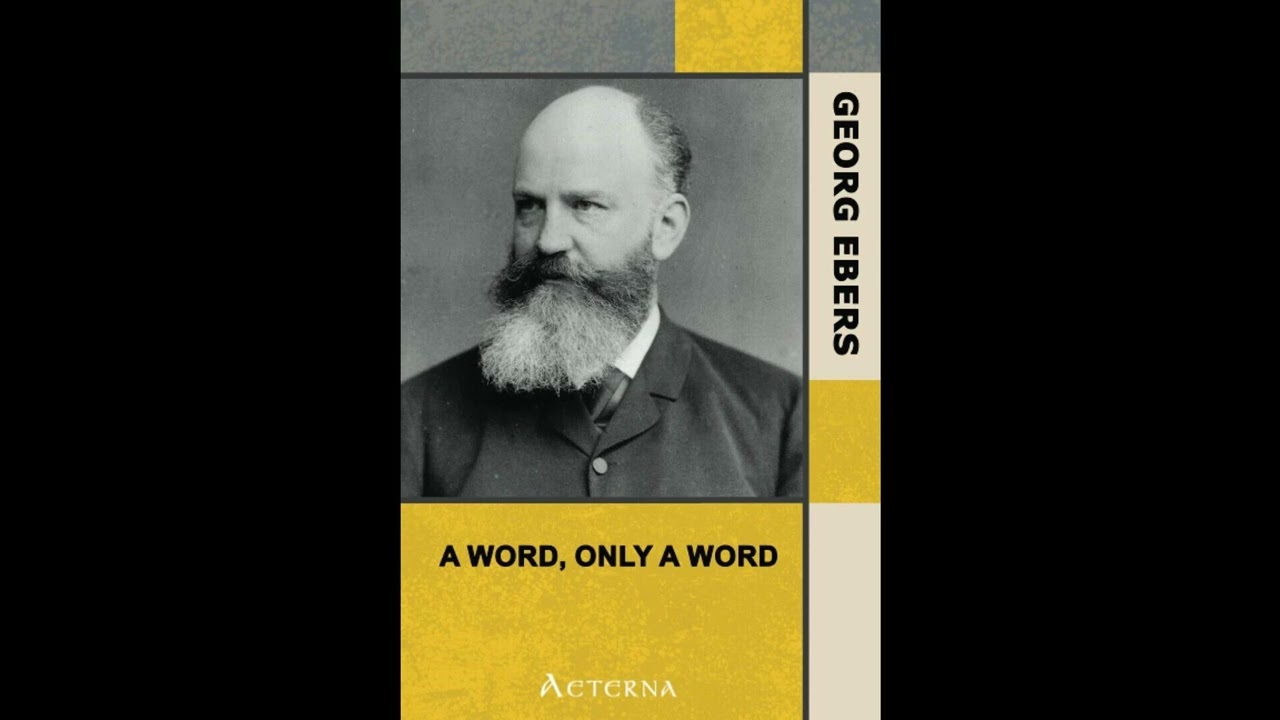
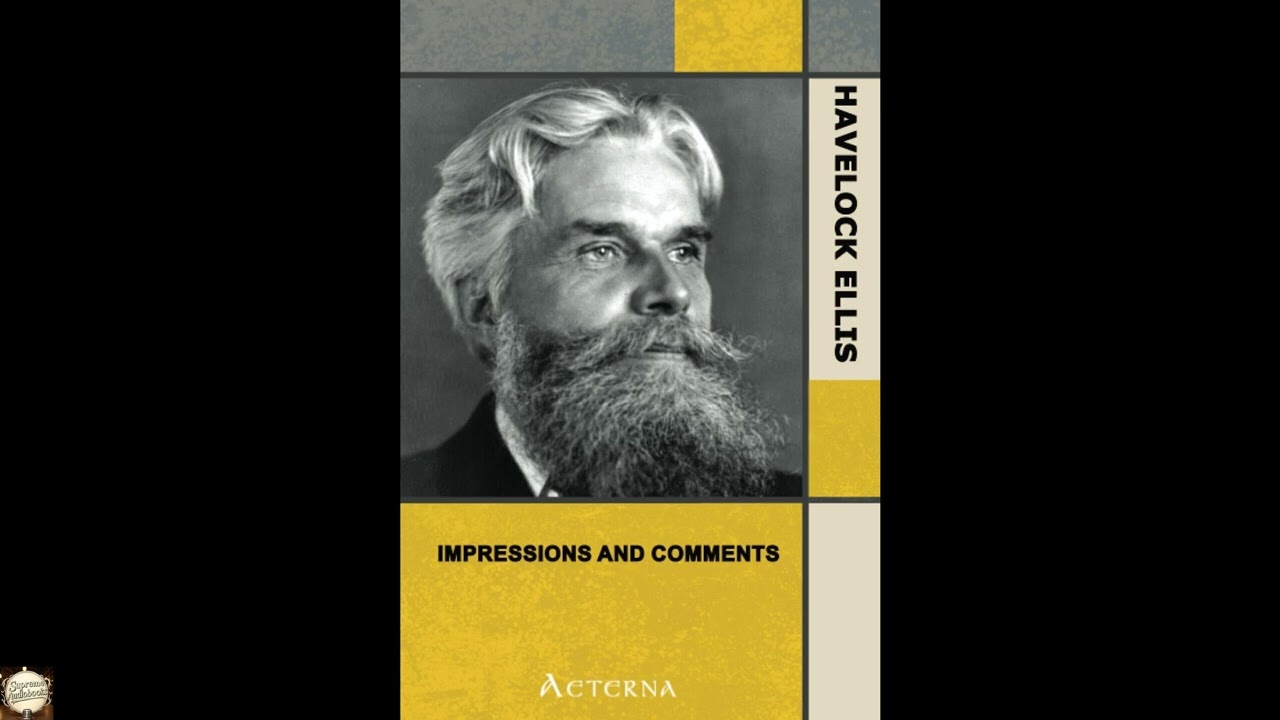
For those drawn to the deep currents of human thought, to the concentrated wisdom gleaned from a life lived between ancient history and vibrant storytelling, Quotations from Georg Ebers offers a unique listening experience. This collection distills the essence of a remarkable mind—that of the renowned German Egyptologist and novelist, Georg Ebers—into a series of arresting observations. Far from a mere academic exercise, this audiobook presents the distilled reflections of a scholar who breathed life into the distant past, inviting listeners to engage with profound insights on history, art, human nature, and the ceaseless march of time. It's an opportunity to encounter a public intellectual from a bygone era, whose perspectives on the world, shaped by rigorous research and vivid imagination, continue to resonate with striking relevance in our own complex times. Within these collected remarks, Ebers takes listeners on a mental expedition through the landscapes of human experience. He navigates the grand sweep of history, drawing parallels and contrasts between the splendors of ancient civilizations, particularly Egypt, and the more familiar struggles and triumphs of his contemporary world. The quotations might touch on the enduring power of monuments, the fleeting nature of personal ambition against the backdrop of millennia, or the universal emotions that bind people across ages and cultures. One encounters his musings on the role of the artist in society, the challenges of scholarship, and the subtle interplay between fact and fiction in understanding the past. Each entry acts as a window into a specific facet of his intellect, revealing the keen observation and philosophical underpinning that characterized his celebrated historical novels and academic writings. The book thus builds a cumulative portrait of a mind deeply engaged with both the empirical truths of antiquity and the broader philosophical questions they inspire. Georg Ebers, born in Berlin in 1837, led a life that perfectly bridged the worlds of meticulous scholarship and popular literature. Educated at Göttingen and Berlin, he initially studied law but soon gravitated towards oriental languages and archaeology. His passion for ancient Egypt blossomed, culminating in his appointment as Professor of Egyptology at the University of Leipzig in 1870, later moving to Jena. It was during his groundbreaking expeditions to Egypt in the early 1870s that he made one of his most significant academic contributions: the discovery of the Ebers Papyrus, an ancient Egyptian medical text of immense historical value. This discovery cemented his reputation as a leading figure in Egyptology. However, Ebers was not content to merely decipher hieroglyphs in dusty archives. He possessed a rare gift for narrative, transforming his profound historical knowledge into widely acclaimed historical novels. Works such as Eine ägyptische Königstochter (An Egyptian Princess), Uarda, and Serapis transported millions of readers back to the Nile Valley, vividly recreating daily life, political intrigue, and personal dramas of ancient Egypt. His novels were instrumental in popularizing Egyptology among the general public, making the arcane fascinating and accessible. Ebers's dual legacy as both a rigorous academic and a compelling storyteller places him as a unique figure in late 19th-century German letters, bridging the gap between scientific discovery and literary imagination. He passed away in 1898, leaving behind a substantial body of work that continues to inform and entertain. The insights collected in Quotations from Georg Ebers offer a concentrated look at several pervasive themes that run through his larger body of work. One prominent theme is the enduring human connection to history. Ebers often reflects on how the echoes of the past constantly shape the present, emphasizing that while civilizations rise and fall, certain fundamental aspects of human nature—love, ambition, grief, curiosity—remain constant. He might, for example, comment on how the artistic expressions found in an ancient tomb reveal the same quest for immortality or beauty that drives contemporary artists. Another core theme is the power of storytelling and art in understanding truth. For Ebers, history was not just a collection of facts but a narrative that required empathy and imaginative reconstruction to truly grasp. He might reflect on how a poet's depiction of a historical event, even if embellished, can sometimes convey a deeper emotional truth than a dry chronicle. Furthermore, the collection likely touches on the nature of knowledge and discovery, a natural preoccupation for a scholar who unearthed ancient texts and artifacts. Ebers’s quotations might ponder the painstaking process of uncovering forgotten wisdom, the humility required in facing the vastness of the unknown, and the exhilaration of intellectual breakthrough. He could observe how the act of deciphering an ancient script is akin to unlocking a secret language of the soul, bridging millennia with a stroke of insight. A fourth recurring idea is the interplay between individual destiny and societal forces. Throughout his historical novels, Ebers consistently explored how personal choices unfold against the backdrop of grand political shifts or cultural norms. His reflections might highlight how even seemingly small actions contribute to the broader currents of history, or conversely, how individuals struggle to maintain their agency within powerful, overwhelming systems. Georg Ebers's literary and academic output emerged during a fascinating period of intense intellectual ferment in Europe, particularly in Germany. The late 19th century was an era marked by burgeoning scientific discovery, rapid industrialization, and a growing fascination with the exotic and the ancient. Archaeology was transforming from a gentleman's hobby into a serious academic discipline, and discoveries in Egypt, Mesopotamia, and Greece captivated the public imagination. Ebers's novels perfectly tapped into this zeitgeist, offering thrilling yet historically grounded narratives that satisfied both a hunger for entertainment and a burgeoning interest in scientific exploration. Culturally, there was a widespread romanticism for the ancient world, often imbued with a sense of wonder and a desire to understand the roots of Western civilization. Politically, Germany was a newly unified nation, asserting its cultural and scientific prowess on the world stage, making scholarship of Ebers’s caliber a source of national pride. His ability to synthesize rigorous research with accessible storytelling made him an ideal voice for this era. Listening to Quotations from Georg Ebers as an audiobook offers a distinctly contemplative experience. The format encourages a measured pace, allowing each thought to truly settle and resonate before moving to the next. The narrator’s voice becomes a guide, interpreting the subtle nuances of Ebers’s observations, delivering them with the gravitas or lightness appropriate to their content. With a run length of several hours, it is ideal for moments of quiet reflection, whether during a morning commute, a leisurely afternoon, or an evening winding down. Listeners can savor individual quotes, pausing to ponder their meaning, or allow the stream of Ebers’s wisdom to wash over them, creating an atmospheric backdrop for their own thoughts. The absence of traditional dialogue in this collection means the listener's focus remains squarely on the carefully chosen words and the voice that delivers them, fostering a unique intimacy with the mind of this celebrated scholar-storyteller.
Enjoyed Quotations from Georg Ebers? A few ways to support us
Audible & Amazon links are affiliate; we may earn a small commission at no extra cost.
About this production
Human narration by a volunteer reader from LibriVox.org, the public-domain audiobook project. LibriVox volunteers record literary works whose copyright has expired in the United States, releasing the resulting recordings into the public domain.
Quotations from Georg Ebers by Georg Ebers. The underlying text is in the U.S. public domain. We do not republish any modern copyrighted edition, translation, or commentary.
The 4K cinematic visuals accompanying this audiobook are generated by an AI image model from prompts derived from the source text. No copyrighted photos, paintings, or stock footage are used. AI generation is disclosed on every video on our YouTube channel as required by YouTube's altered/synthetic content policy.
English subtitles are transcribed from the LibriVox recording with OpenAI Whisper. Translations into the 11 other supported languages are produced by Meta's NLLB-200 neural translation model. No human translator's copyrighted translation is used.
Questions about sourcing or rights? See our DMCA & Sourcing policy or contact us.
Enjoyed this audiobook?
If you'd like to own a copy of Quotations from Georg Ebers or hear a professionally produced edition, the links below help support free audiobook production at no extra cost to you.
As an Amazon Associate we earn from qualifying purchases. Audible / print links are affiliate.