Gorgias
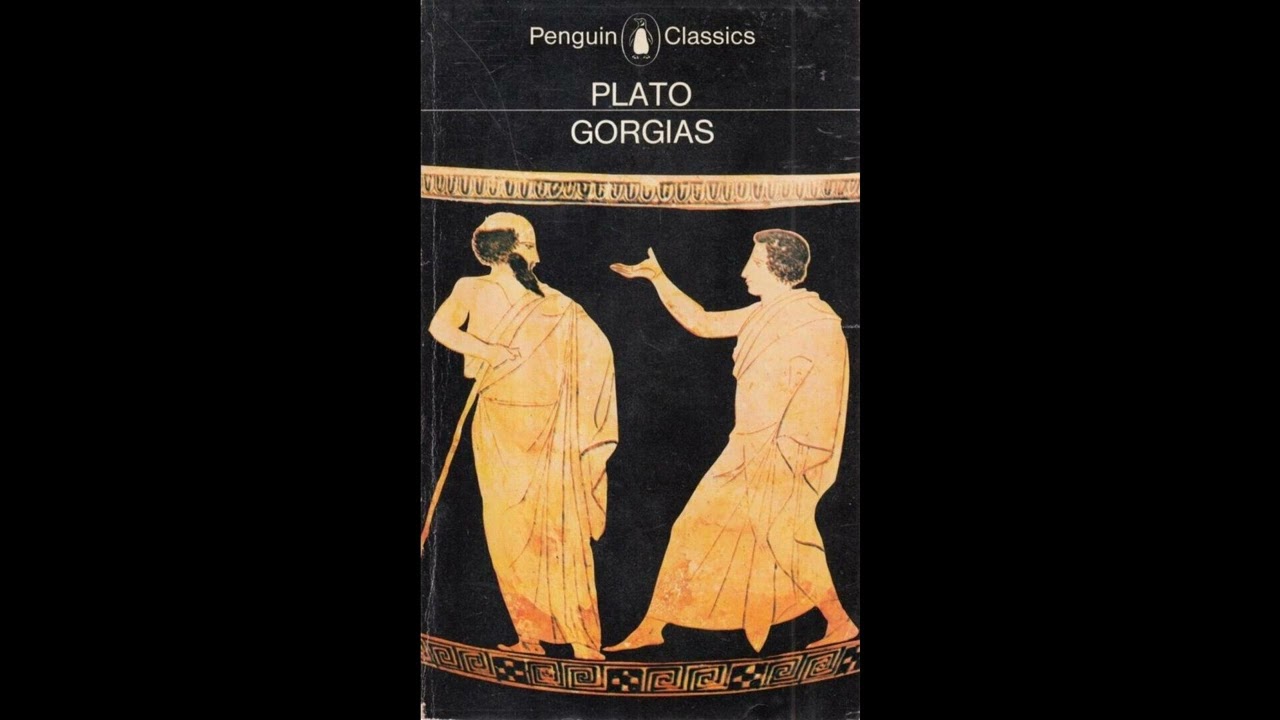
Step into an arena of words where the very foundations of truth, power, and morality are debated with razor-sharp intellect. Plato's Gorgias is not just a philosophical text; it is a dramatic confrontation, a clash of ideals that echoes through the millennia. This ancient dialogue plunges directly into the heart of questions that remain profoundly urgent today: How do we distinguish genuine knowledge from mere persuasion? What constitutes a good leader, a just society, or a truly flourishing life? In an era where public discourse is often shaped by soundbites and emotional appeals, where the line between fact and opinion blurs daily, the arguments laid bare in Gorgias offer a bracing and necessary intellectual challenge, inviting us to critically examine the forces that shape our beliefs and actions. The scene opens in Athens, at a private gathering, where the celebrated rhetorician Gorgias of Leontini has just finished a public demonstration of his oratorical skill. Socrates, ever the relentless questioner, arrives late and immediately presses Gorgias on the true nature of his art. Is rhetoric a genuine art, capable of imparting knowledge and virtue, or is it merely a knack for producing belief without understanding? Gorgias, confident in his ability to persuade anyone on any topic, initially asserts rhetoric's immense power, claiming it allows one to control even physicians and financial experts through speech. As Socrates meticulously probes, however, Gorgias's definitions begin to unravel, revealing inconsistencies in his claims about rhetoric's connection to justice and truth. The debate then shifts to Polus, Gorgias's eager and somewhat impetuous student, who steps in to defend his teacher's craft. Polus argues that power, especially the power to do whatever one wishes, is the greatest good, and that rhetoric provides this power by enabling one to sway juries and assemblies. Socrates, however, turns this notion on its head, suggesting that doing injustice, even if one escapes punishment, is far worse than suffering injustice. He argues that the true power lies not in being able to do wrong, but in acting justly and having a soul in proper order. The discussion escalates further with the arrival of Callicles, a prominent and cynical Athenian, who scoffs at Socrates's moralizing and introduces a radically different view of justice, asserting that it is merely a convention imposed by the weak upon the strong, and that natural justice dictates the powerful should rule and take what they desire. The author, Plato, lived through one of the most tumultuous periods in Athenian history, witnessing the city's democratic ideals often fall short. Born around 428 or 427 BCE into an aristocratic family, he came of age during the Peloponnesian War, which ended in Athens's humiliating defeat. His most profound intellectual influence was Socrates, whose unconventional methods of questioning and commitment to moral integrity deeply impacted the younger philosopher. The unjust trial and execution of Socrates in 399 BCE for impiety and corrupting the youth became a pivotal event in Plato's life, driving him to dedicate himself to philosophy and to preserving his mentor's legacy through writing. After Socrates's death, Plato traveled widely before returning to Athens to found the Academy, often considered the first institution of higher learning in the Western world. Here, he taught and wrote for decades, shaping generations of thinkers, including Aristotle. His body of work comprises some of the foundational texts of Western philosophy, including the Republic, which envisions an ideal state, the Apology, a defense of Socrates, and the Symposium, a celebration of love. Through his dialogues, Plato not only recorded Socrates's ideas but also developed his own theories, most notably the theory of Forms, which posits a realm of perfect, eternal archetypes existing beyond the physical world. Gorgias compellingly enacts several enduring themes. One central concern is the nature of rhetoric itself. Socrates distinguishes between "true arts" like medicine, which aim at the good of the body, and "sham arts" like cookery, which merely flatter the palate. He argues that rhetoric, in its common practice, is akin to cookery for the soul, a knack for persuasion without genuine knowledge or concern for the listener's true well-being. He challenges Gorgias to admit that a rhetorician, if they truly had knowledge of justice, would have to teach it, but Gorgias retreats, revealing rhetoric's fundamental divorce from truth. Another profound theme is the radical distinction between justice and self-interest. Callicles’s assertion that "might makes right" and that true happiness comes from indulging every desire is directly contrasted by Socrates’s sustained argument that an orderly, just soul is the only path to genuine well-being, even if it means suffering injustice rather than committing it. Socrates uses the vivid image of a "leaky jar" to describe the insatiable desire of the unjust, contrasting it with the contained and satisfied soul of the virtuous person. This work emerged during a time of immense political and intellectual ferment in Athens. The city had recently suffered a devastating defeat in the Peloponnesian War, leading to political instability and a crisis of confidence in democratic institutions. The Sophists, professional teachers of rhetoric like Gorgias, gained considerable influence during this period, offering to equip citizens with the persuasive skills necessary to succeed in public life and the law courts. Plato's criticisms in Gorgias can be seen as a direct response to this Sophistic movement, which he viewed as undermining the pursuit of truth and promoting a dangerous relativism. He aimed to defend the Socratic ideal of rational inquiry and moral integrity against what he perceived as the corrosive influence of unprincipled persuasion, which he believed contributed to the decline of Athenian society and, ultimately, to the unjust conviction of his own teacher. Listening to Gorgias as an audiobook offers a unique opportunity to experience this foundational text not as a dry treatise, but as the vibrant, live conversation it was designed to be. The give-and-take between Socrates and his interlocutors—Gorgias's initial grandstanding, Polus's youthful indignation, Callicles's cynical realism—unfolds with dramatic intensity. The voices of the narrator and characters bring to life the shifts in tone, the rhetorical thrusts, and the mounting intellectual tension that are crucial to understanding the arguments. You can follow the intricate thread of Socrates's questioning as he gradually unpicks the assumptions of his opponents, appreciating the pacing of the arguments and the moments of dramatic pause or exasperation. The several hours of listening will allow you to immerse yourself in the world of ancient Athenian thought, making the arguments feel less like abstract philosophy and more like an overheard conversation that forces you to ponder your own convictions.
Enjoyed Gorgias? A few ways to support us
Audible & Amazon links are affiliate; we may earn a small commission at no extra cost.
About this production
Human narration by a volunteer reader from LibriVox.org, the public-domain audiobook project. LibriVox volunteers record literary works whose copyright has expired in the United States, releasing the resulting recordings into the public domain.
Gorgias by Plato. The underlying text is in the U.S. public domain. We do not republish any modern copyrighted edition, translation, or commentary.
The 4K cinematic visuals accompanying this audiobook are generated by an AI image model from prompts derived from the source text. No copyrighted photos, paintings, or stock footage are used. AI generation is disclosed on every video on our YouTube channel as required by YouTube's altered/synthetic content policy.
English subtitles are transcribed from the LibriVox recording with OpenAI Whisper. Translations into the 11 other supported languages are produced by Meta's NLLB-200 neural translation model. No human translator's copyrighted translation is used.
Questions about sourcing or rights? See our DMCA & Sourcing policy or contact us.
Enjoyed this audiobook?
If you'd like to own a copy of Gorgias or hear a professionally produced edition, the links below help support free audiobook production at no extra cost to you.
As an Amazon Associate we earn from qualifying purchases. Audible / print links are affiliate.