Euthyphro
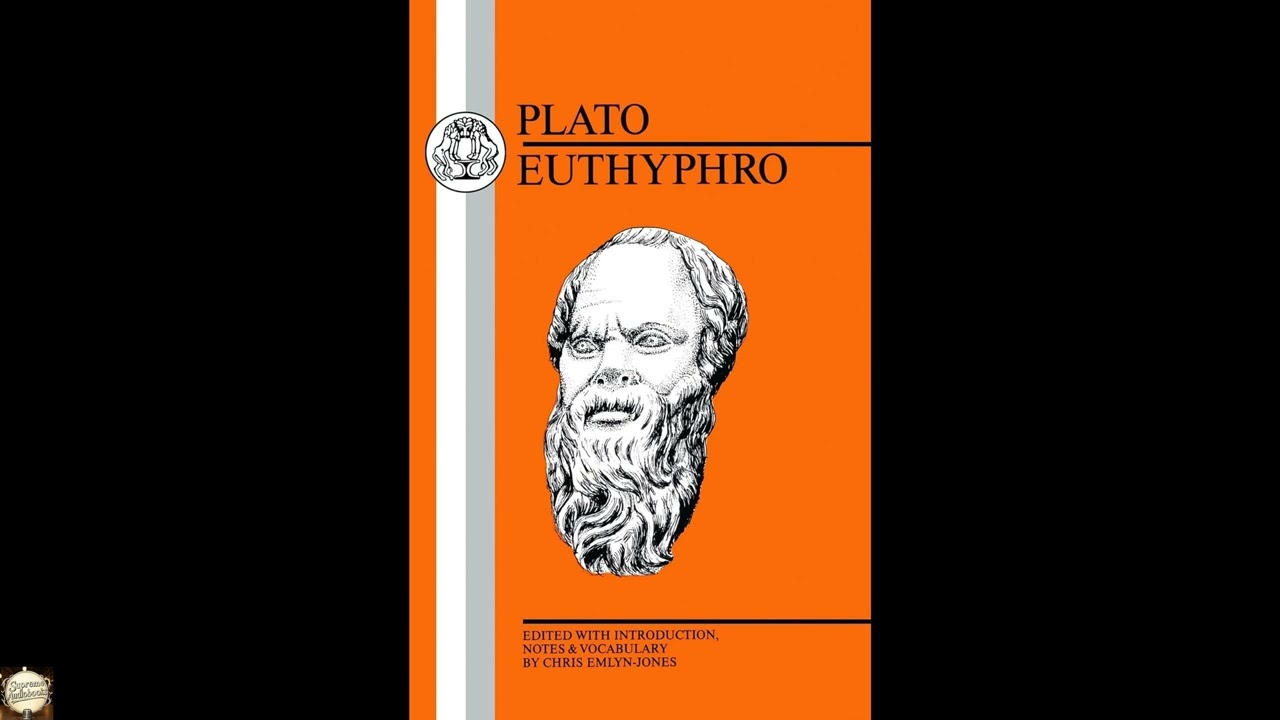
What makes something good? Is an action pious because the gods love it, or do the gods love it because it is inherently pious? These are not abstract questions confined to dusty philosophical tomes. They are the fundamental inquiries that shape our personal ethics, our legal systems, and our understanding of right and wrong in any era. Plato's Euthyphro brings these ancient dilemmas into sharp focus through a seemingly simple dialogue, stripping away assumptions to reveal the challenging core of moral reasoning. This foundational text invites listeners to grapple with the very nature of justice, divinity, and human accountability, proving that the search for ethical clarity is as urgent today as it was in ancient Athens. The scene unfolds just outside the King Archon's court in classical Athens. Two men meet by chance: Socrates, the city's most notorious philosopher, and Euthyphro, a self-proclaimed expert on religious matters and a prophet. Socrates is there to answer charges of impiety and corrupting the youth – charges that will ultimately lead to his famous trial and execution. Euthyphro, however, is on a mission of his own, a mission so unusual it stops Socrates in his tracks. Euthyphro is prosecuting his own father for murder, an act he insists is perfectly pious and righteous, despite the scandal it causes among his family and friends. Intrigued by Euthyphro's unwavering certainty and his claim to profound religious knowledge, Socrates seizes the opportunity. If Euthyphro truly understands piety so well as to prosecute his own father, then he must possess the very definition Socrates needs to defend himself against the impiety charge. Socrates, with his characteristic humility, asks Euthyphro to teach him what piety is. Thus begins a relentless intellectual sparring match. Euthyphro offers a series of definitions: piety is what he is doing now (prosecuting the wrongdoer), piety is what is loved by the gods, piety is what is loved by all the gods, piety is a part of justice that concerns service to the gods, and finally, piety is a knowledge of how to pray and sacrifice. Each definition is presented with confidence, only to be dismantled by Socrates' incisive questions, revealing inherent contradictions or circular reasoning. The dialogue builds in intellectual tension as Euthyphro struggles to articulate a stable, universal understanding of a concept he claims to know intimately, slowly exposing the shaky ground of unexamined belief. Plato, born around 428 or 427 BCE in Athens, was a pivotal figure in Western thought, a student of Socrates, and the founder of the Academy, often considered the first institution of higher learning in the Western world. His early life was marked by the Peloponnesian War, a protracted conflict that saw the decline of Athenian power and the rise of political instability. The profound impact of his teacher Socrates' trial and execution in 399 BCE deeply shaped Plato's philosophical concerns, particularly his focus on justice, moral knowledge, and the ideal state. After Socrates' death, Plato traveled extensively before returning to Athens to establish the Academy. His extensive body of work, almost all of it written as dialogues, became the bedrock of philosophical inquiry for centuries. Beyond Euthyphro, his other notable works include The Republic, a monumental treatise on political philosophy and justice; Apology, an account of Socrates' defense speech; Crito, a dialogue concerning justice and obedience to the law; and Phaedo, which discusses the immortality of the soul. Plato’s influence permeates philosophy, politics, mathematics, and literature, establishing him as one of history's most original and far-reaching thinkers. His dialogues are not merely records of Socratic thought but sophisticated literary works that present complex arguments and vivid characterizations. At its heart, Euthyphro confronts the question of what constitutes true moral knowledge, offering a stark contrast between Socratic reason and unexamined religious belief. Euthyphro’s repeated attempts to define piety reveal his reliance on traditional narratives and personal conviction rather than universal principles. For example, he cites the actions of the gods themselves, who punished their fathers, as justification for his own prosecution. Socrates patiently demonstrates the logical fallacies in such reasoning, pushing Euthyphro beyond anecdotal examples to seek an essential form that applies to all pious acts. This relentless pursuit of a universal definition underscores a primary theme: the Socratic method, or elenchus, as a tool for intellectual purification, exposing ignorance and compelling a deeper examination of one's convictions. The dialogue also famously introduces the "Euthyphro Dilemma," a philosophical problem that has resonated through centuries of theological and ethical debate. When Euthyphro proposes that "piety is what is loved by all the gods," Socrates asks a critical clarifying question: Is something pious because it is loved by the gods, or is it loved by the gods because it is pious? This is more than a linguistic quibble; it’s a profound challenge to divine command theory. If piety is merely determined by divine preference, then morality becomes arbitrary, subject to the whims of the gods. If, however, the gods love piety because it possesses an inherent quality of goodness, then piety exists independently of divine will, suggesting an objective moral standard accessible to reason. This dilemma highlights the fundamental relationship between reason, divine authority, and the very possibility of objective morality. The Athens of Plato’s time, the late fifth and early fourth centuries BCE, was a city in flux. The golden age of Athenian democracy was giving way to instability, marked by the recent defeat in the Peloponnesian War and a series of political upheavals. This period saw a rise in skepticism and intellectual ferment, with the Sophists challenging traditional values and promoting rhetoric and relativism. Amidst this backdrop, traditional religious practices and beliefs were also under scrutiny, sometimes leading to charges of impiety against intellectuals who questioned established norms. Socrates himself became a prominent victim of this climate, accused of impiety and corrupting the youth, reflecting a society grappling with its identity and values. Plato, as a loyal student, wrote Euthyphro not just as a philosophical exercise, but as a defense of Socratic inquiry and a profound commentary on the moral and intellectual health of his polis. The dialogue directly confronts the uncritical acceptance of religious tradition that contributed to Socrates' condemnation, making it a direct response to the era's intellectual and political crises. Listening to Euthyphro as an audiobook offers a uniquely immediate and engaging experience of philosophical debate. The very form of a Socratic dialogue, a conversation between two individuals, is perfectly suited to audio presentation. A skilled narrator can bring out the nuances in Socrates' patient, probing questions and Euthyphro's increasingly frustrated or evasive responses, making the intricate arguments easier to follow. The several hours of running time allow for a focused and digestible engagement with one of philosophy's most enduring questions. You can truly immerse yourself in the give-and-take, following the rhythm of the logic as Socrates meticulously dissects each proposed definition. The spoken word recreates the original oral tradition of philosophical discourse, drawing you into the atmosphere of ancient Athens, allowing the words to resonate not just as text, but as a living exchange of ideas that challenges you to think alongside these seminal figures.
Enjoyed Euthyphro? A few ways to support us
Audible & Amazon links are affiliate; we may earn a small commission at no extra cost.
About this production
Human narration by a volunteer reader from LibriVox.org, the public-domain audiobook project. LibriVox volunteers record literary works whose copyright has expired in the United States, releasing the resulting recordings into the public domain.
Euthyphro by Plato. The underlying text is in the U.S. public domain. We do not republish any modern copyrighted edition, translation, or commentary.
The 4K cinematic visuals accompanying this audiobook are generated by an AI image model from prompts derived from the source text. No copyrighted photos, paintings, or stock footage are used. AI generation is disclosed on every video on our YouTube channel as required by YouTube's altered/synthetic content policy.
English subtitles are transcribed from the LibriVox recording with OpenAI Whisper. Translations into the 11 other supported languages are produced by Meta's NLLB-200 neural translation model. No human translator's copyrighted translation is used.
Questions about sourcing or rights? See our DMCA & Sourcing policy or contact us.
Enjoyed this audiobook?
If you'd like to own a copy of Euthyphro or hear a professionally produced edition, the links below help support free audiobook production at no extra cost to you.
As an Amazon Associate we earn from qualifying purchases. Audible / print links are affiliate.