Personal Recollections of Joan of Arc
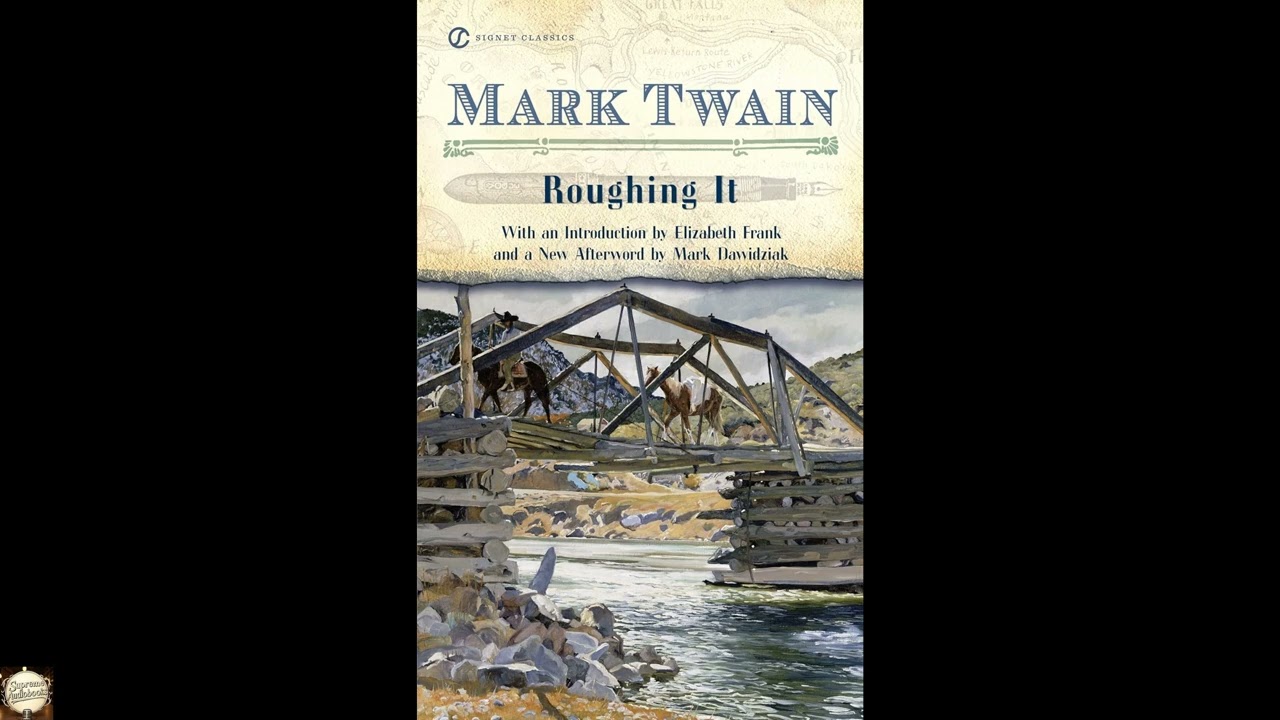
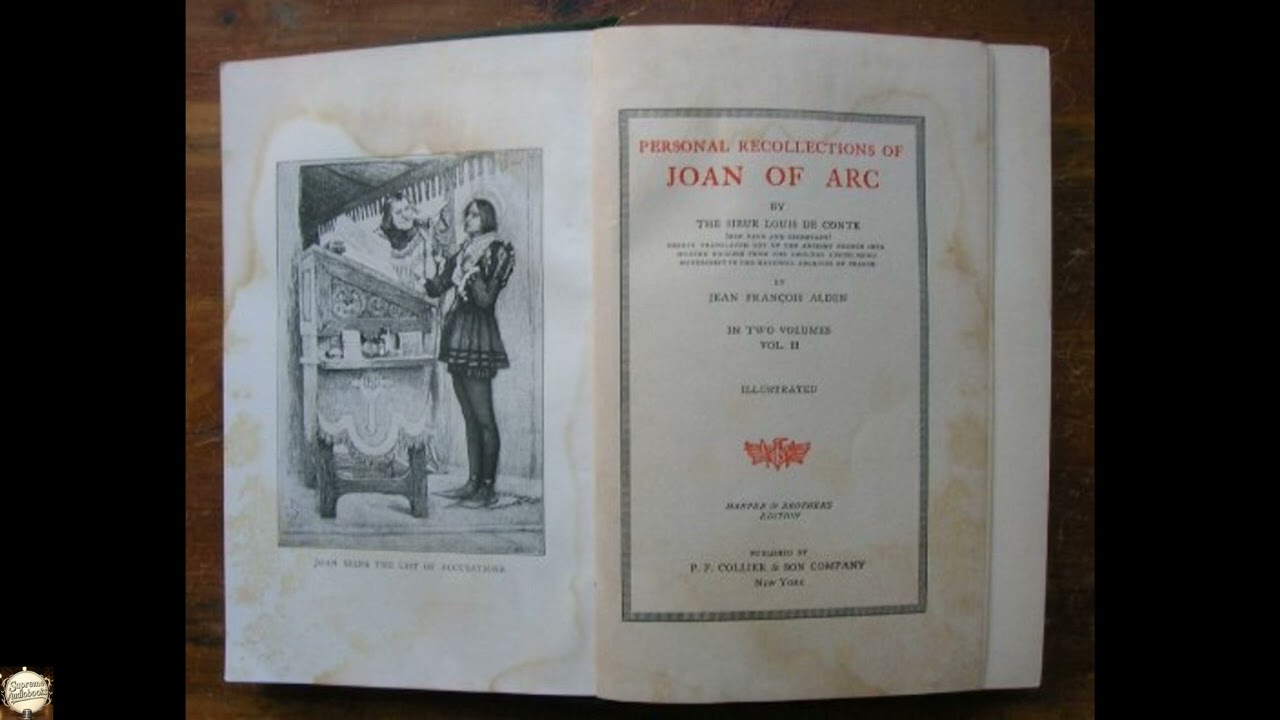
Imagine the world’s most famous humorist – the sardonic, witty observer of human foibles, Mark Twain – setting aside his satirical pen to dedicate over a decade to writing what he considered his most significant and profoundly earnest book. That surprising turn defines Personal Recollections of Joan of Arc, a work that stands as a heartfelt tribute to one of history’s most enigmatic and inspiring figures. Far from the irreverent tone listeners might expect, this is a deeply sympathetic account, narrated by a fictionalized page who served Joan herself. It asks us to look beyond the legends and politics to see the unwavering spirit of a young woman who changed the course of a nation. This is a story about conviction, courage, and the often-lonely burden of leadership, as relevant today as it was in the fifteenth century or when Twain put pen to paper. The story unfolds through the loving memory of Sieur Louis de Conte, an aged Frenchman who, as a young boy, served as Joan’s page and later her secretary. He recounts her life from her humble beginnings in the small village of Domrémy, painting a picture of a pious and gentle girl who experienced divine visions and heard voices instructing her to save France. At the time, France was a fractured kingdom, largely occupied by English forces during the protracted Hundred Years' War, with its Dauphin, Charles VII, a weak and indecisive figure. Joan, a mere peasant girl, faced immense skepticism, ridicule, and outright hostility when she arrived at court, insisting on her divine mission to lead the French army and crown the Dauphin. Despite the daunting odds and the entrenched cynicism of the French court and military, Joan’s unwavering faith and sheer force of personality gradually win over key figures. She miraculously identifies the Dauphin in a crowd, demonstrates uncanny military insight, and soon leads the demoralized French forces to a series of astonishing victories, most notably the lifting of the Siege of Orléans, which earned her the epithet "Maid of Orléans." De Conte vividly portrays the scenes of battle, Joan’s strategic brilliance, her compassion for her soldiers, and her unflagging spirit as she pushes her army forward, determined to see Charles crowned king at Reims and to drive the English completely from French soil. The narrative builds with her ascendant military career and the growing faith of the French people in their miraculous leader, detailing her successes and the mounting political opposition she faced even from those she fought to save. The author of this unique historical novel, Samuel Langhorne Clemens, known universally by his pen name Mark Twain, was born in 1835 in Florida, Missouri, and spent his formative years in the river town of Hannibal. His early life was a diverse mosaic: a printer’s apprentice, a steamboat pilot on the Mississippi River—a profession that gave him his famous pseudonym—and a prospector and journalist in the American West. These experiences grounded his writing in the specific details of American life and helped him develop his signature blend of sharp observation, colloquial language, and biting humor. He quickly rose to prominence with works like The Innocents Abroad (1869), a satirical account of European travel, and cemented his place in American letters with the beloved The Adventures of Tom Sawyer (1876) and its more complex sequel, Adventures of Huckleberry Finn (1884), both iconic tales that captured the spirit and challenges of a young nation. Twain’s career was marked by both literary triumphs and personal struggles. He became a global celebrity, renowned for his lectures and his distinctive white suits, but also faced significant financial setbacks and the profound grief of losing his wife and three of his four children. It was during these later, often darker years, that he produced Personal Recollections of Joan of Arc, a surprising departure from the cynical social commentary of works like A Connecticut Yankee in King Arthur's Court (1889) or the autobiographical Roughing It (1872). He considered Joan of Arc to be "by far the most extraordinary person the human race has ever produced," and poured his intellect and emotion into this project, viewing it as his most important literary endeavor. Twain died in 1910, leaving behind a legacy as a foundational figure in American realism and one of the world's greatest humorists and social critics. At its core, Personal Recollections of Joan of Arc grapples with the profound theme of unwavering faith and conviction against insurmountable odds. Joan’s belief in her divine mission never falters, even when confronted by skepticism, political maneuvering, or the terrors of war. De Conte's narration consistently highlights her absolute certainty, such as when she insists on meeting the Dauphin, undeterred by the court's mockery. This steadfastness becomes a beacon for the despairing French, demonstrating how one person’s pure conviction can ignite hope and courage in thousands. Another prominent theme is heroism, defined not by strength but by moral purity and selflessness. Joan is portrayed as physically courageous on the battlefield, but her true heroism stems from her complete lack of self-interest and her singular dedication to France. She repeatedly forgives those who betray her and expresses compassion even for her enemies, embodying a higher form of leadership that transcends mere military prowess. The book also addresses the nature of truth and perception, particularly through its narrative frame. Twain, known for puncturing illusions, presents Joan's story without irony, seemingly accepting the miraculous as historical fact. This challenges the reader to consider how belief shapes reality and how an individual’s purity of spirit can cut through the fog of political deceit. The contrast between Joan's simple, direct honesty and the convoluted machinations of the French court and later, her English accusers, vividly illustrates the theme of innocence confronting worldly cynicism. Her unadorned answers during interrogations, recounted with reverence by de Conte, stand in stark opposition to the legalistic traps designed to ensnare her, underscoring the vulnerability of transparent truth in the face of institutionalized malice. Twain published Personal Recollections of Joan of Arc in 1896, a period in America often referred to as the Gilded Age. It was a time of rapid industrialization, increasing social inequality, and profound changes in cultural values, sometimes characterized by materialism and political corruption. Twain himself had experienced financial ruin shortly before this publication, making his deep dive into a story of spiritual purity and unwavering moral character particularly poignant. In the literary world, realism was gaining ascendancy, often depicting the grittier aspects of American life. Twain’s decision to write a historical novel set in 15th-century France, rendered with such sincere reverence for its subject, stood out against the backdrop of his more cynical contemporary works and the broader literary trends of the time. It reflected a personal reckoning, perhaps a desire to celebrate an ideal of unblemished goodness amidst his own disillusionment and the moral complexities of his era. Listening to Personal Recollections of Joan of Arc as an audiobook offers a singular opportunity to immerse yourself fully in this deeply personal and reverent narrative. The voice of Sieur Louis de Conte becomes your guide, relaying his youthful awe and lifelong devotion to Joan with an intimacy that prose on the page cannot quite replicate. You become part of his recollections, experiencing Joan's courage, her compassion, and her spirit through the filter of someone who loved and admired her beyond measure. The run length, several hours, allows for a substantial, unfolding experience, perfect for long walks or contemplative evenings. Pay attention to the pacing, how the narrative builds Joan's character and her impact, and how the narrator's voice conveys both the grandeur of history and the tender affection for a lost friend. The careful rendering of dialogue and the rich descriptions of fifteenth-century France create an atmosphere that draws you into a story of profound faith and extraordinary heroism.
Enjoyed Personal Recollections of Joan of Arc? A few ways to support us
Audible & Amazon links are affiliate; we may earn a small commission at no extra cost.
About this production
Human narration by a volunteer reader from LibriVox.org, the public-domain audiobook project. LibriVox volunteers record literary works whose copyright has expired in the United States, releasing the resulting recordings into the public domain.
Personal Recollections of Joan of Arc by Mark Twain. The underlying text is in the U.S. public domain. We do not republish any modern copyrighted edition, translation, or commentary.
The 4K cinematic visuals accompanying this audiobook are generated by an AI image model from prompts derived from the source text. No copyrighted photos, paintings, or stock footage are used. AI generation is disclosed on every video on our YouTube channel as required by YouTube's altered/synthetic content policy.
English subtitles are transcribed from the LibriVox recording with OpenAI Whisper. Translations into the 11 other supported languages are produced by Meta's NLLB-200 neural translation model. No human translator's copyrighted translation is used.
Questions about sourcing or rights? See our DMCA & Sourcing policy or contact us.
Enjoyed this audiobook?
If you'd like to own a copy of Personal Recollections of Joan of Arc or hear a professionally produced edition, the links below help support free audiobook production at no extra cost to you.
As an Amazon Associate we earn from qualifying purchases. Audible / print links are affiliate.