About Mark Twain
Few voices capture the spirit of nineteenth-century America with such wit and candor as that of Samuel Langhorne Clemens, known universally as Mark Twain. Born on November 30, 1835, in Florida, Missouri, Clemens came of age in a nation rapidly expanding and grappling with its identity. He departed this world on April 21, 1910, in Redding, Connecticut, leaving behind a literary legacy that continues to resonate.
His early life in Hannibal, Missouri, a bustling port town on the Mississippi River, provided the fertile ground for much of his later fiction. With only a rudimentary formal education, Clemens apprenticed as a printer, a trade that instilled in him a love for language and a keen eye for human idiosyncrasies. His most formative years, however, were spent as a steamboat pilot on the Mississippi, a profession that not only furnished him with his indelible pen name—a riverboat term for "two fathoms deep"—but also gave him an unparalleled understanding of the river’s culture and the diverse characters inhabiting its banks.
After the Civil War halted steamboat traffic, Twain headed west, trying his hand at silver mining before finding his true calling as a journalist for the Territorial Enterprise in Virginia City, Nevada. His reporting blended factual observation with humorous exaggeration, quickly establishing his distinctive voice. His short story, “The Celebrated Jumping Frog of Calaveras County,” published in 1865, brought him national recognition. This early success paved the way for his first major book, *The Innocents Abroad*, a humorous travelogue that satirized European culture and American provincialism, which became an instant bestseller in 1869 and established his reputation as a leading American humorist.
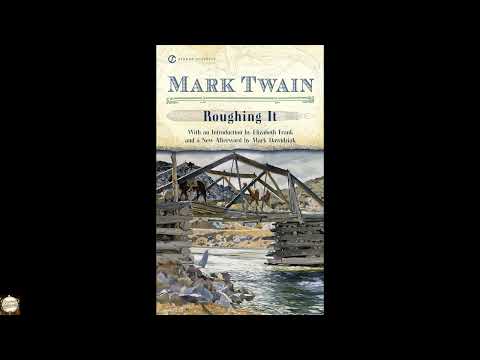
Twain’s literary output spanned decades and genres, with several works securing his place in the canon of American literature. *Roughing It* recounts his adventures as he traversed the American West during the mining boom; *The Adventures of Tom Sawyer* follows the mischievous escapades of a boy growing up along the Mississippi River; and *Adventures of Huckleberry Finn* chronicles a runaway boy’s flight from civilization and his profound friendship with an escaped slave. Later, *A Connecticut Yankee in King Arthur’s Court* sends a pragmatic American engineer back to medieval England, while *Life on the Mississippi* recollects his piloting days and vivid observations of river life.
Across his body of work, Twain’s style is characterized by its colloquial language, regional dialects, and an unparalleled gift for satire. He masterfully employed humor to critique societal norms, often exposing hypocrisy and injustice, particularly regarding racism, class distinctions, and political corruption. In *Adventures of Huckleberry Finn*, for instance, his use of vernacular speech not only grounds the narrative in its specific setting but also underscores the social divisions and moral ambiguities of the era. His recurring themes include the tension between civilization and freedom, the loss of innocence, and the often-flawed nature of humanity.
Often hailed as the "father of American literature," Twain broke away from European literary conventions, forging a distinctly American voice and narrative style. His embrace of realism and regionalism profoundly influenced subsequent generations of writers, establishing a path for authors who sought to depict American life and character with authenticity and unvarnished truth. His insights into the American character and his pioneering use of indigenous dialects continue to shape how stories are told. His words, still resonant with laughter and sharp observation, now wait to be heard anew as free audiobooks.
More on Wikipedia →








![MARK TWAIN'S [Date, 1601.] CONVERSATION As It WAS By The SOCIAL FIRESIDE In The TIME- Full Audiobook by Mark Twain — free full audiobook](https://img.youtube.com/vi/IBbX13QIif8/hqdefault.jpg)