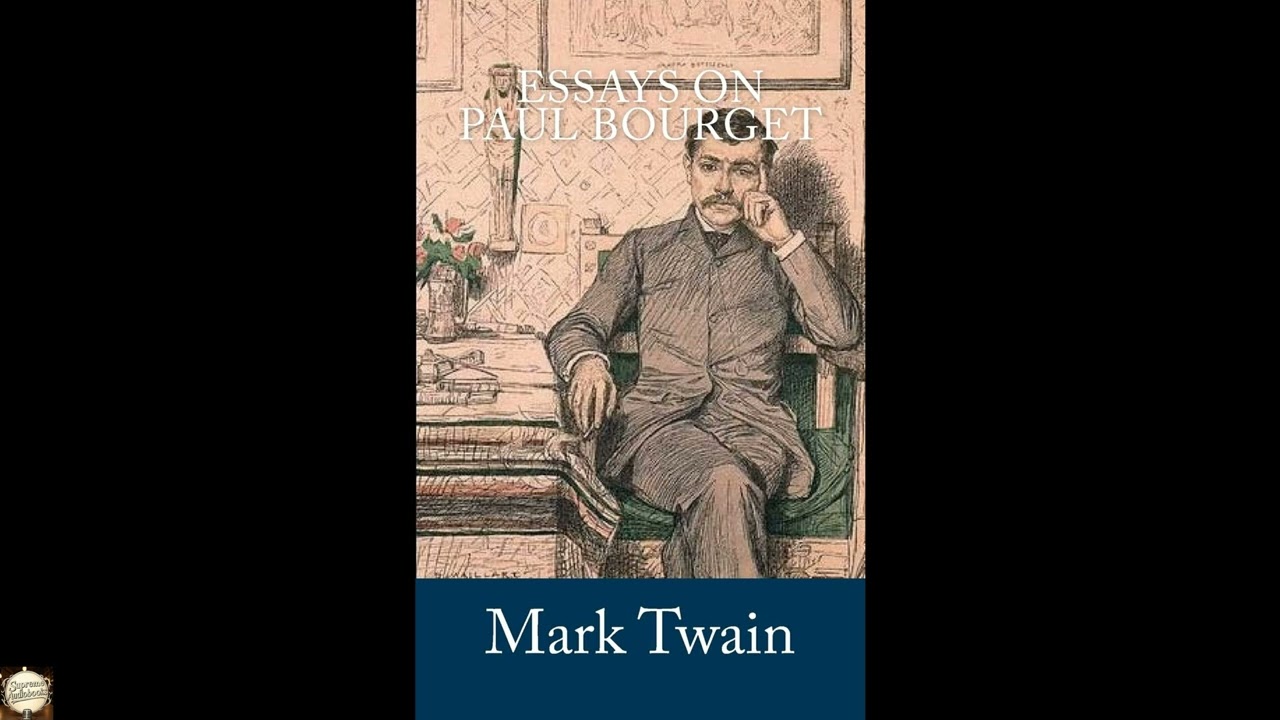
Essays on Paul Bourget
When a literary titan turns his discerning, often satirical eye upon another prominent figure, the result is rarely less than electrifying. Mark Twain's Essays on Paul Bourget offers listeners precisely this kind of intellectual spectacle: a brilliant American humorist and social critic engaging directly with the observations of a celebrated French novelist and academic. Far from a dry critical exercise, this collection represents a vibrant clash of cultures, a spirited defense of national character, and a masterclass in the art of the argumentative essay, all delivered with Twain's signature wit. Even today, as societies grapple with globalization and the challenges of understanding different perspectives, Twain's sharp, funny, and profoundly American responses resonate, reminding us of the enduring tension between self-perception and external judgment. The central drama of these essays unfolds as Mark Twain, the quintessential American voice, meticulously addresses Paul Bourget's critical study of the United States. Bourget, a distinguished French intellectual of the late nineteenth century, had undertaken a visit to America, subsequently publishing his impressions which often presented a detached, sometimes condescending European view of the young nation. Twain takes on the role of America's spirited advocate, meticulously scrutinizing Bourget's pronouncements on everything from American manners and women to its burgeoning industries and unique social customs. The setting is less a physical landscape and more the intellectual arena of transatlantic discourse, where ideas and cultural perceptions are the battleground. At the heart of the conflict lies a fundamental disagreement over how one truly understands a foreign land. Twain suggests that Bourget, despite his extensive travels and academic rigor, often views America through an unyielding European lens, unable or unwilling to fully grasp the nuances of a society still defining itself. Twain's "characters" are, in essence, the differing national spirits: the pragmatic, often boisterous American idealism personified by Twain himself, arrayed against the refined, traditionalist European intellect represented by Bourget. The arc of these essays progresses from Twain’s initial presentation of Bourget’s specific claims to his systematic, often uproarious, dismantling of them, culminating in a powerful assertion of America's distinct identity and the validity of its own particular way of life. The story, if you will, is one of intellectual jousting, where humor serves as both a shield and a rapier. Samuel Langhorne Clemens, known to the world as Mark Twain, was born in 1835 in Florida, Missouri, and passed away in 1910. His early life was a patchwork of experiences that would profoundly shape his literary output: a printer's apprentice, a steamboat pilot on the Mississippi River—a time that gifted him his famous pen name—and a prospector and journalist in the American West. These varied occupations provided him with an unparalleled understanding of American life, its characters, and its distinct dialects, all of which he channeled into his writing. His time spent observing human nature in all its forms, from the rough-and-tumble frontier to the more polished drawing rooms, forged his unique perspective. Twain's place in American literature is monumental. He is widely considered the father of American literature, the author who truly captured the authentic American vernacular and spirit. His notable works include The Adventures of Tom Sawyer, a nostalgic tale of boyhood, and its sequel, Adventures of Huckleberry Finn, a foundational American novel often praised for its realism and social commentary. Life on the Mississippi chronicles his riverboat days with a blend of memoir and travelogue, while A Connecticut Yankee in King Arthur's Court demonstrates his satirical bite against inherited aristocracy and technological progress. Twain was a central figure in American Realism, eschewing the romanticism of earlier eras for a truthful, often unvarnished, portrayal of life. The essays pulsate with several key themes. One prominent concern is the nature of cultural critique and national identity. Twain uses Bourget's observations as a foil to articulate what he saw as the true American character, contrasting it with Bourget's often misinformed or superficial assessments. For instance, when Bourget comments on the "newness" or perceived lack of history in American society, Twain might turn the critique on its head, celebrating America’s forward-looking spirit and resourcefulness as distinct virtues, rather than flaws. He demonstrates how perspective profoundly shapes understanding, often with a humorous twist that exposes the absurdity of Bourget's claims. Another significant theme is the power of humor as a critical tool. Twain doesn't merely refute Bourget; he often lampoons him, deploying exaggeration, irony, and feigned innocence to dismantle his arguments. When Bourget makes a sweeping generalization about American women or the pursuit of wealth, Twain might respond with a meticulously constructed, seemingly logical argument that leads to an obviously preposterous conclusion, thereby highlighting the flaw in Bourget's original premise. This method not only makes his critique palatable but also highly effective, allowing the reader to enjoy the intellectual battle even as serious points about cultural understanding are made. These essays emerged from a specific moment in history—the late nineteenth century, a period marked by America's ascendance on the world stage and a growing sense of national confidence following the Civil War and rapid industrialization. Europe, particularly France, was still seen by many Americans as the arbiter of culture and refinement. However, American writers like Twain were increasingly asserting an independent American literary voice, one rooted in its own experiences and language, rather than simply imitating European forms. Paul Bourget's visit to the United States in 1893 and his subsequent book, Outre-Mer: Impressions of America, published in 1895, provided a direct impetus for Twain's response. It was a time when America was grappling with its identity, both internally and externally, and Bourget’s work offered an opportunity for Twain to champion his nation against a foreign gaze. Listening to Essays on Paul Bourget as an audiobook offers a unique gateway into the rhetorical genius of Mark Twain. His prose, even in print, carries the cadences of spoken language, but hearing these essays narrated brings his inimitable voice to life. A skilled reader can truly capture the subtle shifts in Twain's tone—the initial polite engagement, the slow build to exasperated incredulity, and the final flourish of triumphant satire. The run length of several hours makes this an ideal companion for commutes, long walks, or dedicated listening sessions, allowing the listener to fully immerse themselves in Twain's arguments without feeling rushed. The pacing often mirrors Twain's own conversational style, inviting the listener into an intimate intellectual exchange, where the humor lands with greater impact when delivered with precise vocal timing, transforming the act of reading a critical essay into a thoroughly entertaining performance.
Enjoyed Essays on Paul Bourget? A few ways to support us
Audible & Amazon links are affiliate; we may earn a small commission at no extra cost.
About this production
Human narration by a volunteer reader from LibriVox.org, the public-domain audiobook project. LibriVox volunteers record literary works whose copyright has expired in the United States, releasing the resulting recordings into the public domain.
Essays on Paul Bourget by Mark Twain. The underlying text is in the U.S. public domain. We do not republish any modern copyrighted edition, translation, or commentary.
The 4K cinematic visuals accompanying this audiobook are generated by an AI image model from prompts derived from the source text. No copyrighted photos, paintings, or stock footage are used. AI generation is disclosed on every video on our YouTube channel as required by YouTube's altered/synthetic content policy.
English subtitles are transcribed from the LibriVox recording with OpenAI Whisper. Translations into the 11 other supported languages are produced by Meta's NLLB-200 neural translation model. No human translator's copyrighted translation is used.
Questions about sourcing or rights? See our DMCA & Sourcing policy or contact us.
Enjoyed this audiobook?
If you'd like to own a copy of Essays on Paul Bourget or hear a professionally produced edition, the links below help support free audiobook production at no extra cost to you.
As an Amazon Associate we earn from qualifying purchases. Audible / print links are affiliate.

![MARK TWAIN'S [Date, 1601.] CONVERSATION As It WAS By The SOCIAL FIRESIDE In The TIME- Full Audiobook by Mark Twain — free full audiobook](https://img.youtube.com/vi/IBbX13QIif8/maxresdefault.jpg)