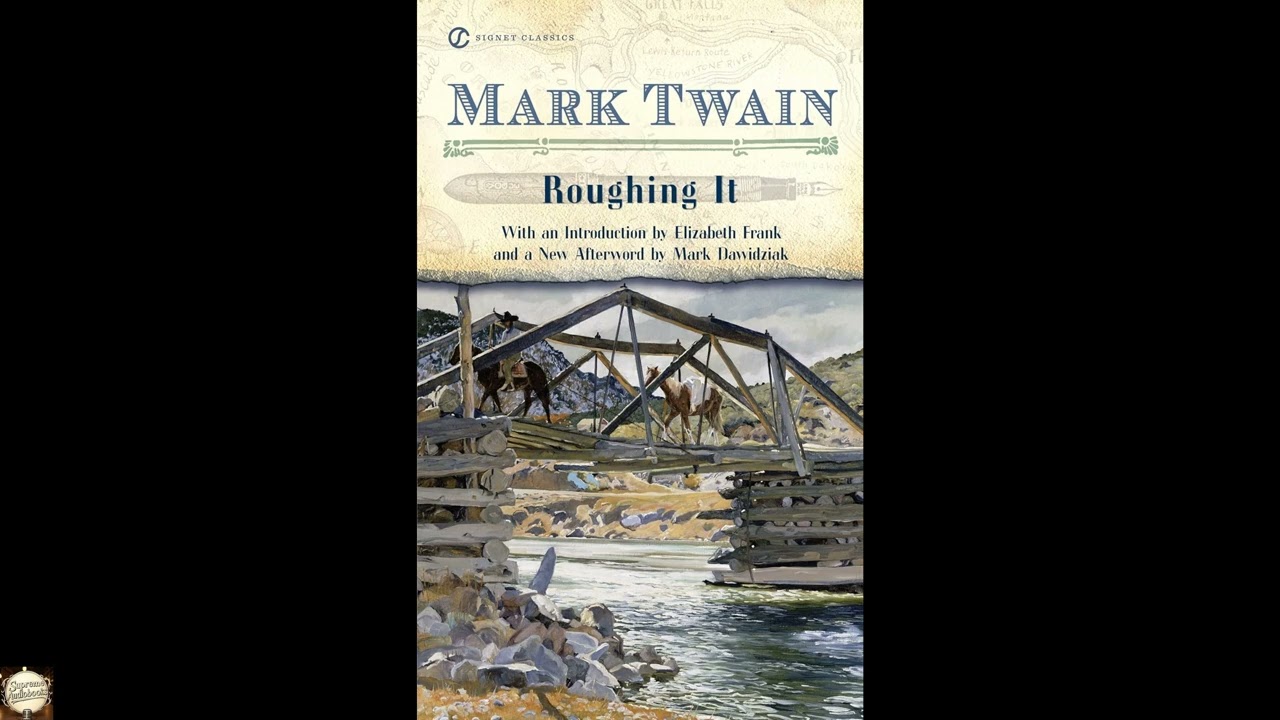
Roughing It
Step back into the rugged, untamed American West of the 1860s, a land of silver strikes, stagecoach bandits, and improbable fortunes, through the eyes of a young, naive Samuel Clemens—the man who would become Mark Twain. Roughing It stands as one of American literature’s great adventure memoirs, a semi-autobiographical account that marries factual experience with the glorious embellishments of a born storyteller. It offers not just a hilarious window into the continent’s wild frontier, but also chronicles the formative years of a literary titan finding his voice amidst the chaos and grandeur of a nation in rapid transformation. This is more than a historical curiosity; it is a foundational text of American humor, a testament to the power of observation, and a reminder that true wealth often lies not in gold or silver, but in the experiences gathered and the stories created along the way. The narrative opens in 1861, with a restless young Samuel Clemens setting out from St. Louis, Missouri, to accompany his older brother, Orion Clemens, who has been appointed Secretary of the Nevada Territory. What begins as a seemingly genteel assignment quickly devolves into an epic, often absurd, overland adventure. Their route takes them across the vast plains and formidable mountains by stagecoach, encountering a parade of colorful characters: hardened frontiersmen, optimistic prospectors, wary Native Americans, and a motley assortment of con artists and eccentrics. Upon arriving in the burgeoning silver camps of Nevada, the narrator, fresh from the gentility of the Mississippi River, throws himself headlong into the frenzy of mining, buying and selling dubious claims, suffering both comical failures and fleeting moments of hope. He chronicles the boom-and-bust cycle, the crude living conditions, and the unique brand of justice and lawlessness that characterized these burgeoning communities. As his initial attempts at striking it rich prove largely futile, Samuel Clemens drifts into a new profession: journalism. He begins writing for the Territorial Enterprise in Virginia City, where, under the pressure of a deadline and the inspiration of a local bar patron, he famously adopts the pen name "Mark Twain." This period marks a significant turning point, as his keen eye for human folly and his burgeoning talent for humorous exaggeration find their perfect outlet. The stories continue through further travels to California, where he meets Bret Harte and other literary figures, and even a side-trip to the Sandwich Islands (modern-day Hawaii), which provides both exotic scenery and further opportunities for Twain's characteristic blend of awe and satire. The arc of the story follows his transformation from an optimistic, somewhat credulous tenderfoot to a shrewd, observant commentator, developing the distinctive voice that would soon define American letters. The author behind this panoramic vision of the West was Samuel Langhorne Clemens, born in Florida, Missouri, in 1835. He spent his boyhood in Hannibal, Missouri, a small town on the Mississippi River that would later serve as the inspiration for the fictional St. Petersburg in his most celebrated novels. After working as a printer's apprentice, Clemens realized a childhood dream by becoming a steamboat pilot on the Mississippi, a profession he held until the outbreak of the Civil War. His brief stint as a Confederate militiaman quickly ended, leading him westward to Nevada with his brother. It was this period of mining, reporting, and lecturing—the very experiences depicted in Roughing It—that forged his identity as "Mark Twain." He would go on to become one of the most beloved and influential American authors, known for works such as The Adventures of Tom Sawyer, Adventures of Huckleberry Finn, and Life on the Mississippi. Twain’s unique blend of humor, social commentary, and pioneering use of vernacular language cemented his place as a foundational figure in American realism, ushering in a new era of literature that reflected the authentic voices and experiences of the common person. He passed away in 1910, leaving behind a legacy that continues to resonate globally. Within Roughing It, several profound themes emerge, elevated by Twain’s inimitable style. One central idea is the enduring allure and elusive nature of the American Dream. The narrator's repeated, often comical, attempts to strike it rich in silver mining perfectly illustrate the hope and inevitable disappointment tied to the promise of instant wealth. We see him enthusiastically purchase worthless claims, dig with fervent desperation, and fall prey to schemes, all while maintaining an almost childlike optimism until harsh reality intervenes. Another potent theme is the clash between civilization and the wilderness. Twain vividly contrasts the untamed, dangerous beauty of the Nevada desert and its unique wildlife—like his memorable description of the coyote, "a living, breathing allegory of want"—with the rapid, often chaotic, emergence of towns like Virginia City, which sprang up seemingly overnight, bringing both lawlessness and the beginnings of social order. The story also constantly plays with the distinction between truth and invention, highlighting the power of storytelling itself. Twain masterfully blurs the line between his actual experiences and outrageous exaggerations, inviting the audience to consider the nature of tall tales and how personal narratives shape our understanding of history and character. Finally, the book stands as a compelling account of identity and self-discovery, charting the path of Samuel Clemens as he sheds his youthful naiveté, sharpens his observational skills, and ultimately finds his true calling as a writer and humorist, transforming into the iconic Mark Twain before our very eyes. Published in 1872, Roughing It arrived at a pivotal moment in American history. The Civil War had concluded just a few years prior, and the nation was grappling with Reconstruction while simultaneously looking westward for new opportunities and a renewed sense of national purpose. The era was defined by rapid expansion, the consolidation of Manifest Destiny, and the tail end of the great gold and silver rushes that had drawn thousands across the continent. The transcontinental railroad, completed in 1869, had begun to connect the disparate regions of the United States, making travel—and the sharing of stories from the frontier—more accessible than ever before. In the literary world, there was a growing appetite for realism and humor that reflected the unique American experience, moving away from the more romanticized narratives of earlier generations. Twain’s book perfectly captured this zeitgeist, offering a witty, unflinching, yet deeply affectionate portrait of a transformative period, contributing significantly to the emerging genre of American travel writing and humorous sketches. His work provided a mirror to a nation defining itself through its landscapes, its characters, and its distinct sense of humor. To experience Roughing It as an audiobook is to truly appreciate Mark Twain’s unparalleled gifts as a storyteller. His prose, brimming with colloquialisms and a natural rhythm, feels purpose-built for the spoken word. The narrator's performance breathes life into the myriad of unforgettable characters, from the earnest but bumbling Orion to the grizzled prospectors and cynical journalists. Listeners can savor the perfectly timed punchlines, the subtle inflections of irony, and the shifts in tone from wide-eyed wonder to wry observation. The run length offers a substantial listening experience, ideal for long commutes or leisurely afternoons, allowing ample time to immerse oneself in the expansive landscapes and boisterous frontier towns. Pay close attention to the way the voice actor renders the vivid descriptive passages, painting mental pictures of shimmering deserts and towering mountains, and how the dialogue captures the raw, unpolished language of the period. This auditory presentation allows Twain's singular voice to transcend the page, bringing listeners directly into the heart of a grand American adventure.
Enjoyed Roughing It? A few ways to support us
Audible & Amazon links are affiliate; we may earn a small commission at no extra cost.
About this production
Human narration by a volunteer reader from LibriVox.org, the public-domain audiobook project. LibriVox volunteers record literary works whose copyright has expired in the United States, releasing the resulting recordings into the public domain.
Roughing It by Mark Twain. The underlying text is in the U.S. public domain. We do not republish any modern copyrighted edition, translation, or commentary.
The 4K cinematic visuals accompanying this audiobook are generated by an AI image model from prompts derived from the source text. No copyrighted photos, paintings, or stock footage are used. AI generation is disclosed on every video on our YouTube channel as required by YouTube's altered/synthetic content policy.
English subtitles are transcribed from the LibriVox recording with OpenAI Whisper. Translations into the 11 other supported languages are produced by Meta's NLLB-200 neural translation model. No human translator's copyrighted translation is used.
Questions about sourcing or rights? See our DMCA & Sourcing policy or contact us.
Enjoyed this audiobook?
If you'd like to own a copy of Roughing It or hear a professionally produced edition, the links below help support free audiobook production at no extra cost to you.
As an Amazon Associate we earn from qualifying purchases. Audible / print links are affiliate.
![MARK TWAIN'S [Date, 1601.] CONVERSATION As It WAS By The SOCIAL FIRESIDE In The TIME- Full Audiobook by Mark Twain — free full audiobook](https://img.youtube.com/vi/IBbX13QIif8/maxresdefault.jpg)