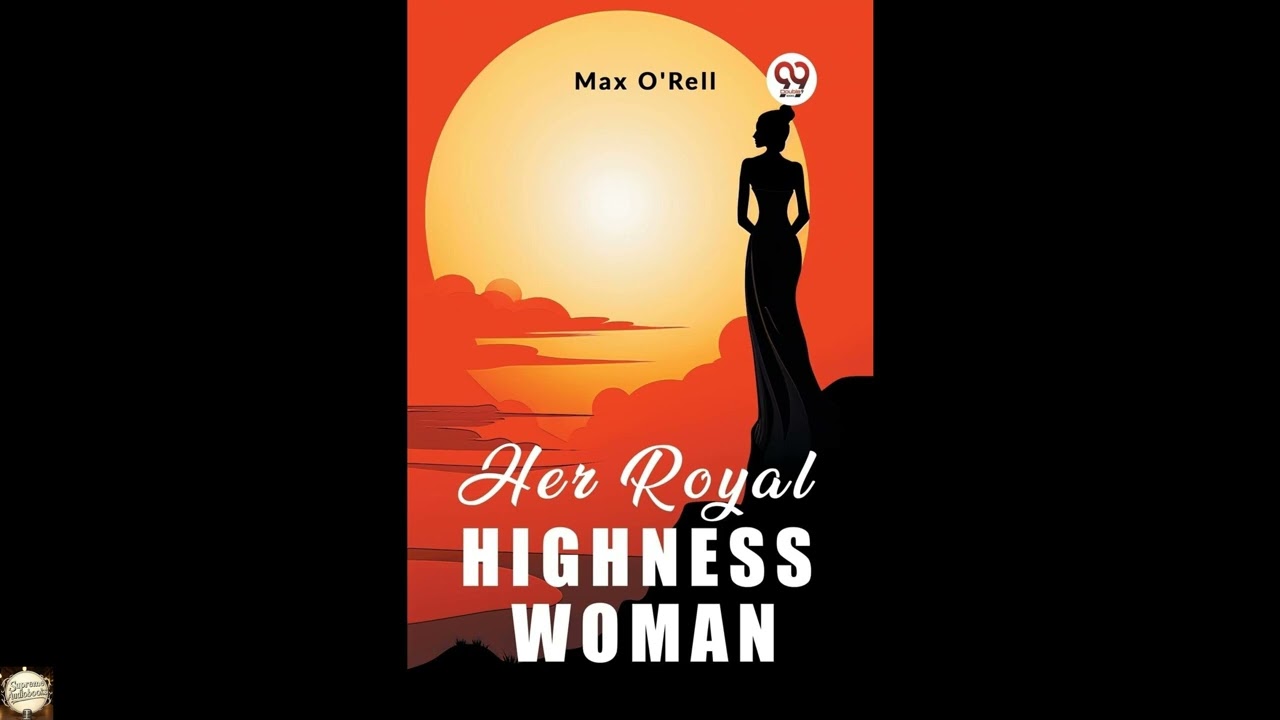
Her Royal Highness Woman
From the Parisian salons to the bustling streets of late Victorian Europe, one witty French observer made it his mission to decipher the enigmatic subject that has fascinated poets, philosophers, and common men for centuries: Woman. Max O'Rell's Her Royal Highness Woman is not merely a book; it is a meticulously crafted, often uproariously funny, and surprisingly insightful expedition into the heart of what it meant to be female, and what it meant for men to observe women, at the turn of the twentieth century. While penned in a bygone era, O'Rell's keen observations on gender dynamics, societal expectations, and the enduring interplay between the sexes continue to provoke thought and amusement, making this a fascinating auditory experience for anyone curious about the roots of modern relationships and the historical perceptions that still echo today. This distinctive work presents itself as a series of artful sketches and shrewd commentaries, rather than a conventional novel with a linear narrative. O'Rell invites us into his world of meticulous observation, focusing his sharp, often satiric gaze on the myriad facets of womanhood as understood during his time. We begin with his initial premises about the fundamental differences between the sexes, articulated with a distinct Gallic charm and a playful air of masculine bewilderment. He then proceeds to examine women's roles within the family and society, from the daughter's upbringing and the nuances of female education to the complexities of courtship, marriage, and motherhood. O'Rell's commentary extends to the public sphere, touching upon the elaborate rituals of fashion, the social gatherings that defined polite society, and the subtle power dynamics at play in every interaction between men and women. His central conflict, if one can call it that, lies in the perpetual, often humorous, misunderstanding between the sexes. He paints vivid verbal portraits of women's alleged inconsistencies, their emotional intricacies, and their supposed irrationalities, always with an underlying current of admiration, even devotion. The arc of this observational study carries listeners through a sequence of themed chapters, each offering a fresh perspective on a particular characteristic or social function attributed to women. He touches upon their capacity for sentiment, their practical wisdom, their perceived weaknesses, and their undeniable strengths, concluding with a cumulative picture that is far more nuanced than a simple caricature, leaving the listener to ponder the enduring "mystery" as O'Rell himself does, without offering a definitive, singular answer. The author behind this engaging treatise was Léon Paul Blouët, who wrote under the more memorable pseudonym Max O'Rell. Born in 1848 in France, Blouët was a former cavalry officer who later settled in England, teaching French at the prestigious St. Paul's School in London. It was this unique vantage point – a Frenchman living and working within English society – that gave him the material and perspective for his most famous works. His early literary success came with John Bull and His Island (1883), a witty and incisive comparison of French and English customs and national character, which instantly made him a literary sensation on both sides of the Channel. Max O'Rell swiftly became a celebrated figure, known for his lectures across Britain, America, and beyond, where his charming accent and droll observations captivated audiences. He frequently returned to the theme of national character and social critique in subsequent publications such as Jonathan and His Continent (about America) and A Frenchman in America, solidifying his reputation as a master of comparative cultural commentary. O'Rell's contributions situated him firmly within the popular literary tradition of fin-de-siècle humorists and travel writers, offering a lighthearted yet penetrating look at the societal norms and eccentricities of his era. He continued writing and lecturing until his death in 1903, leaving behind a body of work that provides not only amusement but also a valuable historical record of turn-of-the-century social attitudes. At its core, Her Royal Highness Woman grapples with the intricate themes of gender roles and societal expectations. O'Rell frequently highlights the prevailing views of what constituted "proper" feminine behavior, contrasting it with men's own often contradictory demands. For instance, he humorously observes the elaborate strictures placed upon women's fashion, simultaneously marveling at their dedication to these trends and gently mocking the male gaze that both demands and criticizes them. This dynamic reveals how women navigated a world where their appearance and conduct were under constant scrutiny. Another significant theme present is the exploration of perception versus reality. O'Rell, with his characteristic blend of admiration and exasperation, often dissects the perceived "illogic" of women, only to implicitly suggest that this "illogic" might be a different, equally valid form of reasoning. His musings on love, marriage, and the varying ways men and women approach emotional life demonstrate this contrast, offering a window into how deeply ingrained stereotypes colored even well-intentioned observations. The book's literary significance lies in its candid, if biased, portrayal of the ongoing "battle of the sexes," serving as both a product of its time and a mirror reflecting timeless human dynamics. The late nineteenth and early twentieth centuries, the period when Max O'Rell was writing, were times of profound social and cultural change. Known in France as the Belle Époque, and in England as the late Victorian and Edwardian eras, this period saw traditional gender roles facing unprecedented challenges. Women's suffrage movements were gaining momentum across the Western world, and women were increasingly entering higher education and the workforce, albeit often in limited capacities. There was a prevailing cultural anxiety about "the New Woman" – a figure often depicted as independent, educated, and assertive, challenging established norms of domesticity and subservience. Max O'Rell's work emerged from this specific historical crucible. His humorous observations on women, while seemingly light-hearted, engaged with these very real societal shifts. He provided a voice, albeit a traditional male one, that both acknowledged and gently questioned the evolving landscape of gender relations. His widespread popularity indicates that many readers, both men and women, found his witty commentary a palatable way to engage with these complex and sometimes unsettling cultural transformations, allowing them to laugh at the absurdities of human nature while subtly confronting the tensions inherent in a changing world. To experience Her Royal Highness Woman as an audiobook is to genuinely bring Max O'Rell's turn-of-the-century wit to life. A skilled narrator can deftly capture the distinct tone of O'Rell's prose – the playful irony, the subtle sarcasm, the occasional burst of genuine admiration – which is essential to fully appreciating the work. The run length of several hours makes this a perfect companion for extended walks, daily commutes, or an afternoon of thoughtful listening. Pay attention to the narrator's pacing, especially in the delivery of O'Rell's pithy observations and humorous anecdotes; the comedic timing often determines the full impact of his remarks. The clarity of voice and the nuanced portrayal of O'Rell's implied persona as the bemused yet insightful observer will transport listeners directly into the elegant, often perplexing, world he so charmingly describes, making the antiquated sentiments feel remarkably fresh and pertinent.
Enjoyed Her Royal Highness Woman? A few ways to support us
Audible & Amazon links are affiliate; we may earn a small commission at no extra cost.
About this production
Human narration by a volunteer reader from LibriVox.org, the public-domain audiobook project. LibriVox volunteers record literary works whose copyright has expired in the United States, releasing the resulting recordings into the public domain.
Her Royal Highness Woman by Max O'Rell. The underlying text is in the U.S. public domain. We do not republish any modern copyrighted edition, translation, or commentary.
The 4K cinematic visuals accompanying this audiobook are generated by an AI image model from prompts derived from the source text. No copyrighted photos, paintings, or stock footage are used. AI generation is disclosed on every video on our YouTube channel as required by YouTube's altered/synthetic content policy.
English subtitles are transcribed from the LibriVox recording with OpenAI Whisper. Translations into the 11 other supported languages are produced by Meta's NLLB-200 neural translation model. No human translator's copyrighted translation is used.
Questions about sourcing or rights? See our DMCA & Sourcing policy or contact us.
Enjoyed this audiobook?
If you'd like to own a copy of Her Royal Highness Woman or hear a professionally produced edition, the links below help support free audiobook production at no extra cost to you.
As an Amazon Associate we earn from qualifying purchases. Audible / print links are affiliate.