On The Art of Reading
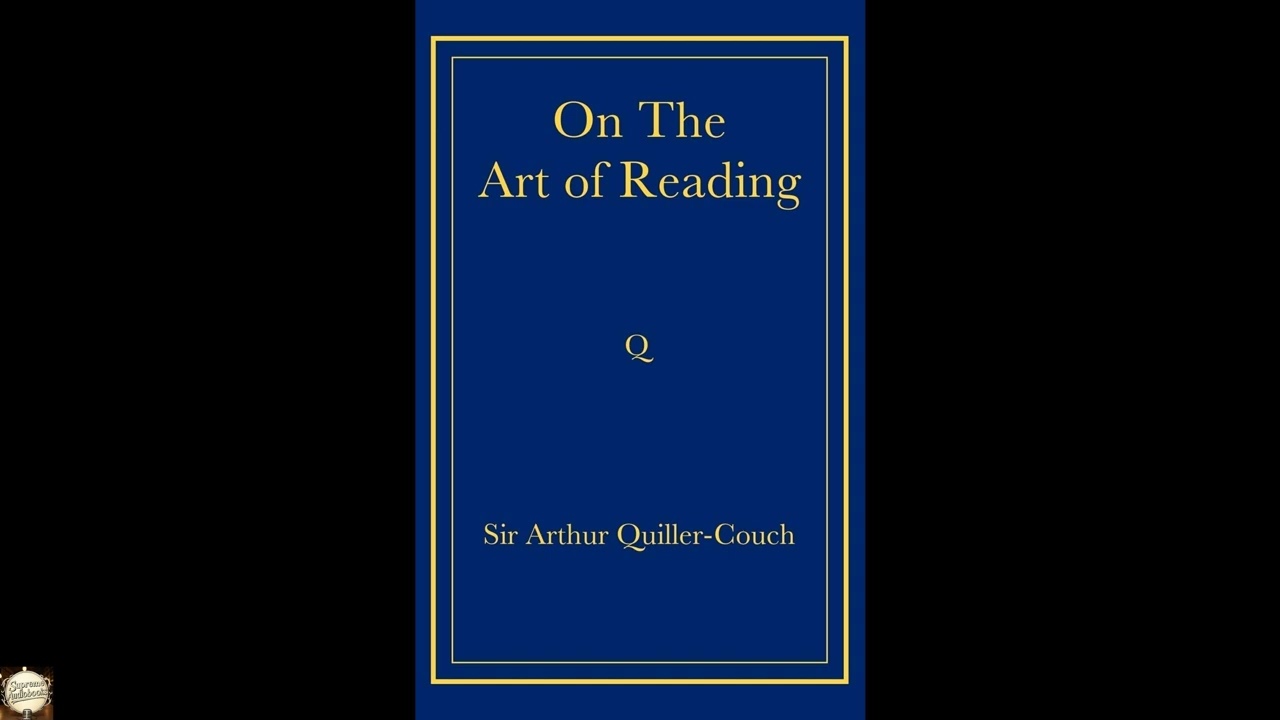
In an age awash with information, where screens constantly vie for our attention and content scrolls by at dizzying speed, the very act of reading risks becoming a hurried, superficial glance rather than a profound engagement. Arthur Quiller-Couch’s On The Art of Reading arrives not as a relic from a bygone era, but as an urgent and necessary guide for anyone seeking to reclaim the power and pleasure of true literacy. This collection of his lectures challenges us to move beyond mere word recognition and into the deeper currents of thought, emotion, and understanding that literature offers. It asks us, with gentle but firm insistence, not just what we read, but how we read—a question whose answers remain profoundly relevant for navigating the complexities of our contemporary world. Quiller-Couch, affectionately known as “Q” by generations of students, does not present a conventional story with characters and a setting in the narrative sense. Instead, he invites us into the intellectual setting of a Cambridge lecture hall, where he serves as our erudite, yet warmly accessible, guide. The central predicament he addresses is a universal one: the common tendency towards passive reading. He observes that many approach texts with an almost dutiful listlessness, absorbing words without truly digesting their meaning, questioning their assumptions, or appreciating their craft. This, he argues, stunts intellectual growth and diminishes the sheer delight available through literature. The arc of Q’s instruction moves from identifying this problem to offering a robust array of solutions. He systematically dismantles the habits that hinder genuine understanding—from the pitfalls of superficial skimming to the danger of letting preconceived notions cloud our judgment. With a light touch and abundant wisdom, he then builds a framework for active, critical reading. He discusses the specific challenges and rewards of approaching different genres, whether it be the rhythm and imagery of poetry, the narrative flow of fiction, or the persuasive power of expository prose. His ultimate goal is to awaken in the reader a vital curiosity, an insatiable desire to connect with the author’s mind, and an ability to articulate one’s own reasoned responses to what one encounters on the page. Arthur Quiller-Couch was born in Bodmin, Cornwall, in 1863, a region that would profoundly influence his literary sensibilities and to which he would often return throughout his life. Educated at Clifton College and Trinity College, Oxford, he began his career in journalism, writing for various London periodicals, before committing more fully to creative writing. Early in his career, he made a name for himself as a novelist and poet, often drawing inspiration from Cornish folklore and landscape. His literary reputation broadened significantly with his editorship of The Oxford Book of English Verse in 1900, a seminal anthology that shaped the popular understanding of English poetry for decades. In 1912, Quiller-Couch received the prestigious appointment as the Edward VII Professor of English Literature at Cambridge University, a position he held until his death in 1944. It was in this role that he delivered the lectures that would eventually form On The Art of Reading and many of his other critical works. A knighted figure since 1910, "Q" became an influential voice in early 20th-century literary criticism, known for his elegant prose, his staunch advocacy for clear and vigorous English, and his passion for making literature accessible to a wider audience. He firmly believed in the moral and intellectual uplift that well-read literature could provide, bridging the academic rigor of university study with the general reader's love for good books. Several fundamental themes emerge with striking clarity throughout Quiller-Couch’s discourse. Perhaps the most prominent is the insistence on active engagement over passive consumption in reading. He consistently urges listeners to approach texts not as inert objects to be absorbed, but as dynamic conversations. For instance, he might demonstrate this by advising a reader of poetry not just to scan the lines for meter, but to listen to the sounds, to visualize the images, and to feel the emotional resonance, thereby becoming a co-creator of meaning rather than a mere recipient. This active participation, he argues, transforms reading from a chore into a joyous intellectual pursuit. Another recurring theme is the paramount importance of clarity and precision in language, both in the texts we read and in our own critical responses. Q’s own prose style serves as a model: articulate, unpretentious, and direct. He criticizes obscurantism and academic jargon, suggesting that truly profound thoughts do not need convoluted expression to be valued. He illustrates this by examining how authors achieve their effects through careful word choice, sentence structure, and rhetorical device, and in doing so, he subtly educates the listener on how to spot and appreciate such craftsmanship, ultimately encouraging them to cultivate similar exactitude in their own thinking and writing. When Quiller-Couch delivered these lectures, the world was on the cusp of significant change. The early decades of the 20th century, particularly the period just before and during the First World War, were a time of intellectual ferment and social upheaval. There was a growing professionalization of English studies in universities, moving away from purely classical education towards a more dedicated focus on national literature. Concurrently, broader access to education and the rise of mass media meant that more people were reading than ever before, yet there were anxieties among scholars about the depth and quality of this widespread literacy. In this context, On The Art of Reading emerged as a timely intervention. Q's work offered a humanist perspective, promoting a deep appreciation for the enduring value of literature at a moment when traditional values were being questioned and modernist literary movements were beginning to challenge established forms. His lectures sought to ground students—and indeed, any curious mind—in the fundamentals of discerning, critical engagement with texts, aiming to foster not just knowledgeable readers, but also thoughtful citizens equipped to interpret the world around them with greater insight. Listening to On The Art of Reading as an audiobook offers a unique and highly appropriate experience. These were, after all, originally delivered as spoken words, designed to instruct, inspire, and entertain an audience in a lecture hall. The narration typically captures the measured pace and thoughtful cadence that Sir Arthur himself likely employed, allowing the listener to absorb his arguments in the same way his students did. The several hours of listening provide ample time for his ideas to unfold gradually, building an atmosphere of quiet contemplation and intellectual camaraderie. Pay attention to the subtle shifts in his rhetorical strategy, the gentle humor woven into his advice, and the clarity of his voice that makes even complex ideas feel approachable. It is akin to having a wise, patient mentor speak directly to you, guiding you through the often-unseen intricacies of literary appreciation.
Enjoyed On The Art of Reading? A few ways to support us
Audible & Amazon links are affiliate; we may earn a small commission at no extra cost.
About this production
Human narration by a volunteer reader from LibriVox.org, the public-domain audiobook project. LibriVox volunteers record literary works whose copyright has expired in the United States, releasing the resulting recordings into the public domain.
On The Art of Reading by Arthur Quiller-Couch. The underlying text is in the U.S. public domain. We do not republish any modern copyrighted edition, translation, or commentary.
The 4K cinematic visuals accompanying this audiobook are generated by an AI image model from prompts derived from the source text. No copyrighted photos, paintings, or stock footage are used. AI generation is disclosed on every video on our YouTube channel as required by YouTube's altered/synthetic content policy.
English subtitles are transcribed from the LibriVox recording with OpenAI Whisper. Translations into the 11 other supported languages are produced by Meta's NLLB-200 neural translation model. No human translator's copyrighted translation is used.
Questions about sourcing or rights? See our DMCA & Sourcing policy or contact us.
Enjoyed this audiobook?
If you'd like to own a copy of On The Art of Reading or hear a professionally produced edition, the links below help support free audiobook production at no extra cost to you.
As an Amazon Associate we earn from qualifying purchases. Audible / print links are affiliate.