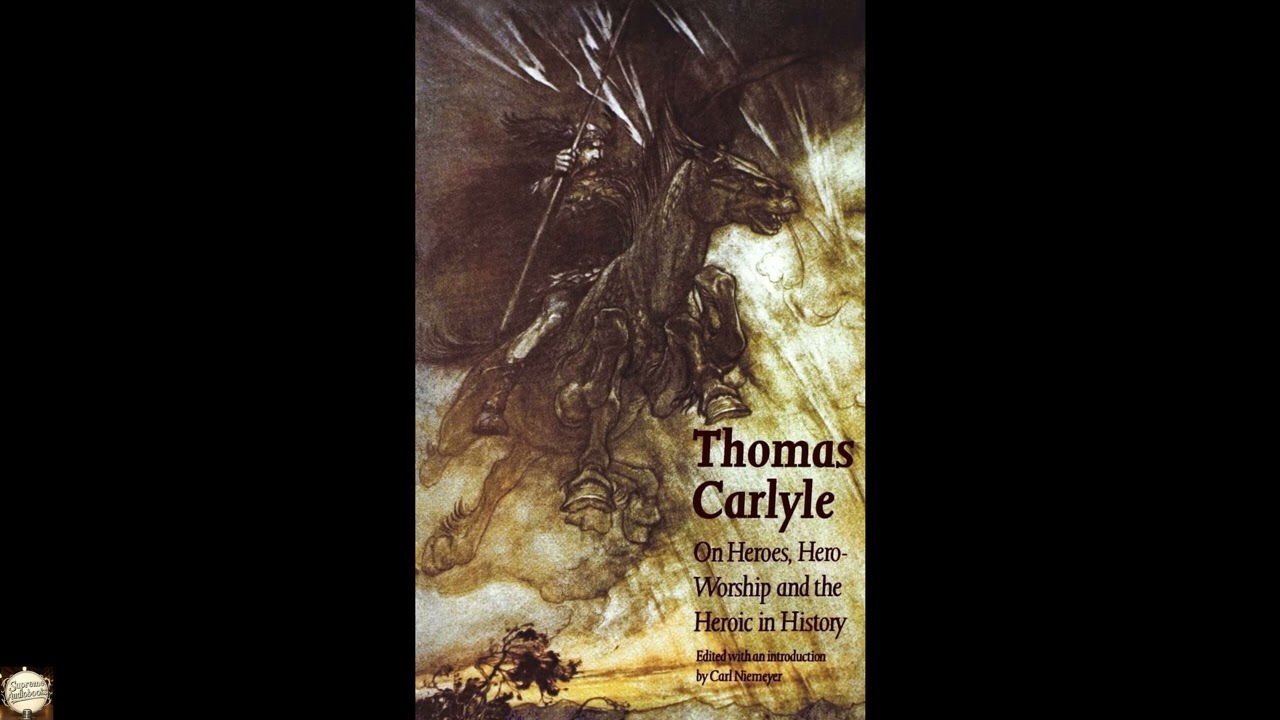
On Heroes, Hero-Worship and the Heroic in History
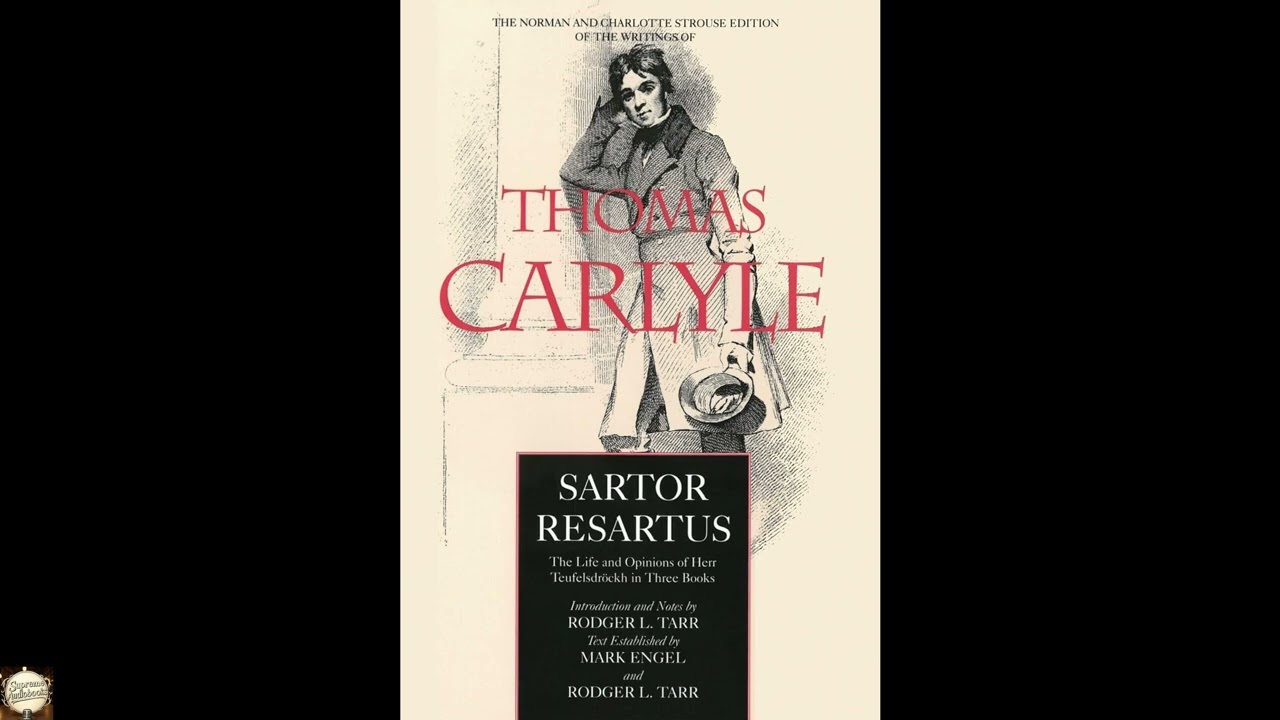
Why do we remember the great figures of history? What makes a leader truly heroic, and how do such individuals shape the course of nations and the very fabric of human thought? Thomas Carlyle's "On Heroes, Hero-Worship and the Heroic in History" stands as a monumental inquiry into these questions, a sweeping and impassioned defense of the enduring power of individual genius in an age increasingly prone to mass movements and materialist explanations. Delivered as a series of lectures in 1841, this work confronts the listener with a stark, vital argument for the recognition and reverence of those singular souls who, through their vision and sincerity, illuminate and transform their eras. It is a work that challenges us to consider our own relationship with leadership, with belief, and with the figures who have left an indelible mark on the human story, making its central concerns as relevant today as they were nearly two centuries ago. Carlyle's intellectual undertaking unfurls across six distinct lectures, each dedicated to a particular manifestation of the heroic spirit. He begins by establishing his foundational premise: that "Universal History... is at bottom the History of the Great Men who have worked here." Rather than offering a traditional narrative plot, the book traces the evolution of heroism through various societal roles, starting with the Hero as Divinity. Here, Carlyle champions figures like Odin, not as a literal god but as a profound truth-speaker whose insights into the cosmos profoundly shaped the Norse peoples. He argues for seeing these ancient figures not as mythical fabrications but as real men who embodied essential truths for their time, inspiring genuine veneration. The progression continues to the Hero as Prophet, epitomized by Muhammad, whom Carlyle defends against common Victorian prejudices, emphasizing his sincerity and the transformative power of his message. Then comes the Hero as Poet, where Dante Alighieri and William Shakespeare are presented as supreme revealers of human experience, their works enduring testaments to universal truths. Carlyle moves on to the Hero as Priest, focusing on Martin Luther and John Knox as revolutionary figures who dared to stand for conviction against institutional dogma, forever altering the spiritual landscape of Europe. His final two categories are the Hero as Man of Letters – exemplified by Samuel Johnson and Jean-Jacques Rousseau – whose words reshaped thought, and finally, the Hero as King, personified by Napoleon Bonaparte, a man of immense practical power who nonetheless drew his strength from a profound, if sometimes flawed, vision. Throughout this intellectual journey, Carlyle is building a case for the spiritual foundation of greatness and the necessity of acknowledging transcendent power in individuals. Born in Ecclefechan, Scotland, in 1795, Thomas Carlyle grew up in a devoutly Calvinist family, the son of a stonemason. His early life was marked by intellectual rigor and a deep moral seriousness. He attended the University of Edinburgh with the intention of entering the ministry, but a crisis of faith led him away from theology and towards literature and history. After years of struggle as a tutor and translator, he found his voice as a writer, developing a unique, often idiosyncratic prose style characterized by dramatic pronouncements, rhetorical questions, and a powerful, almost prophetic tone. His marriage to Jane Welsh Carlyle, a brilliant writer and intellect in her own right, provided a turbulent yet deeply influential companionship throughout his life. Carlyle's literary career was prolific and impactful. He first gained widespread recognition with Sartor Resartus (1833-34), a philosophical novel that blended autobiography, satire, and social commentary. His monumental three-volume The French Revolution: A History (1837) solidified his reputation as a leading historian and stylist. Other significant works include Past and Present (1843), a blistering critique of Victorian industrial society, and his multi-volume biography of Frederick the Great (1858-65). Throughout his long life, Carlyle remained a prominent and often controversial figure in Victorian intellectual circles, known as one of the great "sages" of his age, whose writings fiercely engaged with the most pressing social and moral questions of his time. He passed away in 1881 in Chelsea, London, leaving behind a profound literary legacy. "On Heroes" enacts several core themes, foremost among them the "Great Man Theory" of history. Carlyle vigorously contends that the progress of civilization is not merely an aggregation of minor forces or economic shifts, but fundamentally driven by the appearance of extraordinary individuals. He illustrates this with Muhammad, arguing that the rapid spread of Islam was not simply due to geopolitical factors, but to the inherent sincerity and power of the prophet's vision, which resonated deeply with his followers. Another central theme is the necessity of hero-worship, which Carlyle defines not as blind idolatry but as a natural, healthy human instinct for reverence—a recognition of the divine spark within exceptional people. He shows this when discussing Luther's stand at the Diet of Worms, portraying it not just as an act of political defiance, but as a genuine, divinely inspired commitment to truth that warranted profound respect. This deep spiritual commitment is tied to his belief in sincerity as the bedrock of heroism; genuine heroes, like Shakespeare, speak from an authentic, uncorrupted place, revealing truths that resonate across centuries. This work emerged during a period of profound societal upheaval and intellectual ferment in early Victorian England. The Industrial Revolution was rapidly transforming the landscape, creating unprecedented wealth alongside widespread poverty and social unrest. Traditional religious certainties were being challenged by new scientific discoveries and philosophical currents. Democracy was gaining ground, and there was a growing tendency to view history through mechanistic or economic lenses. Carlyle, observing what he perceived as a spiritual and moral decline—a society increasingly governed by utilitarian principles and a "vote-by-ballot-box" mentality—felt compelled to articulate a counter-argument. He sought to remind his contemporaries of the enduring spiritual dimension of human existence and the irreplaceable role of visionary leaders in guiding humanity through times of crisis, directly addressing the anxieties of an age grappling with rapid change and a perceived loss of spiritual anchor. Listening to "On Heroes, Hero-Worship and the Heroic in History" as an audiobook offers a unique and resonant experience, especially given its origins as a series of public lectures. Carlyle's prose, with its characteristic rhythms, dramatic pronouncements, and impassioned rhetoric, truly comes alive when spoken. The run length, several hours in total, makes it an ideal companion for focused listening sessions, allowing the arguments to unfold at their own pace. A skilled narrator can capture the intellectual fire and emotional conviction behind Carlyle's words, bringing out the nuances of his often complex sentences and the force of his ideas. As you listen, attend to the powerful, almost sermon-like quality of his argumentation, the way he uses vivid imagery and historical anecdotes to bolster his points, and how the narrator's voice underscores the very act of oratory that brought this profound work into being.
Enjoyed On Heroes, Hero-Worship and the Heroic in History? A few ways to support us
Audible & Amazon links are affiliate; we may earn a small commission at no extra cost.
About this production
Human narration by a volunteer reader from LibriVox.org, the public-domain audiobook project. LibriVox volunteers record literary works whose copyright has expired in the United States, releasing the resulting recordings into the public domain.
On Heroes, Hero-Worship and the Heroic in History by Thomas Carlyle. The underlying text is in the U.S. public domain. We do not republish any modern copyrighted edition, translation, or commentary.
The 4K cinematic visuals accompanying this audiobook are generated by an AI image model from prompts derived from the source text. No copyrighted photos, paintings, or stock footage are used. AI generation is disclosed on every video on our YouTube channel as required by YouTube's altered/synthetic content policy.
English subtitles are transcribed from the LibriVox recording with OpenAI Whisper. Translations into the 11 other supported languages are produced by Meta's NLLB-200 neural translation model. No human translator's copyrighted translation is used.
Questions about sourcing or rights? See our DMCA & Sourcing policy or contact us.
Enjoyed this audiobook?
If you'd like to own a copy of On Heroes, Hero-Worship and the Heroic in History or hear a professionally produced edition, the links below help support free audiobook production at no extra cost to you.
As an Amazon Associate we earn from qualifying purchases. Audible / print links are affiliate.