My Lady Ludlow
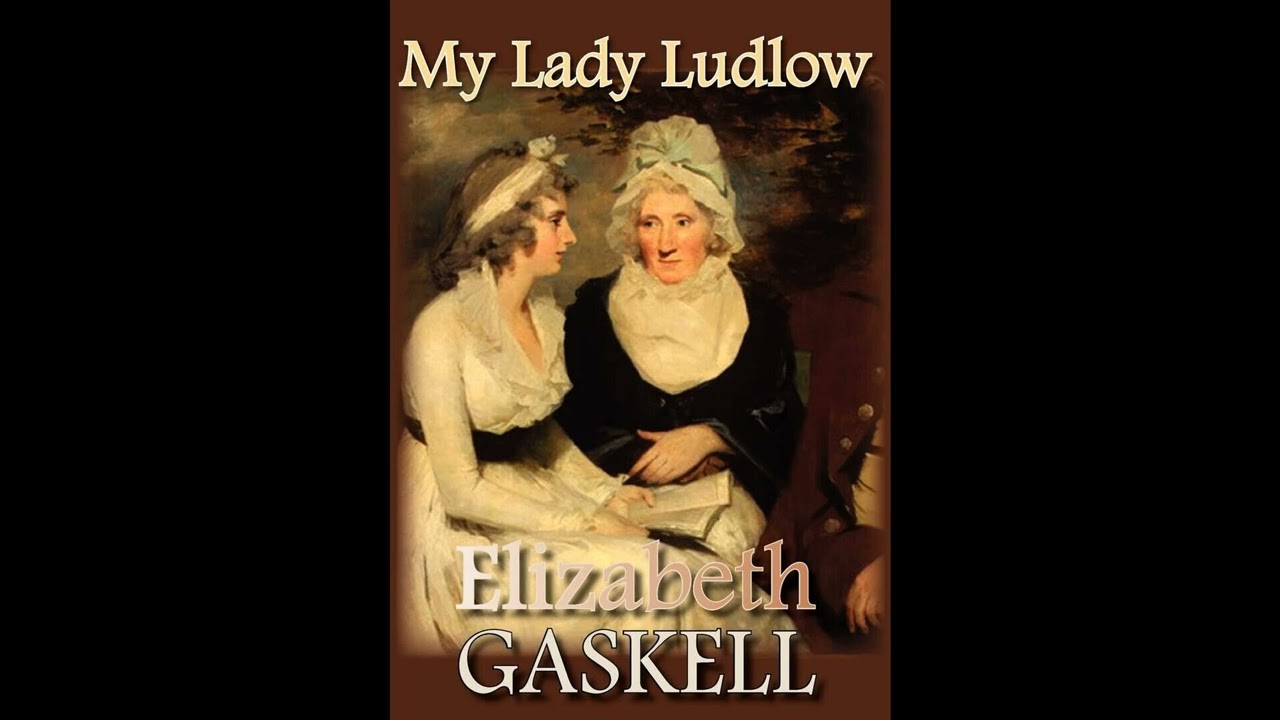
Step into a world where the hedgerows still mark ancient property lines and the rhythms of life are dictated by tradition, not haste. Elizabeth Gaskell's My Lady Ludlow invites you to an English village where the past casts a long, graceful shadow, and change arrives not with a bang, but a quiet, insistent murmur. This novella, a gem of Victorian literature, offers more than just a charming portrait of bygone rural life; it is a thoughtful examination of how societies reckon with progress, how individuals cling to cherished beliefs even as the world around them shifts, and how the smallest domestic sphere can become a battleground of ideas. For listeners today, it provides a gentle yet penetrating look at the enduring tension between old ways and new, the complexities of social class, and the quiet power of a woman determined to live by her own code. The story unfolds through the reminiscences of Mrs. Brandling, born Margaret Dawson, an elderly woman looking back on her youth spent at Hanbury Court under the stern but benevolent eye of Lady Ludlow. The setting is an idyllic English village, seemingly untouched by the burgeoning industrial age, where the hierarchy of the landed gentry remains largely unchallenged. Lady Ludlow, the widowed mistress of the estate, is a formidable presence – an aristocrat of the old school, deeply attached to her lineage, her church, and the established order of things. She views the world through a lens of strict tradition, believing in the inherent rightness of class divisions and the dangers of too much education for the lower orders. Into this carefully maintained world comes Miss Galindo, a young woman of genteel birth but reduced circumstances, who arrives at Hanbury Court to teach the younger children. Unlike Lady Ludlow, Miss Galindo is educated, practical, and possesses a quiet, modern spirit, believing in the value of knowledge and self-improvement for everyone, regardless of station. Their interactions, observed with keen insight by young Margaret, form the central dynamic of the narrative. The clashes are often subtle: Lady Ludlow's insistence on propriety versus Miss Galindo's quiet resourcefulness; the Lady's deeply ingrained sense of duty to her social class versus the younger woman's belief in individual merit. We see Lady Ludlow navigate challenges to her authority and her worldview, from the radical ideas of her own son Harry, to the emergence of a small French emigrant community, and her determined efforts to control the destiny of a beautiful, well-born ward, Miss Anne Hearn. Elizabeth Gaskell (1810-1865) stands as one of the preeminent literary figures of the Victorian era, a woman whose life and work were deeply intertwined with the social and industrial transformations of nineteenth-century England. Born in London but raised largely in the Cheshire town of Knutsford—the inspiration for her beloved Cranford—Gaskell experienced firsthand the gentle, fading world of rural gentry alongside the burgeoning realities of urban industrialization after her marriage to William Gaskell, a Unitarian minister in Manchester. This unique perspective allowed her to bridge seemingly disparate worlds in her fiction, chronicling both the quiet domesticity of village life and the harsh realities of factory towns. Her literary career began relatively late in life, spurred by personal tragedy; the death of her young son William prompted her to write her first novel, Mary Barton (1848), a powerful and compassionate portrayal of working-class life and industrial unrest. This was followed by a string of highly regarded novels including Ruth (1853), a groundbreaking novel about a fallen woman; North and South (1855), which contrasts the industrial North with the agricultural South; and her unfinished final work, Wives and Daughters (1866). Gaskell was a realist, known for her acute observation of character, her keen ear for regional dialect, and her unflinching yet empathetic treatment of social issues. She earned a significant place in the English literary canon not only for her novels but also for her acclaimed biography, The Life of Charlotte Brontë. My Lady Ludlow quietly unpacks several compelling themes. Central among them is the perpetual tension between tradition and progress. Lady Ludlow herself is the embodiment of inherited custom; she genuinely believes that educating the poor only makes them discontented with their lot, and she views social mobility with profound suspicion. She cannot fathom, for instance, why a young woman like Miss Galindo, with her abilities, would need to work for a living, let alone teach. The story shows the inherent resistance to new ideas when they threaten established comfort, and it presents both the dignity and the limitations of an unwavering adherence to the past. The novella also keenly observes class and social hierarchy. Lady Ludlow's world is one where everyone knows their place, from the lord of the manor to the lowliest tenant. Her sense of duty, while often benevolent, is strictly paternalistic, and she genuinely struggles to comprehend aspirations that extend beyond one's birthright. Another key theme is the role of women and education in a changing society. Margaret, as the narrator, is a keen observer of the restricted choices available to women, whether it is the dignified but constrained life of Lady Ludlow or the necessity for Miss Galindo to use her intellect to earn a living. The contrast between Lady Ludlow's views on appropriate female accomplishments and Miss Galindo's practical intellect highlights the shifting expectations and opportunities for women during the period. Finally, the narrative subtly comments on the nature of benevolent authority. Lady Ludlow is not malicious; she genuinely cares for her dependants and tenants. However, her kindness is always filtered through her rigid worldview, sometimes leading to outcomes that, while well-intentioned, are ultimately unyielding and perhaps even damaging to the very people she wishes to help. Her inability to truly listen to alternative perspectives, even from those she loves, reveals the limitations of a rule based solely on inherited position. My Lady Ludlow was published serially in Charles Dickens's magazine Household Words in 1858, placing it firmly in the heart of the Victorian era. This was a time of immense social and economic transformation in Britain, characterized by the continued growth of industrialization, the rise of a powerful middle class, and ongoing debates about social reform. While the novella harks back to an earlier, more rural England, its emergence in the mid-19th century reflects Victorian anxieties and discussions about the decline of the traditional aristocracy, the burgeoning power of new social classes, and the ethical implications of social change. Gaskell, often seen as a social commentator, used her fiction to grapple with these shifts, frequently contrasting the perceived stability of the past with the tumultuous present. The story subtly addresses contemporary questions about charity, education for the working classes, and the changing roles for women, all filtered through the lens of a specific historical moment when old certainties were giving way to new, sometimes unsettling, possibilities. Listening to My Lady Ludlow as an audiobook offers a uniquely intimate and transporting experience. Gaskell's prose, known for its gentle pace and observant detail, perfectly suits the spoken word, allowing the listener to truly settle into the world of Hanbury Court. The narrator's voice, as Mrs. Brandling recounts her youthful memories, creates a warm, reflective atmosphere, inviting you to become a quiet confidante in her observations. The run length of several hours makes this a perfect choice for focused listening, perhaps over a few evenings, allowing the nuances of Lady Ludlow's formidable character and Miss Galindo's quiet strength to truly resonate. Listen for the subtle inflections in the dialogue that bring each character to life, from the Lady's imperious pronouncements to the humble voices of the villagers. A skilled narrator will amplify the gentle humor, the quiet pathos, and the underlying tension between tradition and change, making the quiet drama of Gaskell's English village profoundly affecting.
Enjoyed My Lady Ludlow? A few ways to support us
Audible & Amazon links are affiliate; we may earn a small commission at no extra cost.
About this production
Human narration by a volunteer reader from LibriVox.org, the public-domain audiobook project. LibriVox volunteers record literary works whose copyright has expired in the United States, releasing the resulting recordings into the public domain.
My Lady Ludlow by Elizabeth Gaskell. The underlying text is in the U.S. public domain. We do not republish any modern copyrighted edition, translation, or commentary.
The 4K cinematic visuals accompanying this audiobook are generated by an AI image model from prompts derived from the source text. No copyrighted photos, paintings, or stock footage are used. AI generation is disclosed on every video on our YouTube channel as required by YouTube's altered/synthetic content policy.
English subtitles are transcribed from the LibriVox recording with OpenAI Whisper. Translations into the 11 other supported languages are produced by Meta's NLLB-200 neural translation model. No human translator's copyrighted translation is used.
Questions about sourcing or rights? See our DMCA & Sourcing policy or contact us.
Enjoyed this audiobook?
If you'd like to own a copy of My Lady Ludlow or hear a professionally produced edition, the links below help support free audiobook production at no extra cost to you.
As an Amazon Associate we earn from qualifying purchases. Audible / print links are affiliate.