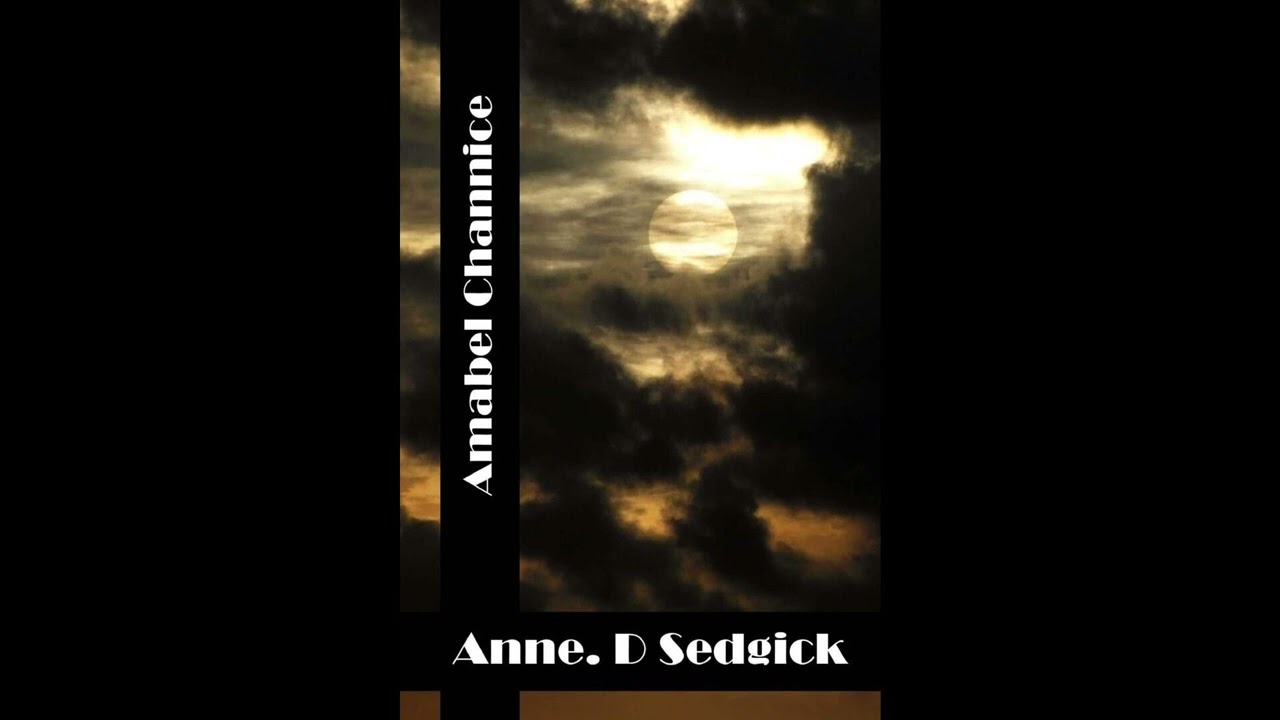
Amabel Channice: (Anne Douglas Sedgwick Classics Collection)
Within the elegant drawing rooms and manicured gardens of early twentieth-century England, a quiet revolution often took place in the human heart. Amabel Channice, a compelling novel from the Anne Douglas Sedgwick Classics Collection, invites listeners into one such private struggle, a story of social grace meeting personal crisis. This is a narrative concerned with appearances and the often-painful truths hidden beneath them, offering a profound look at how individuals navigate societal expectations while striving for authentic selfhood. Its perceptive gaze at marriage, identity, and the compromises of polite society remains relevant, speaking to anyone who has ever felt the subtle pressures of convention or questioned the true nature of their dearest relationships. The story centers on the seemingly idyllic life of Amabel Channice, a woman whose beauty and gentle demeanor have secured her a respected position within a world of privilege. Married to Lord Channice, a man of established reputation and considerable influence, Amabel appears to have all the comforts and securities society can offer. Their life together unfolds in a manner befitting their station, marked by serene routines and the quiet decorum of their country estate. However, beneath this veneer of tranquility, a nascent disquiet begins to stir. The novel carefully introduces elements that challenge Amabel’s perception of her husband and their shared existence, hinting at complexities she has, perhaps, been too protected or too innocent to perceive. The central conflict arises with the introduction of a disruptive force, a character whose presence, whether through charm, intensity, or a different moral code, acts as a catalyst for Amabel’s self-awakening. This individual brings a new perspective, forcing Amabel to scrutinize the foundations of her marriage and the unspoken agreements that govern her world. She finds herself grappling with shifting loyalties, confronting revelations that undermine her preconceived notions about the people she trusts most, and questioning the very nature of truth and deception. As events unfold, Amabel must navigate a landscape of emotional ambiguity, making choices that will define her understanding of love, integrity, and her own strength of will, all without revealing the ultimate resolution of her internal and external struggles. The author behind this discerning study of character is Anne Douglas Sedgwick (1873-1935), an American-born novelist who spent the majority of her life in England and France. Educated largely in Europe, Sedgwick cultivated a uniquely transatlantic sensibility that informed her literary perspective. She married Basil de Sélincourt, a notable literary critic, and became an active participant in Anglo-American literary circles, admired for her refined prose and acute psychological insight. Her novels frequently depicted the nuances of social interaction, particularly among the upper classes, and often focused on women confronting moral and emotional predicaments. Sedgwick's literary output included acclaimed titles such as Tante (1911) and The Little French Girl (1924), the latter proving to be her most widely read success. Critics and readers alike praised her ability to craft complex female characters and her elegant, precise command of language. She is considered a significant figure in the period bridging late Victorian and early modernist literature, her work often echoing the psychological realism championed by Henry James, with whom she shared a fascination for the subtle interplay of culture, personality, and ethical choice. Amabel Channice eloquently demonstrates several recurrent themes in Sedgwick's body of writing. One prominent theme is the discrepancy between appearance and reality. Amabel’s initial contentment stems from a life that looks perfect, but as the narrative progresses, she learns that outward displays of propriety and affection can mask significant underlying tensions or even deliberate falsehoods. Consider, for example, a scene where a seemingly casual comment from a new acquaintance subtly exposes a contradiction in Lord Channice's past, forcing Amabel to reconsider everything she thought she knew about him, moving from a superficial understanding to a more complex, unsettling truth. Another significant theme is the evolution of female identity and agency. Amabel begins the story as a woman whose identity is largely defined by her husband and her social role. However, as she faces increasing challenges, she is compelled to think for herself, to develop a more robust sense of self that is independent of external validation. A pivotal moment might be when she silently defies a subtle command, choosing to pursue her own line of questioning or an uncomfortable truth, rather than simply accepting the comforting, prescribed narrative. This quiet assertion marks her growth and her struggle to forge a personal moral compass in a world that often prioritizes conformity. Listening to Amabel Channice as an audiobook offers a distinct appreciation for Anne Douglas Sedgwick's artistry. The narration experience is crucial for a novel so steeped in psychological observation and social subtlety. A skilled narrator can bring Sedgwick’s elegant prose to life, distinguishing characters through carefully modulated voices and conveying the unspoken emotions that lie beneath polite dialogue. The several-hours run length allows for deep immersion, perfect for extended periods of listening during daily routines or moments of quiet contemplation. Pay close attention to the pacing, which often mirrors Amabel's own slow dawning of awareness, and how the narrator uses pauses and shifts in tone to build atmosphere and suspense. The subtle vocalizations of internal monologues will particularly illuminate Amabel's evolving thoughts, drawing listeners into her intimate world and her profoundly human struggle.
Enjoyed Amabel Channice: (Anne Douglas Sedgwick Classics Collection)? A few ways to support us
Audible & Amazon links are affiliate; we may earn a small commission at no extra cost.
About this production
Human narration by a volunteer reader from LibriVox.org, the public-domain audiobook project. LibriVox volunteers record literary works whose copyright has expired in the United States, releasing the resulting recordings into the public domain.
Amabel Channice: (Anne Douglas Sedgwick Classics Collection) by Anne Douglas Sedgwick. The underlying text is in the U.S. public domain. We do not republish any modern copyrighted edition, translation, or commentary.
The 4K cinematic visuals accompanying this audiobook are generated by an AI image model from prompts derived from the source text. No copyrighted photos, paintings, or stock footage are used. AI generation is disclosed on every video on our YouTube channel as required by YouTube's altered/synthetic content policy.
English subtitles are transcribed from the LibriVox recording with OpenAI Whisper. Translations into the 11 other supported languages are produced by Meta's NLLB-200 neural translation model. No human translator's copyrighted translation is used.
Questions about sourcing or rights? See our DMCA & Sourcing policy or contact us.
Enjoyed this audiobook?
If you'd like to own a copy of Amabel Channice: (Anne Douglas Sedgwick Classics Collection) or hear a professionally produced edition, the links below help support free audiobook production at no extra cost to you.
As an Amazon Associate we earn from qualifying purchases. Audible / print links are affiliate.