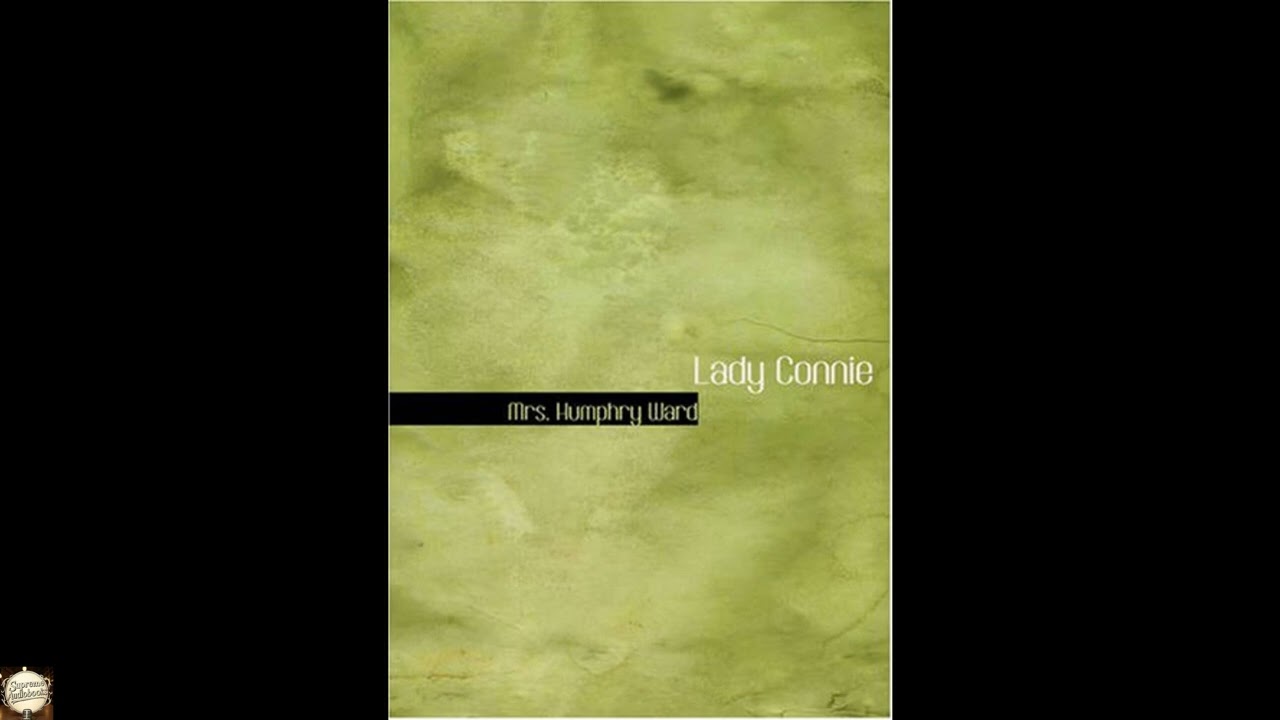
Lady Connie
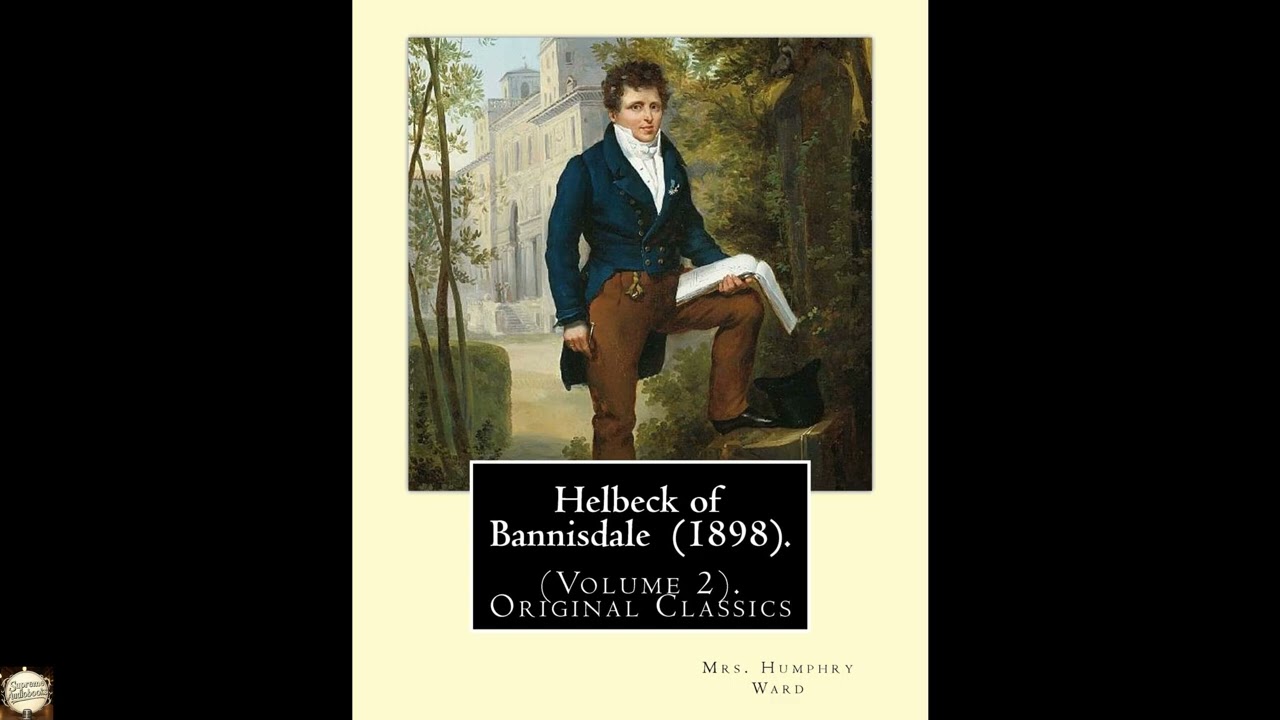
Step into the hallowed halls and sun-dappled quadrangles of Edwardian Oxford with Mrs. Humphry Ward's Lady Connie, a novel that captures the spirit of a young woman poised between a world of strict social convention and the stirrings of a new, more independent age. This is not merely a tale of romance and reputation, though it has both in abundance; it is a vivid portrait of character forged in the crucible of societal expectation, where a single impetuous act can ripple through an entire community. For listeners today, the struggles of Lady Connie Chiltern—her quest for authenticity, her battles against judgment, her journey towards self-knowledge—resonate with a striking relevance, reminding us that the human heart's desire for freedom often finds itself in conflict with the unyielding demands of tradition. The story introduces us to Lady Connie Chiltern, a young orphan of formidable spirit and unconventional beauty, arriving at Oxford to live with her staid, academic guardians, the Professor and Mrs. Raeburn. Having spent a sheltered but untamed upbringing in Italy, Connie carries with her an almost pagan vivacity that immediately sets her apart from the buttoned-up decorum of the university town. Her natural charm and lack of artifice attract a diverse array of admirers and critics alike. Among those drawn to her are Douglas Falloden, a brilliant but arrogant young aristocrat whose family pride borders on the tyrannical, and Otto Radowitz, a sensitive and musical German Rhodes Scholar, whose gentle nature offers a stark contrast to Falloden's possessiveness. Connie's spirited nature soon leads her into a series of misunderstandings and outright scandal. A flirtation that begins as innocent fun escalates into a public humiliation for Falloden, pushing his pride to its breaking point and resulting in a disastrous duel. This pivotal event casts a long shadow over Connie's burgeoning reputation and threatens to shatter her prospects entirely, forcing her to confront the severe consequences of her actions within a society that grants little forgiveness to women who stray from the path of propriety. The ensuing drama sees Connie grapple with guilt, societal scorn, and the weight of decisions that not only impact her own future but those of the men who love her. The novel follows her challenging path toward maturity, as she navigates the complexities of love, loyalty, and the unforgiving gaze of a judgmental world. The author, Mary Augusta Ward, known to her readers as Mrs. Humphry Ward, was one of the most prominent and influential novelists of her era. Born Mary Augusta Arnold in Hobart, Tasmania, in 1851, she was the granddaughter of Dr. Thomas Arnold, the famed headmaster of Rugby School, and niece of the poet Matthew Arnold. Her family tree also includes Aldous Huxley and Julian Huxley, placing her firmly at the nexus of intellectual and literary giants. Ward's life was marked by a deep engagement with social and intellectual issues. She was a scholar of early Spanish literature and a tireless advocate for social causes, notably founding the Passmore Edwards Settlement (later the Mary Ward Settlement) in London, which provided education and community services to the working poor. Despite her progressive work in social reform, Ward held famously conservative views on women's suffrage, leading the Women's National Anti-Suffrage League. This complex position—a powerful, independent woman who argued against women gaining the vote—made her a figure of considerable controversy then, as now. Her literary output was prolific, beginning with scholarly essays and reviews, and later transitioning to immensely popular novels. Her 1888 novel, Robert Elsmere, dealing with religious doubt and social responsibility, became an international bestseller, influencing public discourse across continents. Other significant works include Marcella (1899) and Helbeck of Bannisdale (1898), all characterized by their thoughtful engagement with the pressing social, moral, and religious questions of late Victorian and Edwardian England. Mrs. Humphry Ward died in 1920, leaving behind a body of work that captures a transitional moment in British society, bridging the earnest intellectualism of the Victorian age with the emerging anxieties of the twentieth century. Lady Connie vividly examines the enduring tension between individual desires and the constraints of social expectations. We see this play out in Connie's initial arrival at Oxford; her bright, untutored nature clashes sharply with the subtle but rigid social codes governing behavior, particularly for young women. Her spontaneous enjoyment of life and lack of self-consciousness are repeatedly misinterpreted by a society that values demureness and conformity above all else. This clash culminates in the central scandal, where a single, albeit reckless, action takes on disproportionate significance, demonstrating how quickly a young woman's reputation—her very identity—can be undone by the slightest perceived transgression. Another central theme is the nuanced portrayal of education, not merely as formal instruction but as a shaping force for character and intellect. Oxford itself acts as a character, with its intellectual debates, its ancient traditions, and its closed, academic society. We witness Connie's gradual, sometimes painful, education in the ways of the world, contrasting with the more formal education of the male students who often fail to apply their academic wisdom to matters of the heart or social grace. The novel further interrogates the nature of love and duty, as Connie must choose between the powerful, if sometimes destructive, passion of Falloden and the steadfast, selfless devotion of Radowitz, weighing personal happiness against societal approval and moral obligation. When Lady Connie was published in 1916, Europe was deep in the throes of the First World War. While the novel's action is generally set in the slightly earlier, seemingly more stable Edwardian period, it reflects the social anxieties and changing landscape that immediately preceded the conflict. The rigid social codes, the emphasis on family honor, and the distinct roles for men and women portrayed in the book were already beginning to fray. Ward's narrative looks back at a world on the cusp of profound change, where the old certainties were giving way to new questions about individual freedom, gender roles, and the very structure of society. The novel can be seen as a lament for a passing era, even as it subtly hints at the forces that would ultimately sweep it away, capturing a moment when the Edwardian golden age was already casting long shadows of doubt and unrest. Listening to Lady Connie as an audiobook offers a singular opportunity to immerse oneself in the atmosphere of early twentieth-century Oxford and the passionate inner lives of its characters. Over its several hours, a skilled narrator can bring the distinct cadences of the period's dialogue to life, making the often subtle social interactions and witty exchanges sparkle. The pacing of the prose, with its careful unfolding of character and dramatic events, lends itself perfectly to the spoken word, allowing listeners to absorb the nuances of Ward's social commentary and her psychological portraits. One can truly hear the haughty pride of Falloden, the gentle sincerity of Radowitz, and above all, the evolving spirit of Lady Connie herself, as her voice and temperament shift from untamed exuberance to a more tempered understanding of herself and her world. The experience is like being drawn into a compelling drawing-room drama, where every inflection and every silence contributes to the richness of the story.
Enjoyed Lady Connie? A few ways to support us
Audible & Amazon links are affiliate; we may earn a small commission at no extra cost.
About this production
Human narration by a volunteer reader from LibriVox.org, the public-domain audiobook project. LibriVox volunteers record literary works whose copyright has expired in the United States, releasing the resulting recordings into the public domain.
Lady Connie by Mrs. Humphry Ward. The underlying text is in the U.S. public domain. We do not republish any modern copyrighted edition, translation, or commentary.
The 4K cinematic visuals accompanying this audiobook are generated by an AI image model from prompts derived from the source text. No copyrighted photos, paintings, or stock footage are used. AI generation is disclosed on every video on our YouTube channel as required by YouTube's altered/synthetic content policy.
English subtitles are transcribed from the LibriVox recording with OpenAI Whisper. Translations into the 11 other supported languages are produced by Meta's NLLB-200 neural translation model. No human translator's copyrighted translation is used.
Questions about sourcing or rights? See our DMCA & Sourcing policy or contact us.
Enjoyed this audiobook?
If you'd like to own a copy of Lady Connie or hear a professionally produced edition, the links below help support free audiobook production at no extra cost to you.
As an Amazon Associate we earn from qualifying purchases. Audible / print links are affiliate.